 Add to Chrome
 Add to Firefox
 Add to Edge
StuPASE: Towards Low-Hallucination Studio-Quality Generative Speech Enhancement
Mar 10, 2026
Achieving high perceptual quality without hallucination remains a challenge in generative speech enhancement (SE). A representative approach, PASE, is robust to hallucination but has limited perceptual quality under adverse conditions. We propose StuPASE, built upon PASE to achieve studio-level quality while retaining its low-hallucination property. First, we show that finetuning PASE with dry targets rather than targets containing simulated early reflections substantially improves dereverberation. Second, to address performance limitations under strong additive noise, we replace the GAN-based generative module in PASE with a flow-matching module, enabling studio-quality generation even under highly challenging conditions. Experiments demonstrate that StuPASE consistently produces perceptually high-quality speech while maintaining low hallucination, outperforming state-of-the-art SE methods. Audio demos are available at: https://xiaobin-rong.github.io/stupase_demo/.

PASE: Leveraging the Phonological Prior of WavLM for Low-Hallucination Generative Speech Enhancement
Nov 17, 2025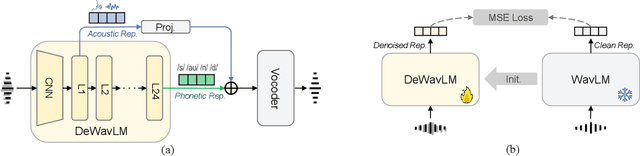
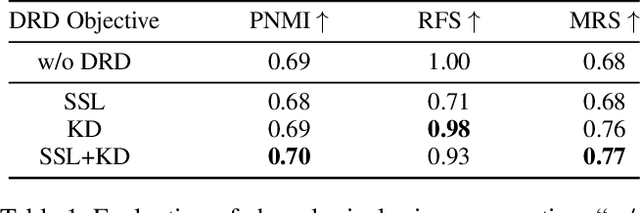
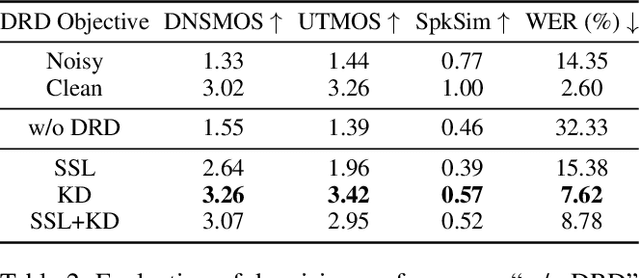
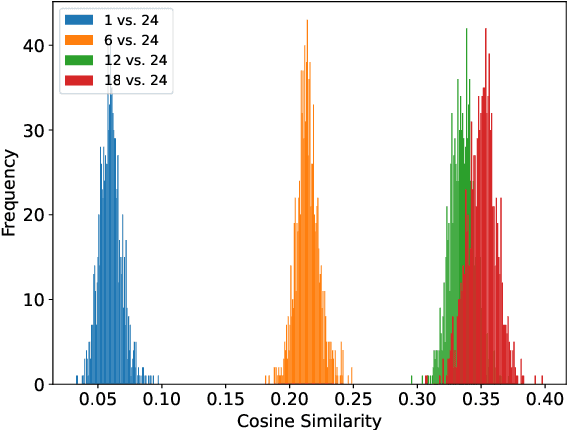
Generative models have shown remarkable performance in speech enhancement (SE), achieving superior perceptual quality over traditional discriminative approaches. However, existing generative SE approaches often overlook the risk of hallucination under severe noise, leading to incorrect spoken content or inconsistent speaker characteristics, which we term linguistic and acoustic hallucinations, respectively. We argue that linguistic hallucination stems from models' failure to constrain valid phonological structures and it is a more fundamental challenge. While language models (LMs) are well-suited for capturing the underlying speech structure through modeling the distribution of discrete tokens, existing approaches are limited in learning from noise-corrupted representations, which can lead to contaminated priors and hallucinations. To overcome these limitations, we propose the Phonologically Anchored Speech Enhancer (PASE), a generative SE framework that leverages the robust phonological prior embedded in the pre-trained WavLM model to mitigate hallucinations. First, we adapt WavLM into a denoising expert via representation distillation to clean its final-layer features. Guided by the model's intrinsic phonological prior, this process enables robust denoising while minimizing linguistic hallucinations. To further reduce acoustic hallucinations, we train the vocoder with a dual-stream representation: the high-level phonetic representation provides clean linguistic content, while a low-level acoustic representation retains speaker identity and prosody. Experimental results demonstrate that PASE not only surpasses state-of-the-art discriminative models in perceptual quality, but also significantly outperforms prior generative models with substantially lower linguistic and acoustic hallucinations.
Crowdsourced Multilingual Speech Intelligibility Testing
Mar 21, 2024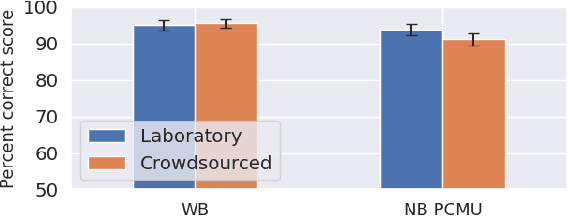
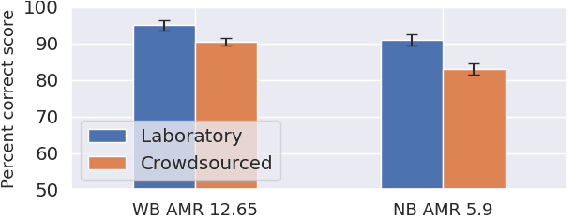
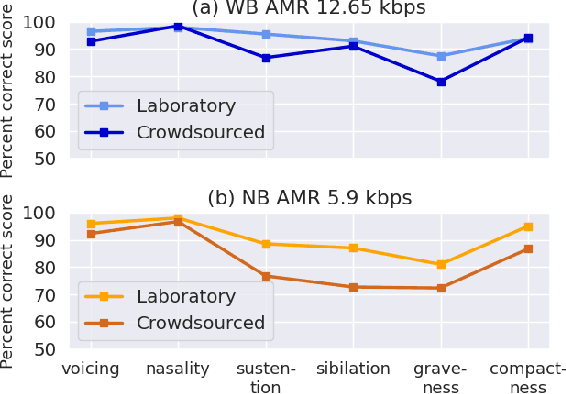
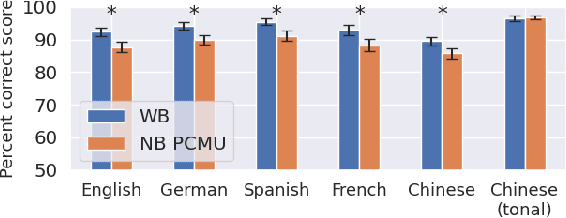
With the advent of generative audio features, there is an increasing need for rapid evaluation of their impact on speech intelligibility. Beyond the existing laboratory measures, which are expensive and do not scale well, there has been comparatively little work on crowdsourced assessment of intelligibility. Standards and recommendations are yet to be defined, and publicly available multilingual test materials are lacking. In response to this challenge, we propose an approach for a crowdsourced intelligibility assessment. We detail the test design, the collection and public release of the multilingual speech data, and the results of our early experiments.