 Add to Chrome
 Add to Firefox
 Add to Edge
EvalVerse: Pipeline-Aware and Expert-Calibrated Benchmarking for Professional Cinematic Video Generation
May 22, 2026
The rapid evolution of generative video foundation models has propelled the field toward professional-grade cinematic synthesis. To achieve such demanding quality, the community transitions towards Reinforcement Learning (RL) and agentic workflows. However, reliable evaluation has emerged as a critical bottleneck. Existing benchmarks predominantly evaluate ''whether it is right'' (basic prompt-following) while fundamentally neglecting ''whether it is good'' (cinematic quality, acting, and aesthetics). Furthermore, current automated metrics lack the domain-specific rigor required to provide trustworthy signals, creating a severe credibility gap between human aesthetic perception and machine scoring. To bridge this gap, we introduce EvalVerse, a comprehensive, pipeline-aware, and expert-calibrated evaluation framework. We treat video generation assessment not merely as an engineering task, but as a core scientific problem: the systematic digitization of subjective cinematic expertise. First, we organize domain knowledge into an evaluation taxonomy aligned with the professional filmmaking workflow (pre-production, production, and post-production). Second, we distill human expert judgments into a curated dataset with large-scale human annotations. Third, we inject this knowledge into Vision-Language Models (VLMs) through an expert-calibrated fine-tuning strategy, enabling the VLM to perform explicit Chain-of-Thought reasoning. Compared to previous works, EvalVerse not only retains compatibility with foundational ''rightness'' metrics, but also significantly expands the criteria to ''goodness'' and broaden the task coverage to complex multi-shot sequencing and audio-visual integration. Consequently, by providing granular diagnostic signals, EvalVerse transcends a static leaderboard and establishes a fundamental infrastructure for future work, such as reward models and evaluator agent.

Channel Reciprocity Based Attack Detection for Securing UWB Ranging by Autoencoder
May 28, 2024
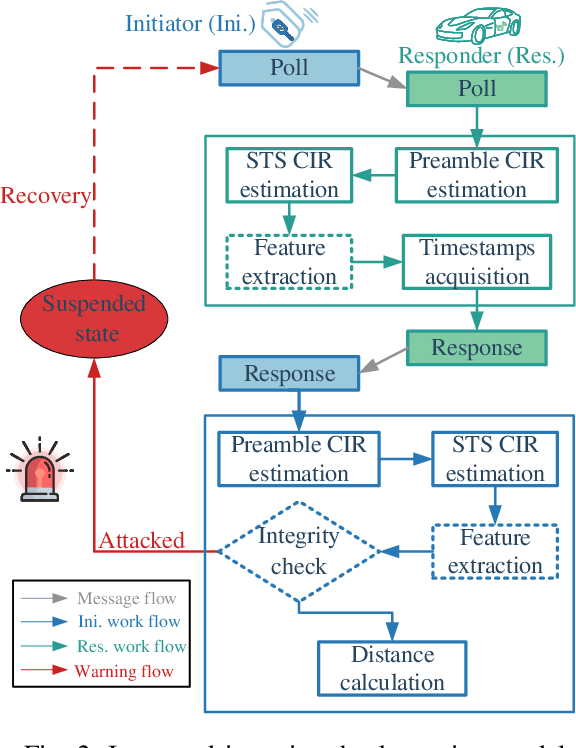

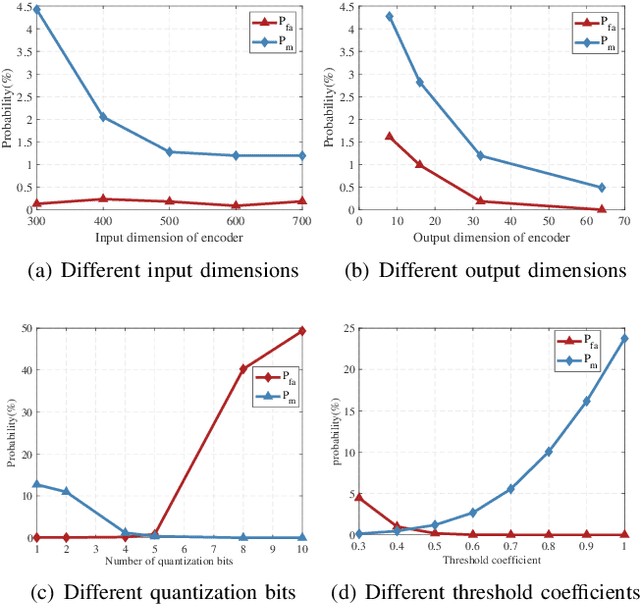
A variety of ranging threats represented by Ghost Peak attack have raised concerns regarding the security performance of Ultra-Wide Band (UWB) systems with the finalization of the IEEE 802.15.4z standard. Based on channel reciprocity, this paper proposes a low complexity attack detection scheme that compares Channel Impulse Response (CIR) features of both ranging sides utilizing an autoencoder with the capability of data compression and feature extraction. Taking Ghost Peak attack as an example, this paper demonstrates the effectiveness, feasibility and generalizability of the proposed attack detection scheme through simulation and experimental validation. The proposed scheme achieves an attack detection success rate of over 99% and can be implemented in current systems at low cost.
Power Adaptation for Suborbital Downlink with Stochastic Satellites Interference
Mar 16, 2023


In this paper, we investigate the downlink power adaptation for the suborbital node in suborbital-ground communication systems under extremely high reliability and ultra-low latency communications requirements, which can be formulated as a power threshold-minimization problem. Specifically, the interference from satellites is modeled as an accumulation of stochastic point processes on different orbit planes, and hybrid beamforming (HBF) is considered. On the other hand, to ensure the Quality of Service (QoS) constraints, the finite blocklength regime is adopted. Numerical results show that the transmit power required by the suborbital node decreases as the elevation angle increases at the receiving station.