 Add to Chrome
 Add to Firefox
 Add to Edge
Direction-adaptive Mamba: Spatial-Frequency Dual-Domain Collaborative Learning for PolSAR Image Classification
Jul 26, 2026
Deep learning dominates polarimetric synthetic aperture radar (PolSAR) image classification, with Mamba architectures serving as favorable backbones due to linear complexity and strong global modeling capacity. However, existing PolSAR Mamba methods have two critical flaws: pure spatial processing discards fine-grained edges and textures, and fixed scanning patterns fail to model direction-variant anisotropic scattering and weak boundaries essential for PolSAR physical analysis. This work proposes DA-Mamba, a direction-adaptive Mamba framework with dual-domain collaborative learning for PolSAR classification. Equipped with an edge-aligned direction-adaptive scanning scheme, DA-Mamba captures long-range spatial dependencies and accurate boundary details. It adopts the Non-Subsampled Contourlet Transform (NSCT) to separate PolSAR data into low-frequency global components and multi-directional high-frequency subbands, extracting anisotropic structural features from high-frequency information while preserving global context via low-frequency branches. A dual-domain collaborative learning module further integrates spatial scattering and frequency-domain representations to strengthen feature discriminability. Evaluated on three real-world PolSAR datasets, DA-Mamba surpasses state-of-the-art methods, verifying the efficacy of the proposed adaptive scanning and dual-domain fusion designs. Code will be publicly available.

A Novel Riemannian Sparse Representation Learning Network for Polarimetric SAR Image Classification
Feb 21, 2025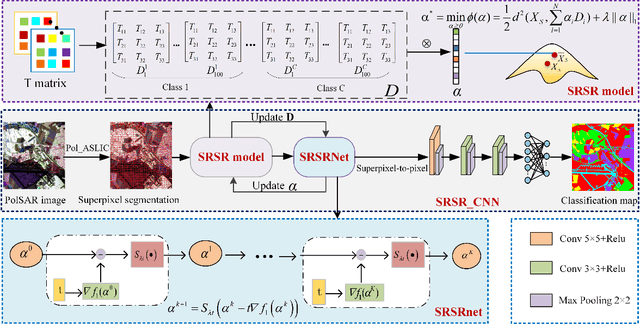
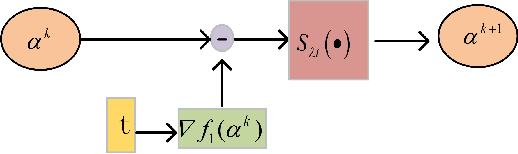
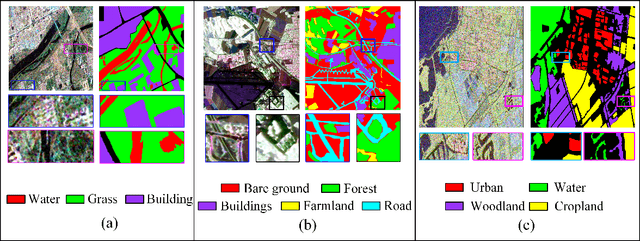
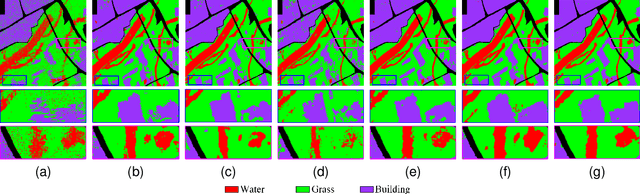
Deep learning is an effective end-to-end method for Polarimetric Synthetic Aperture Radar(PolSAR) image classification, but it lacks the guidance of related mathematical principle and is essentially a black-box model. In addition, existing deep models learn features in Euclidean space, where PolSAR complex matrix is commonly converted into a complex-valued vector as the network input, distorting matrix structure and channel relationship. However, the complex covariance matrix is Hermitian positive definite (HPD), and resides on a Riemannian manifold instead of a Euclidean one. Existing methods cannot measure the geometric distance of HPD matrices and easily cause some misclassifications due to inappropriate Euclidean measures. To address these issues, we propose a novel Riemannian Sparse Representation Learning Network (SRSR CNN) for PolSAR images. Firstly, a superpixel-based Riemannian Sparse Representation (SRSR) model is designed to learn the sparse features with Riemannian metric. Then, the optimization procedure of the SRSR model is inferred and further unfolded into an SRSRnet, which can automatically learn the sparse coefficients and dictionary atoms. Furthermore, to learn contextual high-level features, a CNN-enhanced module is added to improve classification performance. The proposed network is a Sparse Representation (SR) guided deep learning model, which can directly utilize the covariance matrix as the network input, and utilize Riemannian metric to learn geometric structure and sparse features of complex matrices in Riemannian space. Experiments on three real PolSAR datasets demonstrate that the proposed method surpasses state-of-the-art techniques in ensuring accurate edge details and correct region homogeneity for classification.