 Add to Chrome
 Add to Firefox
 Add to Edge
TD-DPO: Difference-Aware Preference Optimization for Mitigating Sycophancy in Clinical Autism Intervention Dialogue
Jul 17, 2026
The sycophancy of large language models can increase the safety risk in intervention dialogue for autistic children. Supervised fine-tuning can somewhat reduce sycophancy, but relying solely on positive examples is often insufficient to identify and correct failure patterns. We observe that sycophancy behaviors can often be localized to a limited span within the model response. In this regime, sequence-level preference optimization can over-update preference-irrelevant tokens and degrade intervention ability. To address this, we propose the \textbf{M}inimal \textbf{E}dit \textbf{D}ata \textbf{A}ugmentation (MEDA) strategy to construct controlled, stable, minimal edit preference pairs and \textbf{T}oken-level \textbf{D}ifference \textbf{D}irect \textbf{P}reference \textbf{O}ptimization (TD-DPO), which upweights difference tokens between chosen and rejected responses while downweighting shared tokens to suppress background drift. Extensive experiments across multiple backbones and evaluators show that TD-DPO achieves a better trade-off between sycophancy mitigation and intervention ability retention in our offline settings, highlighting its potential as a practical alignment approach for autism intervention.

A Simple Review of EEG Foundation Models: Datasets, Advancements and Future Perspectives
Apr 24, 2025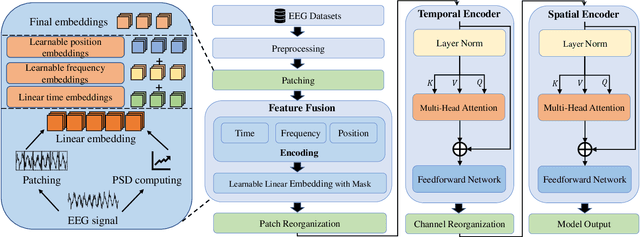
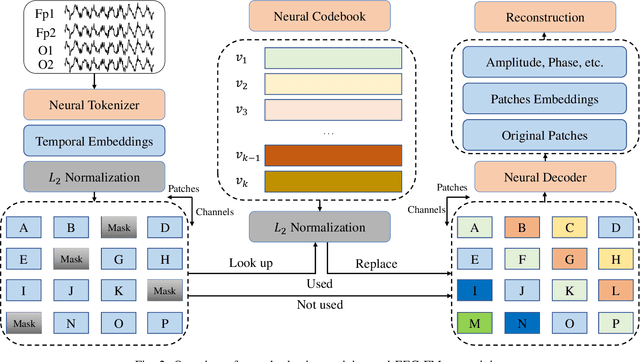
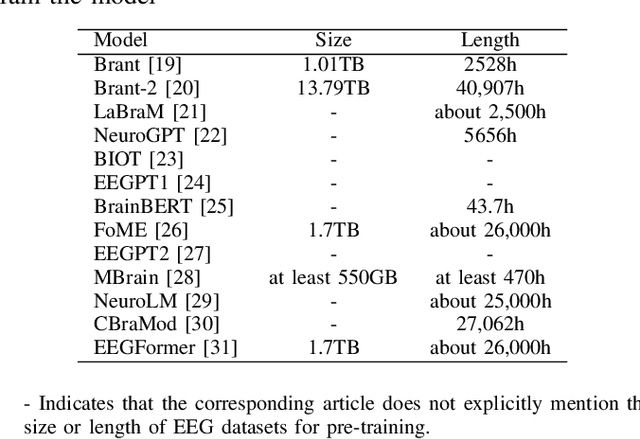
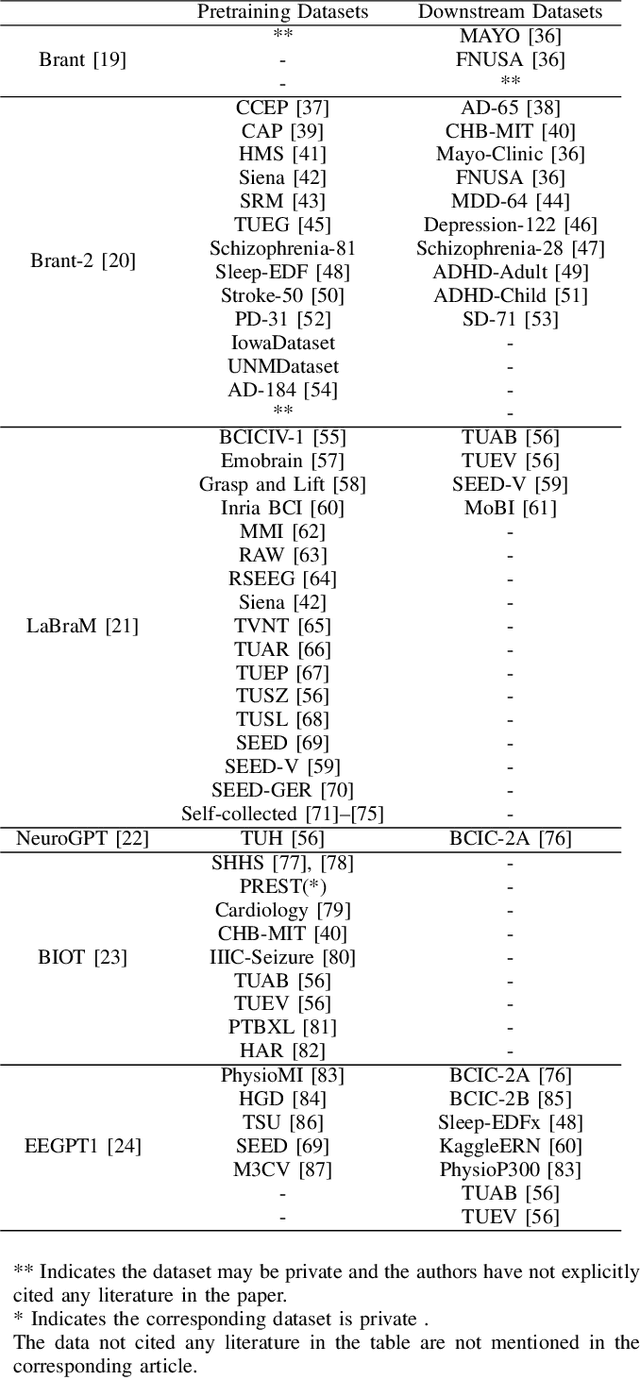
Electroencephalogram (EEG) signals play a crucial role in understanding brain activity and diagnosing neurological disorders. This review focuses on the recent development of EEG foundation models(EEG-FMs), which have shown great potential in processing and analyzing EEG data. We discuss various EEG-FMs, including their architectures, pre-training strategies, their pre-training and downstream datasets and other details. The review also highlights the challenges and future directions in this field, aiming to provide a comprehensive overview for researchers and practitioners interested in EEG analysis and related EEG-FMs.