 Add to Chrome
 Add to Firefox
 Add to Edge
SortScrews: A Dataset and Baseline for Real-time Screw Classification
Mar 13, 2026
Automatic identification of screw types is important for industrial automation, robotics, and inventory management. However, publicly available datasets for screw classification are scarce, particularly for controlled single-object scenarios commonly encountered in automated sorting systems. In this work, we introduce $\textbf{SortScrews}$, a dataset for casewise visual classification of screws. The dataset contains 560 RGB images at $512\times512$ resolution covering six screw types and a background class. Images are captured using a standardized acquisition setup and include mild variations in lighting and camera perspective across four capture settings. To facilitate reproducible research and dataset expansion, we also provide a reusable data collection script that allows users to easily construct similar datasets for custom hardware components using inexpensive camera setups. We establish baseline results using transfer learning with EfficientNet-B0 and ResNet-18 classifiers pretrained on ImageNet. In addition, we conduct a well-explored failure analysis. Despite the limited dataset size, these lightweight models achieve strong classification accuracy, demonstrating that controlled acquisition conditions enable effective learning even with relatively small datasets. The dataset, collection pipeline, and baseline training code are publicly available at https://github.com/ATATC/SortScrews.

Listen to Minority: Encrypted Traffic Classification for Class Imbalance with Contrastive Pre-Training
Sep 06, 2023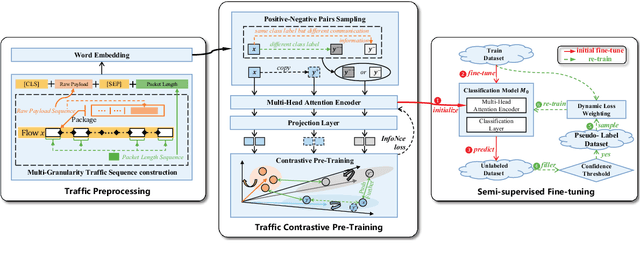
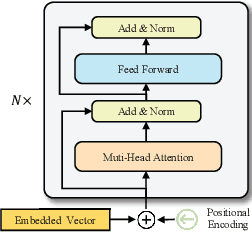
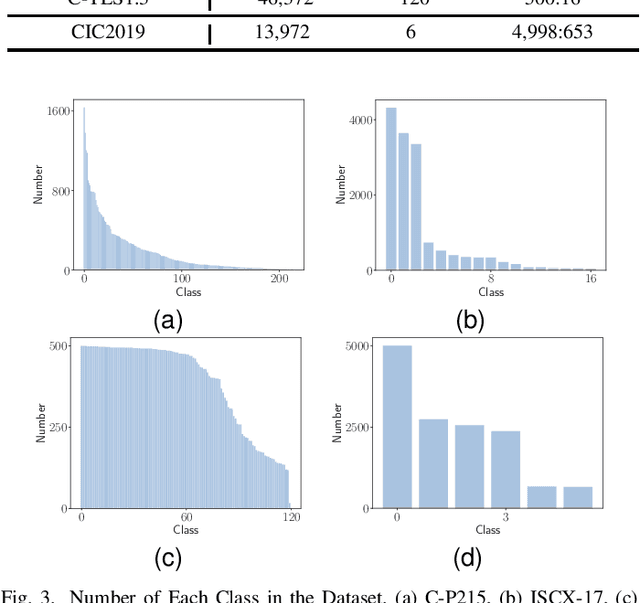
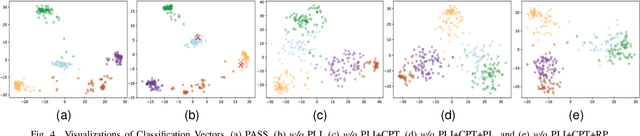
Mobile Internet has profoundly reshaped modern lifestyles in various aspects. Encrypted Traffic Classification (ETC) naturally plays a crucial role in managing mobile Internet, especially with the explosive growth of mobile apps using encrypted communication. Despite some existing learning-based ETC methods showing promising results, three-fold limitations still remain in real-world network environments, 1) label bias caused by traffic class imbalance, 2) traffic homogeneity caused by component sharing, and 3) training with reliance on sufficient labeled traffic. None of the existing ETC methods can address all these limitations. In this paper, we propose a novel Pre-trAining Semi-Supervised ETC framework, dubbed PASS. Our key insight is to resample the original train dataset and perform contrastive pre-training without using individual app labels directly to avoid label bias issues caused by class imbalance, while obtaining a robust feature representation to differentiate overlapping homogeneous traffic by pulling positive traffic pairs closer and pushing negative pairs away. Meanwhile, PASS designs a semi-supervised optimization strategy based on pseudo-label iteration and dynamic loss weighting algorithms in order to effectively utilize massive unlabeled traffic data and alleviate manual train dataset annotation workload. PASS outperforms state-of-the-art ETC methods and generic sampling approaches on four public datasets with significant class imbalance and traffic homogeneity, remarkably pushing the F1 of Cross-Platform215 with 1.31%, ISCX-17 with 9.12%. Furthermore, we validate the generality of the contrastive pre-training and pseudo-label iteration components of PASS, which can adaptively benefit ETC methods with diverse feature extractors.