 Add to Chrome
 Add to Firefox
 Add to Edge
eNavi: Event-based Imitation Policies for Low-Light Indoor Mobile Robot Navigation
Mar 15, 2026
Event cameras provide high dynamic range and microsecond-level temporal resolution, making them well-suited for indoor robot navigation, where conventional RGB cameras degrade under fast motion or low-light conditions. Despite advances in event-based perception spanning detection, SLAM, and pose estimation, there remains limited research on end-to-end control policies that exploit the asynchronous nature of event streams. To address this gap, we introduce a real-world indoor person-following dataset collected using a TurtleBot 2 robot, featuring synchronized raw event streams, RGB frames, and expert control actions across multiple indoor maps, trajectories under both normal and low-light conditions. We further build a multimodal data preprocessing pipeline that temporally aligns event and RGB observations while reconstructing ground-truth actions from odometry to support high-quality imitation learning. Building on this dataset, we propose a late-fusion RGB-Event navigation policy that combines dual MobileNet encoders with a transformer-based fusion module trained via behavioral cloning. A systematic evaluation of RGB-only, Event-only, and RGB-Event fusion models across 12 training variations ranging from single-path imitation to general multi-path imitation shows that policies incorporating event data, particularly the fusion model, achieve improved robustness and lower action prediction error, especially in unseen low-light conditions where RGB-only models fail. We release the dataset, synchronization pipeline, and trained models at https://eventbasedvision.github.io/eNavi/

UDVideoQA: A Traffic Video Question Answering Dataset for Multi-Object Spatio-Temporal Reasoning in Urban Dynamics
Feb 24, 2026Understanding the complex, multi-agent dynamics of urban traffic remains a fundamental challenge for video language models. This paper introduces Urban Dynamics VideoQA, a benchmark dataset that captures the unscripted real-world behavior of dynamic urban scenes. UDVideoQA is curated from 16 hours of traffic footage recorded at multiple city intersections under diverse traffic, weather, and lighting conditions. It employs an event-driven dynamic blur technique to ensure privacy preservation without compromising scene fidelity. Using a unified annotation pipeline, the dataset contains 28K question-answer pairs generated across 8 hours of densely annotated video, averaging one question per second. Its taxonomy follows a hierarchical reasoning level, spanning basic understanding and attribution to event reasoning, reverse reasoning, and counterfactual inference, enabling systematic evaluation of both visual grounding and causal reasoning. Comprehensive experiments benchmark 10 SOTA VideoLMs on UDVideoQA and 8 models on a complementary video question generation benchmark. Results reveal a persistent perception-reasoning gap, showing models that excel in abstract inference often fail with fundamental visual grounding. While models like Gemini Pro achieve the highest zero-shot accuracy, fine-tuning the smaller Qwen2.5-VL 7B model on UDVideoQA bridges this gap, achieving performance comparable to proprietary systems. In VideoQGen, Gemini 2.5 Pro, and Qwen3 Max generate the most relevant and complex questions, though all models exhibit limited linguistic diversity, underscoring the need for human-centric evaluation. The UDVideoQA suite, including the dataset, annotation tools, and benchmarks for both VideoQA and VideoQGen, provides a foundation for advancing robust, privacy-aware, and real-world multimodal reasoning. UDVideoQA is available at https://ud-videoqa.github.io/UD-VideoQA/UD-VideoQA/.
eSkiTB: A Synthetic Event-based Dataset for Tracking Skiers
Jan 10, 2026Tracking skiers in RGB broadcast footage is challenging due to motion blur, static overlays, and clutter that obscure the fast-moving athlete. Event cameras, with their asynchronous contrast sensing, offer natural robustness to such artifacts, yet a controlled benchmark for winter-sport tracking has been missing. We introduce event SkiTB (eSkiTB), a synthetic event-based ski tracking dataset generated from SkiTB using direct video-to-event conversion without neural interpolation, enabling an iso-informational comparison between RGB and event modalities. Benchmarking SDTrack (spiking transformer) against STARK (RGB transformer), we find that event-based tracking is substantially resilient to broadcast clutter in scenes dominated by static overlays, achieving 0.685 IoU, outperforming RGB by +20.0 points. Across the dataset, SDTrack attains a mean IoU of 0.711, demonstrating that temporal contrast is a reliable cue for tracking ballistic motion in visually congested environments. eSkiTB establishes the first controlled setting for event-based tracking in winter sports and highlights the promise of event cameras for ski tracking. The dataset and code will be released at https://github.com/eventbasedvision/eSkiTB.
Eyes on the Road: State-of-the-Art Video Question Answering Models Assessment for Traffic Monitoring Tasks
Dec 02, 2024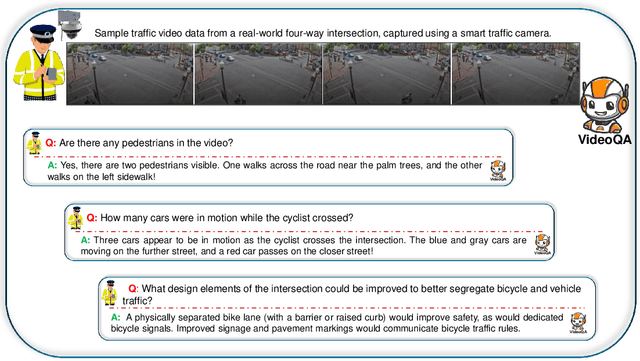
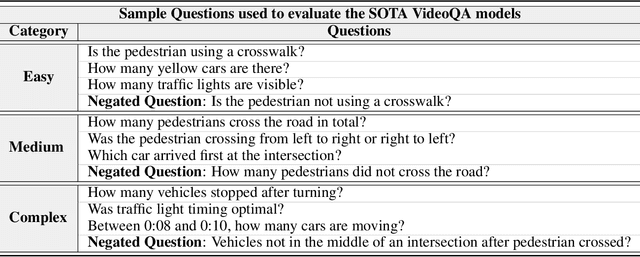
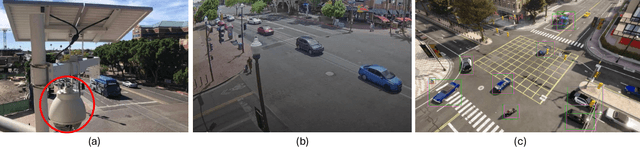
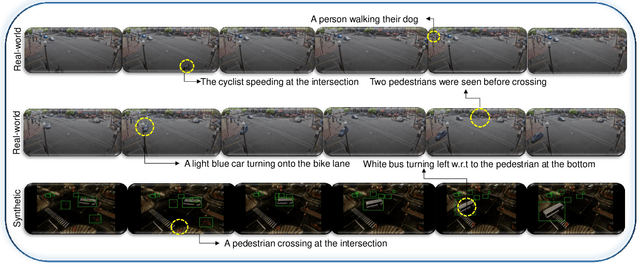
Recent advances in video question answering (VideoQA) offer promising applications, especially in traffic monitoring, where efficient video interpretation is critical. Within ITS, answering complex, real-time queries like "How many red cars passed in the last 10 minutes?" or "Was there an incident between 3:00 PM and 3:05 PM?" enhances situational awareness and decision-making. Despite progress in vision-language models, VideoQA remains challenging, especially in dynamic environments involving multiple objects and intricate spatiotemporal relationships. This study evaluates state-of-the-art VideoQA models using non-benchmark synthetic and real-world traffic sequences. The framework leverages GPT-4o to assess accuracy, relevance, and consistency across basic detection, temporal reasoning, and decomposition queries. VideoLLaMA-2 excelled with 57% accuracy, particularly in compositional reasoning and consistent answers. However, all models, including VideoLLaMA-2, faced limitations in multi-object tracking, temporal coherence, and complex scene interpretation, highlighting gaps in current architectures. These findings underscore VideoQA's potential in traffic monitoring but also emphasize the need for improvements in multi-object tracking, temporal reasoning, and compositional capabilities. Enhancing these areas could make VideoQA indispensable for incident detection, traffic flow management, and responsive urban planning. The study's code and framework are open-sourced for further exploration: https://github.com/joe-rabbit/VideoQA_Pilot_Study
KAT to KANs: A Review of Kolmogorov-Arnold Networks and the Neural Leap Forward
Nov 15, 2024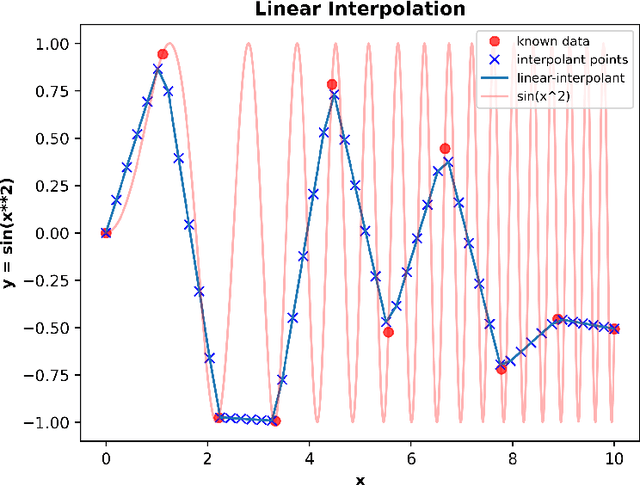
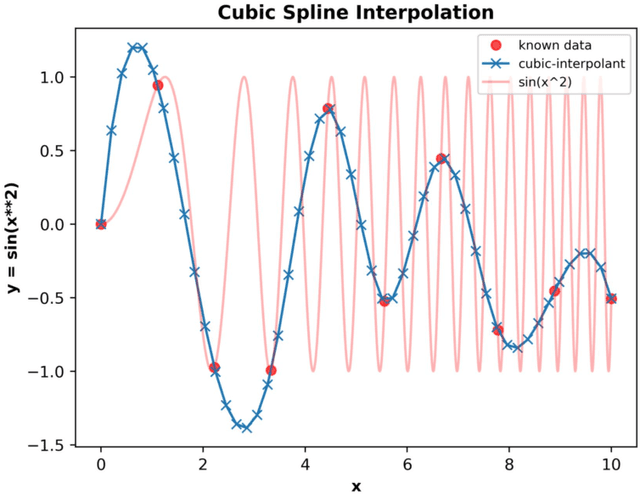
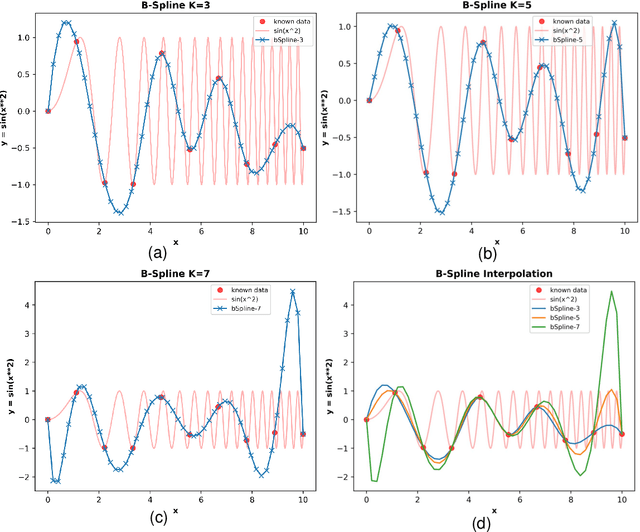
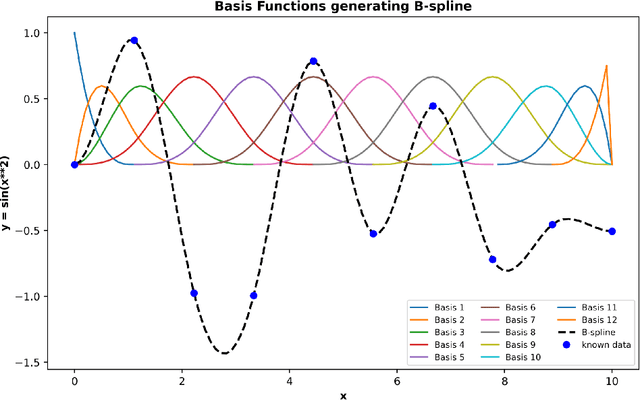
The curse of dimensionality poses a significant challenge to modern multilayer perceptron-based architectures, often causing performance stagnation and scalability issues. Addressing this limitation typically requires vast amounts of data. In contrast, Kolmogorov-Arnold Networks have gained attention in the machine learning community for their bold claim of being unaffected by the curse of dimensionality. This paper explores the Kolmogorov-Arnold representation theorem and the mathematical principles underlying Kolmogorov-Arnold Networks, which enable their scalability and high performance in high-dimensional spaces. We begin with an introduction to foundational concepts necessary to understand Kolmogorov-Arnold Networks, including interpolation methods and Basis-splines, which form their mathematical backbone. This is followed by an overview of perceptron architectures and the Universal approximation theorem, a key principle guiding modern machine learning. This is followed by an overview of the Kolmogorov-Arnold representation theorem, including its mathematical formulation and implications for overcoming dimensionality challenges. Next, we review the architecture and error-scaling properties of Kolmogorov-Arnold Networks, demonstrating how these networks achieve true freedom from the curse of dimensionality. Finally, we discuss the practical viability of Kolmogorov-Arnold Networks, highlighting scenarios where their unique capabilities position them to excel in real-world applications. This review aims to offer insights into Kolmogorov-Arnold Networks' potential to redefine scalability and performance in high-dimensional learning tasks.