 Add to Chrome
 Add to Firefox
 Add to Edge
Catalyst Diffusion Transformer: Generative Inverse Design of Heterogeneous Catalysts
Jul 27, 2026
The vast chemical design space and complex, interdependent design variables make catalyst discovery for targeted properties highly labor- and resource-intensive. Although generative models have emerged as a promising solution, existing approaches are generally limited to single-property conditioning or narrow chemical spaces. Here, we present Catalyst Diffusion Transformer (CatDiT), a unified framework for inverse catalyst design that generates valid and novel structures ranging from intermetallic alloys to oxide surfaces. By learning compressed latent representations, CatDiT enables efficient training and rapid sampling while supporting simultaneous conditioning on adsorbate type, binding energy, and catalyst class. The model provides reliable control of discrete properties and directional control of continuous properties, enriching candidate pools for reaction-specific catalyst discovery. As a representative application, multi-conditional generation for the nitrogen reduction reaction (NRR) yields 28 density functional theory (DFT)-relaxed alloy candidates that satisfy the target activity window and lie above the pure-metal *N-*H scaling line, corresponding to a ~1.5-fold enrichment over the source distribution. These results establish CatDiT as a practical and scalable approach for property-directed catalyst inverse design and targeted catalyst generation.

CatRetriever: Contrastive Representation Learning for Slab-to-Bulk Retrieval in Generative Catalyst Discovery
Jul 13, 2026Inverse design is an emerging data-driven paradigm for efficiently navigating vast chemical spaces to discover new materials with targeted properties, and in the context of heterogeneous catalysis, surface generative models have recently advanced this goal by directly generating catalyst surface-adsorbate structures. However, these models typically operate at the slab level and do not provide the corresponding parent bulk structure, making it difficult to assess bulk-dependent properties such as formation energy, surface energy, crystallographic symmetry, and synthesizability. Here, we address this missing slab-to-bulk connection as a retrieval problem and introduce CatRetriever, a contrastive representation learning model that aligns slab and bulk crystal representations in a shared latent space. From a slab query, CatRetriever accurately retrieves plausible parent bulk candidates with R@1 > 91% and R@3 > 98% on both the in-distribution and holdout evaluation sets. We further extend the CatRetriever framework into an adsorption energy targeted bulk discovery pipeline that combines bulk retrieval, generative search space expansion, and adsorption energy distribution analysis. This workflow evaluates candidates by both structural compatibility with the query slab and their ability to access the target adsorption energy range across diverse surface environments. CatRetriever therefore provides a scalable route for connecting catalyst generative models with physically plausible and adsorption energy compatible bulk catalyst discovery.
Toward Controllable Catalyst Inverse Design via Large-Scale Autoregressive Pretraining
Jun 16, 2026Inverse design of heterogeneous catalysts remains challenging because catalyst surfaces exhibit substantial structural complexity with coupled surface-adsorbate interactions across a vast chemical space that is difficult to explore efficiently through conventional screening alone. Although machine learning-based high-throughput screening has accelerated catalyst discovery, its efficiency inevitably declines as the search space grows, motivating the development of generative models that can directly construct catalysts with target properties. Here, we present a conditional catalyst generative model based on the Generative Pretrained Transformer architecture with a numerical embedding layer that enables the generation of catalyst structures conditioned on both categorical and continuous properties within a single autoregressive framework. The model was pretrained on 133 million catalyst structures and subsequently fine-tuned on approximately 460,000 optimized structures with associated categorical properties and binding energies for conditional generation. The resulting model achieved 98% structural validity, 95% optimization validity, and high categorical condition fidelity, with a 93 % joint match rate for adsorbate type and composition. For binding energy conditioning, the match rate of approximately 20% represents a four-fold improvement over the baseline training distribution, and the generated distributions shift systematically toward the target values, enabling a 1.5 to 4-fold improvement in screening efficiency for reaction-targeted catalyst discovery without additional fine-tuning. These results show that large-scale autoregressive pre-training, combined with explicit property conditioning, provides a practical route toward controllable catalyst generation and accelerated catalysts discovery.
MIND: AI Co-Scientist for Material Research
Apr 15, 2026Large language models (LLMs) have enabled agentic AI systems for scientific discovery, but most approaches remain limited to textbased reasoning without automated experimental verification. We propose MIND, an LLM-driven framework for automated hypothesis validation in materials research. MIND organizes the scientific discovery process into hypothesis refinement, experimentation, and debate-based validation within a multi-agent pipeline. For experimental verification, the system integrates Machine Learning Interatomic Potentials, particularly SevenNet-Omni, enabling scalable in-silico experiments. We also provide a web-based user interface for automated hypothesis testing. The modular design allows additional experimental modules to be integrated, making the framework adaptable to broader scientific workflows. The code is available at: https://github.com/IMMS-Ewha/MIND, and a demonstration video at: https://youtu.be/lqiFe1OQzN4.
Optimal trajectory-guided stochastic co-optimization for e-fuel system design and real-time operation
Mar 03, 2026E-fuels are promising long-term energy carriers supporting the net-zero transition. However, the large combinatorial design-operation spaces under renewable uncertainty make the use of mathematical programming impractical for co-optimizing e-fuel production systems. Here, we present MasCOR, a machine-learning-assisted co-optimization framework that learns from global operational trajectories. By encoding system design and renewable trends, a single MasCOR agent generalizes dynamic operation across diverse configurations and scenarios, substantially simplifying design-operation co-optimization under uncertainty. Benchmark comparisons against state-of-the-art reinforcement learning baselines demonstrate near-optimal performance, while computational costs are substantially lower than those of mathematical programming, enabling rapid parallel evaluation of designs within the co-optimization loop. This framework enables rapid screening of feasible design spaces together with corresponding operational policies. When applied to four potential European sites targeting e-methanol production, MasCOR shows that most locations benefit from reducing system load below 50 MW to achieve carbon-neutral methanol production, with production costs of 1.0-1.2 USD per kg. In contrast, Dunkirk (France), with limited renewable availability and high grid prices, favors system loads above 200 MW and expanded storage to exploit dynamic grid exchange and hydrogen sales to the market. These results underscore the value of the MasCOR framework for site-specific guidance from system design to real-time operation.
Materials Discovery with Extreme Properties via AI-Driven Combinatorial Chemistry
Mar 21, 2023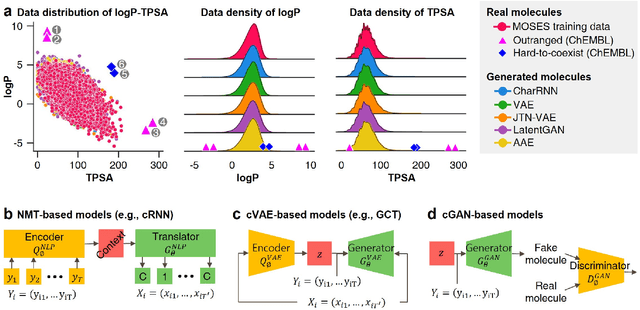
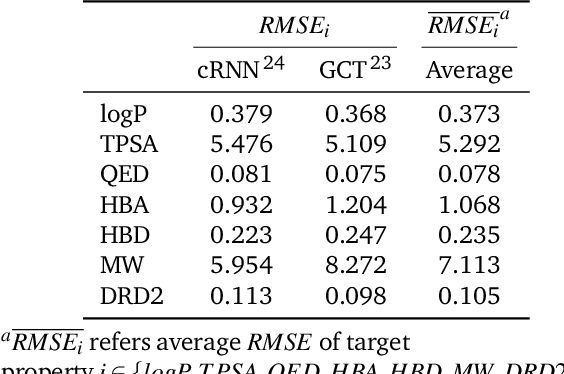
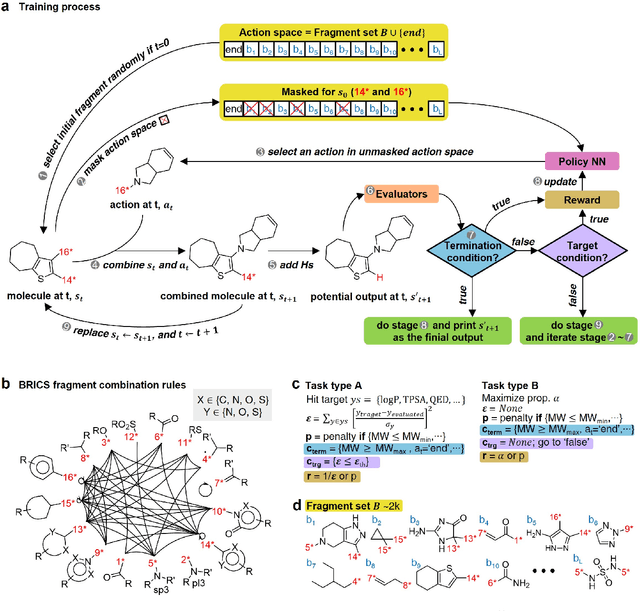
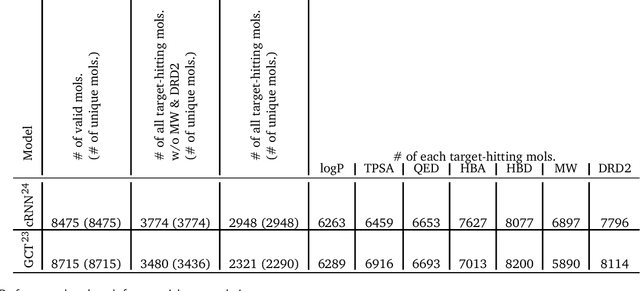
The goal of most materials discovery is to discover materials that are superior to those currently known. Fundamentally, this is close to extrapolation, which is a weak point for most machine learning models that learn the probability distribution of data. Herein, we develop AI-driven combinatorial chemistry, which is a rule-based inverse molecular designer that does not rely on data. Since our model has the potential to generate all possible molecular structures that can be obtained from combinations of molecular fragments, unknown materials with superior properties can be discovered. We theoretically and empirically demonstrate that our model is more suitable for discovering better materials than probability distribution-learning models. In an experiment aimed at discovering molecules that hit seven target properties, our model discovered 1,315 of all target-hitting molecules and 7,629 of five target-hitting molecules out of 100,000 trials, whereas the probability distribution-learning models failed. To illustrate the performance in actual problems, we also demonstrate that our models work well on two practical applications: discovering protein docking materials and HIV inhibitors.
Optimal Planning of Hybrid Energy Storage Systems using Curtailed Renewable Energy through Deep Reinforcement Learning
Dec 12, 2022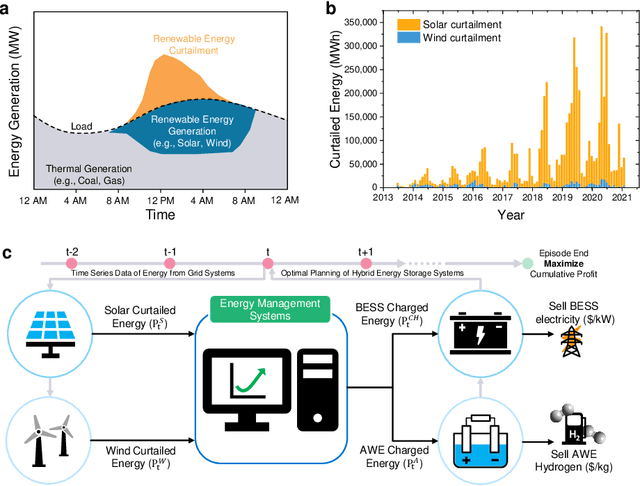
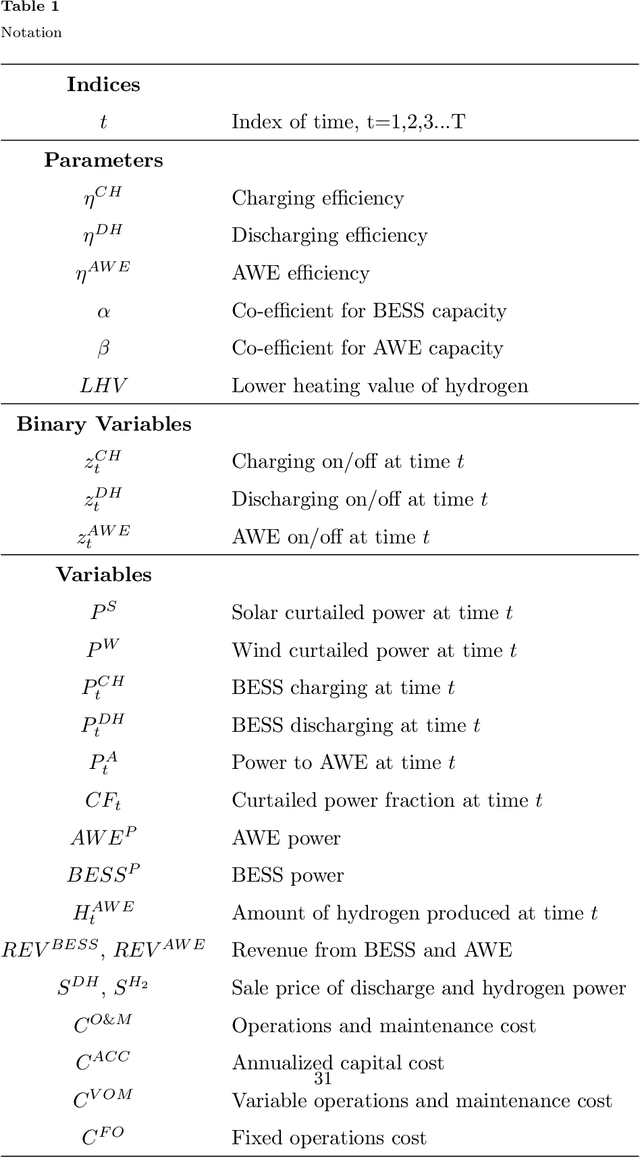
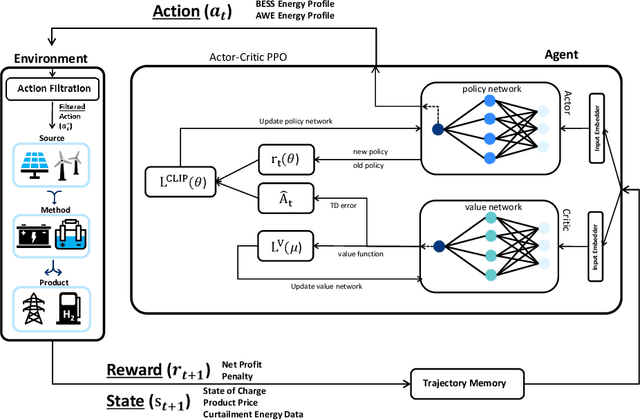
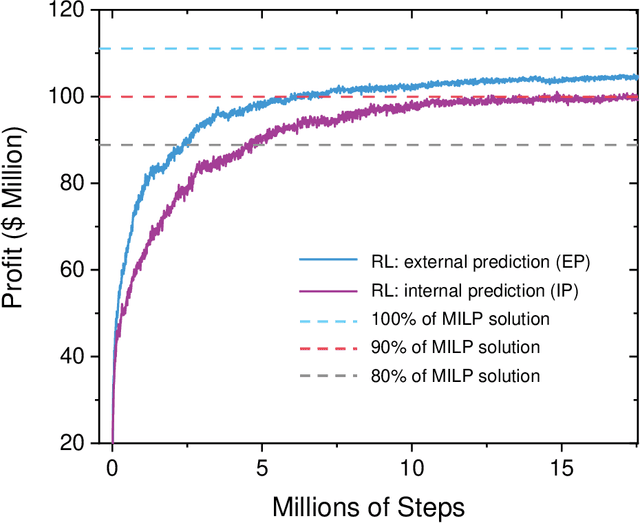
Energy management systems (EMS) are becoming increasingly important in order to utilize the continuously growing curtailed renewable energy. Promising energy storage systems (ESS), such as batteries and green hydrogen should be employed to maximize the efficiency of energy stakeholders. However, optimal decision-making, i.e., planning the leveraging between different strategies, is confronted with the complexity and uncertainties of large-scale problems. Here, we propose a sophisticated deep reinforcement learning (DRL) methodology with a policy-based algorithm to realize the real-time optimal ESS planning under the curtailed renewable energy uncertainty. A quantitative performance comparison proved that the DRL agent outperforms the scenario-based stochastic optimization (SO) algorithm, even with a wide action and observation space. Owing to the uncertainty rejection capability of the DRL, we could confirm a robust performance, under a large uncertainty of the curtailed renewable energy, with a maximizing net profit and stable system. Action-mapping was performed for visually assessing the action taken by the DRL agent according to the state. The corresponding results confirmed that the DRL agent learns the way like what a human expert would do, suggesting reliable application of the proposed methodology.
Generative chemical transformer: attention makes neural machine learn molecular geometric structures via text
Feb 27, 2021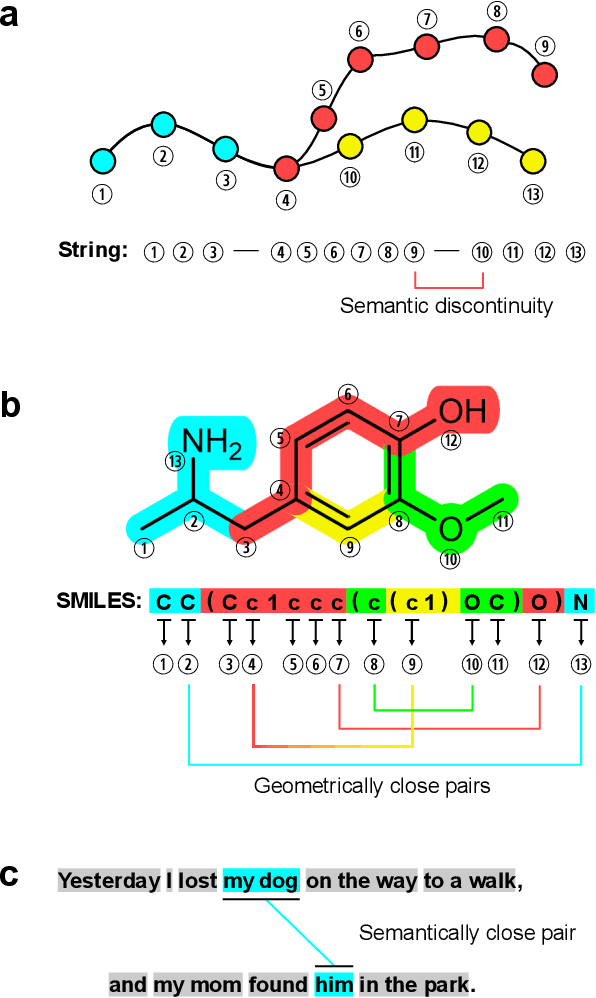
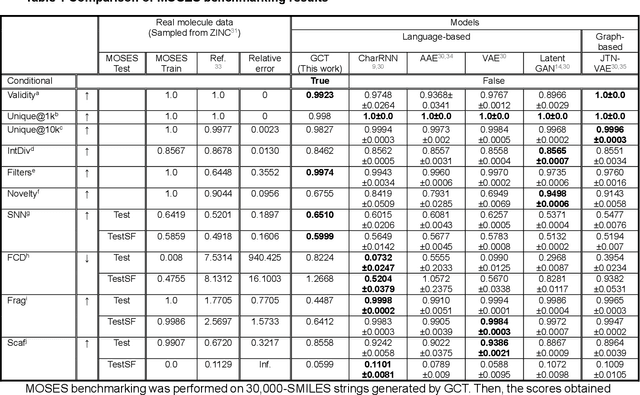
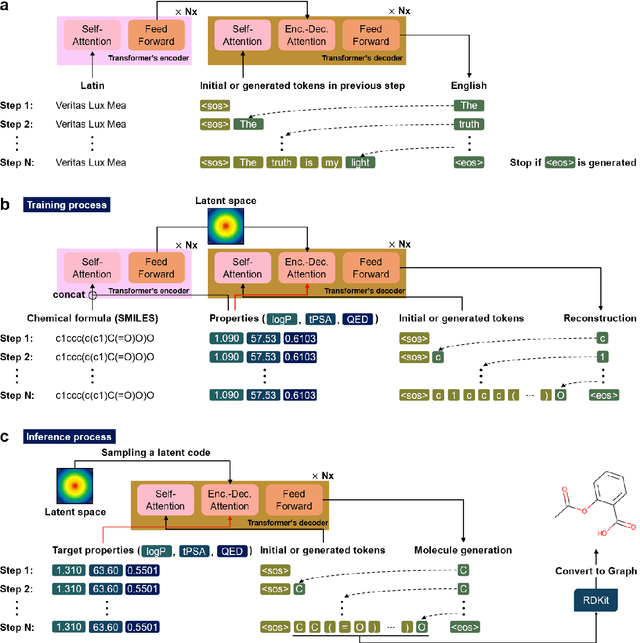
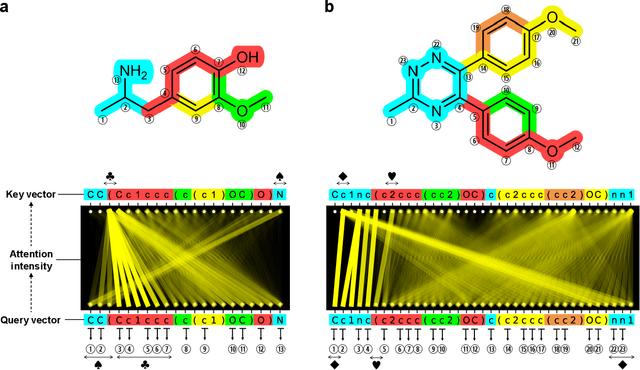
Chemical formula is an artificial language that expresses molecules as text. Neural machines that have learned chemical language can be used as a tool for inverse molecular design. Here, we propose a neural machine that creates molecules that meet some desired conditions based on a deep understanding of chemical language (generative chemical Transformer, GCT). Attention-mechanism in GCT allows a deeper understanding of molecular structures, beyond the limitations of chemical language itself that cause semantic discontinuity, by paying attention to characters sparsely. We investigate the significance of language models to inverse molecular design problems by quantitatively evaluating the quality of generated molecules. GCT generates highly realistic chemical strings that satisfy both a chemical rule and grammars of a language. Molecules parsed from generated strings simultaneously satisfy the multiple target properties and are various for a single condition set. GCT generates de novo molecules, and this is done in a short time that human experts cannot. These advances will contribute to improving the quality of human life by accelerating the process of desired material discovery.