 Add to Chrome
 Add to Firefox
 Add to Edge
Optimal trajectory-guided stochastic co-optimization for e-fuel system design and real-time operation
Mar 03, 2026
E-fuels are promising long-term energy carriers supporting the net-zero transition. However, the large combinatorial design-operation spaces under renewable uncertainty make the use of mathematical programming impractical for co-optimizing e-fuel production systems. Here, we present MasCOR, a machine-learning-assisted co-optimization framework that learns from global operational trajectories. By encoding system design and renewable trends, a single MasCOR agent generalizes dynamic operation across diverse configurations and scenarios, substantially simplifying design-operation co-optimization under uncertainty. Benchmark comparisons against state-of-the-art reinforcement learning baselines demonstrate near-optimal performance, while computational costs are substantially lower than those of mathematical programming, enabling rapid parallel evaluation of designs within the co-optimization loop. This framework enables rapid screening of feasible design spaces together with corresponding operational policies. When applied to four potential European sites targeting e-methanol production, MasCOR shows that most locations benefit from reducing system load below 50 MW to achieve carbon-neutral methanol production, with production costs of 1.0-1.2 USD per kg. In contrast, Dunkirk (France), with limited renewable availability and high grid prices, favors system loads above 200 MW and expanded storage to exploit dynamic grid exchange and hydrogen sales to the market. These results underscore the value of the MasCOR framework for site-specific guidance from system design to real-time operation.

Chemical Property-Guided Neural Networks for Naphtha Composition Prediction
Jun 02, 2023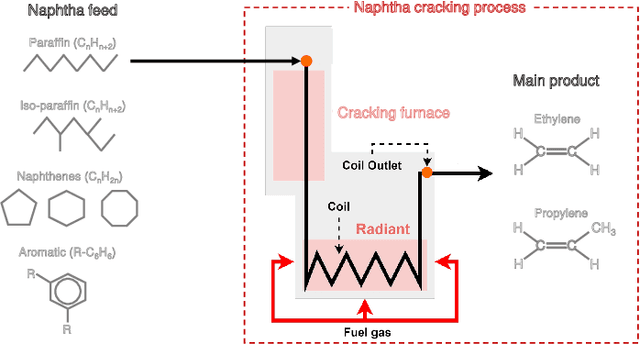
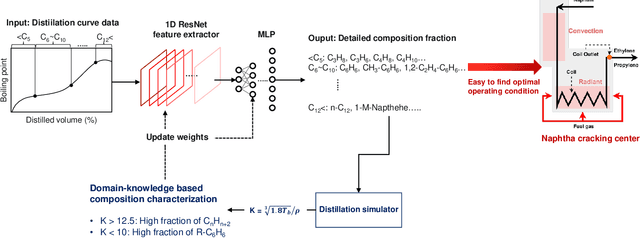
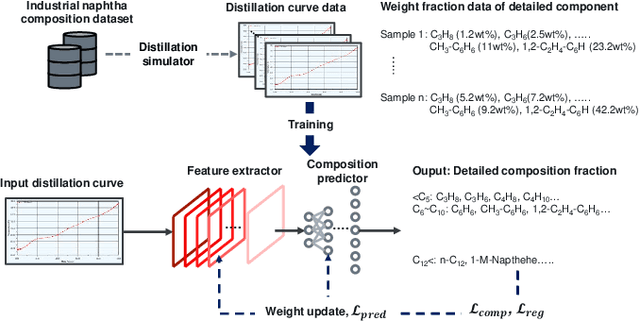
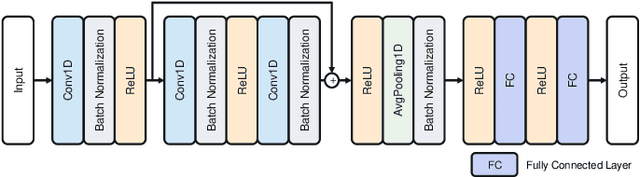
The naphtha cracking process heavily relies on the composition of naphtha, which is a complex blend of different hydrocarbons. Predicting the naphtha composition accurately is crucial for efficiently controlling the cracking process and achieving maximum performance. Traditional methods, such as gas chromatography and true boiling curve, are not feasible due to the need for pilot-plant-scale experiments or cost constraints. In this paper, we propose a neural network framework that utilizes chemical property information to improve the performance of naphtha composition prediction. Our proposed framework comprises two parts: a Watson K factor estimation network and a naphtha composition prediction network. Both networks share a feature extraction network based on Convolutional Neural Network (CNN) architecture, while the output layers use Multi-Layer Perceptron (MLP) based networks to generate two different outputs - Watson K factor and naphtha composition. The naphtha composition is expressed in percentages, and its sum should be 100%. To enhance the naphtha composition prediction, we utilize a distillation simulator to obtain the distillation curve from the naphtha composition, which is dependent on its chemical properties. By designing a loss function between the estimated and simulated Watson K factors, we improve the performance of both Watson K estimation and naphtha composition prediction. The experimental results show that our proposed framework can predict the naphtha composition accurately while reflecting real naphtha chemical properties.