 Add to Chrome
 Add to Firefox
 Add to Edge
Fingerprinting Inference Systems of Large Language Models
May 28, 2026
The behavior of LLMs does not depend solely on the model itself. Components of the inference system, such as the inference engine, attention backend, and hardware platform, subtly influence how inputs are processed. These components differ in their implementations and thereby induce small numerical deviations across systems when running the same model. While prior work has established the theoretical existence of such deviations, their security implications have remained unexplored. In this paper, we show that these deviations are characteristic of specific components and propagate to observable textual outputs, exposing the inference system to any party that can query the model. Building on this observation, we introduce a fingerprinting method that analyzes the prompt-response behavior of LLMs to identify components of the inference system. Our empirical evaluation demonstrates that the inference engine, attention backend, and underlying hardware platform can be identified reliably, even when the LLM is operated at non-zero temperature. We show that preventing fingerprinting is fundamentally hard, as it would require eliminating numerical differences between hardware and software stacks. We therefore propose partial mitigations and discuss their impact.

Hardware-Triggered Backdoors
Jan 29, 2026Machine learning models are routinely deployed on a wide range of computing hardware. Although such hardware is typically expected to produce identical results, differences in its design can lead to small numerical variations during inference. In this work, we show that these variations can be exploited to create backdoors in machine learning models. The core idea is to shape the model's decision function such that it yields different predictions for the same input when executed on different hardware. This effect is achieved by locally moving the decision boundary close to a target input and then refining numerical deviations to flip the prediction on selected hardware. We empirically demonstrate that these hardware-triggered backdoors can be created reliably across common GPU accelerators. Our findings reveal a novel attack vector affecting the use of third-party models, and we investigate different defenses to counter this threat.
No more Reviewer #2: Subverting Automatic Paper-Reviewer Assignment using Adversarial Learning
Mar 25, 2023
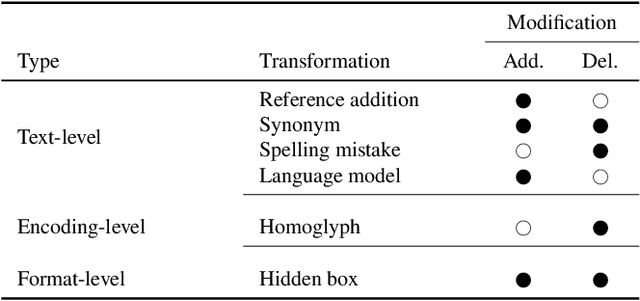

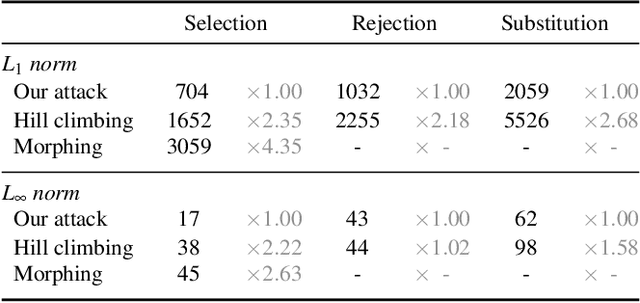
The number of papers submitted to academic conferences is steadily rising in many scientific disciplines. To handle this growth, systems for automatic paper-reviewer assignments are increasingly used during the reviewing process. These systems use statistical topic models to characterize the content of submissions and automate the assignment to reviewers. In this paper, we show that this automation can be manipulated using adversarial learning. We propose an attack that adapts a given paper so that it misleads the assignment and selects its own reviewers. Our attack is based on a novel optimization strategy that alternates between the feature space and problem space to realize unobtrusive changes to the paper. To evaluate the feasibility of our attack, we simulate the paper-reviewer assignment of an actual security conference (IEEE S&P) with 165 reviewers on the program committee. Our results show that we can successfully select and remove reviewers without access to the assignment system. Moreover, we demonstrate that the manipulated papers remain plausible and are often indistinguishable from benign submissions.