 Add to Chrome
 Add to Firefox
 Add to Edge
Direct Interval Propagation Methods using Neural-Network Surrogates for Uncertainty Quantification in Physical Systems Surrogate Model
Mar 22, 2026
In engineering, uncertainty propagation aims to characterise system outputs under uncertain inputs. For interval uncertainty, the goal is to determine output bounds given interval-valued inputs, which is critical for robust design optimisation and reliability analysis. However, standard interval propagation relies on solving optimisation problems that become computationally expensive for complex systems. Surrogate models alleviate this cost but typically replace only the evaluator within the optimisation loop, still requiring many inference calls. To overcome this limitation, we reformulate interval propagation as an interval-valued regression problem that directly predicts output bounds. We present a comprehensive study of neural network-based surrogate models, including multilayer perceptrons (MLPs) and deep operator networks (DeepONet), for this task. Three approaches are investigated: (i) naive interval propagation through standard architectures, (ii) bound propagation methods such as Interval Bound Propagation (IBP) and CROWN, and (iii) interval neural networks (INNs) with interval weights. Results show that these methods significantly improve computational efficiency over traditional optimisation-based approaches while maintaining accurate interval estimates. We further discuss practical limitations and open challenges in applying interval-based propagation methods.

Introducing DAIMYO: a first-time-right dynamic design architecture and its application to tail-sitter UAS development
Sep 15, 2024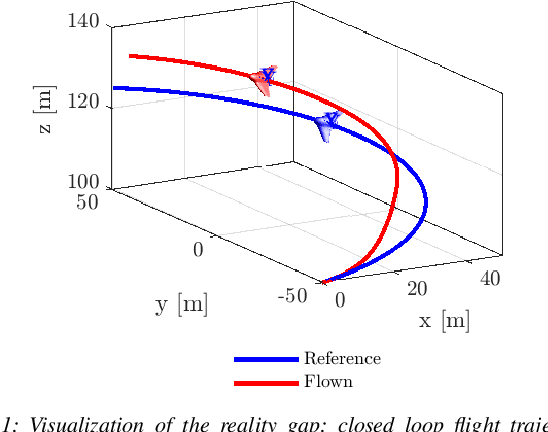


In recent years, there has been a notable evolution in various multidisciplinary design methodologies for dynamic systems. Among these approaches, a noteworthy concept is that of concurrent conceptual and control design or co-design. This approach involves the tuning of feedforward and/or feedback control strategies in conjunction with the conceptual design of the dynamic system. The primary aim is to discover integrated solutions that surpass those attainable through a disjointed or decoupled approach. This concurrent design paradigm exhibits particular promise in the context of hybrid unmanned aerial systems (UASs), such as tail-sitters, where the objectives of versatility (driven by control considerations) and efficiency (influenced by conceptual design) often present conflicting demands. Nevertheless, a persistent challenge lies in the potential disparity between the theoretical models that underpin the design process and the real-world operational environment, the so-called reality gap. Such disparities can lead to suboptimal performance when the designed system is deployed in reality. To address this issue, this paper introduces DAIMYO, a novel design architecture that incorporates a high-fidelity environment, which emulates real-world conditions, into the procedure in pursuit of a `first-time-right' design. The outcome of this innovative approach is a design procedure that yields versatile and efficient UAS designs capable of withstanding the challenges posed by the reality gap.