 Add to Chrome
 Add to Firefox
 Add to Edge
Accelerating nanodrug development in continuous flow systems using informed prediction models based on low-cost surrogate nanoparticles
Aug 06, 2026
The development of nanotherapeutics often involves extensive empirical optimization due to the sensitivity of nanoparticle properties, such as size and polydispersity index (PDI), to minor changes in process parameters. Factors like formulation concentration, flow rates, and mixing ratios can significantly influence clinical efficacy and therapeutic outcomes. The absence of predictive mathematical frameworks has made iterative experimental screening necessary, increasing both costs and development time. This study introduces and validates a predictive modeling approach based on shape constraints, aiming to enhance the estimation of nanoparticle characteristics across various process conditions. Using controlled microfluidic methods, liposomes and lipid nanoparticles were systematically prepared under varying lipid concentrations, flow rates, and aqueous-to-organic mixing ratios. The shape-constrained model, informed by both experimental data and expert knowledge, was subsequently validated for a pharmaceutical application using minimal empirical data. Results reveal that shape-constrained modeling facilitates accurate prediction of nanoparticle size and dispersity, reducing the need for extensive experimental workflows. This framework supports rational and efficient process development for manufacturing nanomedicine systems.

Automated Batch Distillation Process Simulation for a Large Hybrid Dataset for Deep Anomaly Detection
Apr 14, 2026Anomaly detection (AD) in chemical processes based on deep learning offers significant opportunities but requires large, diverse, and well-annotated training datasets that are rarely available from industrial operations. In a recent work, we introduced a large, fully annotated experimental dataset for batch distillation under normal and anomalous operating conditions. In the present study, we augment this dataset with a corresponding simulation dataset, creating a novel hybrid dataset. The simulation data is generated in an automated workflow with a novel Python-based process simulator that employs a tailored index-reduction strategy for the underlying differential-algebraic equations. Leveraging the rich metadata and structured anomaly annotations of the experimental database, experimental records are automatically translated into simulation scenarios. After calibration to a single reference experiment, the dynamics of the other experiments are well predicted. This enabled the fully automated, consistent generation of time-series data for a large number of experimental runs, covering both normal operation and a wide range of actuator- and control-related anomalies. The resulting hybrid dataset is released openly. From a process simulation perspective, this work demonstrates the automated, consistent simulation of large-scale experimental campaigns, using batch distillation as an example. From a data-driven AD perspective, the hybrid dataset provides a unique basis for simulation-to-experiment style transfer, the generation of pseudo-experimental data, and future research on deep AD methods in chemical process monitoring.
Capturing and incorporating expert knowledge into machine learning models for quality prediction in manufacturing
Feb 04, 2022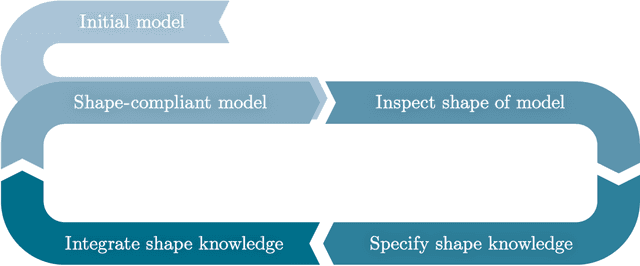
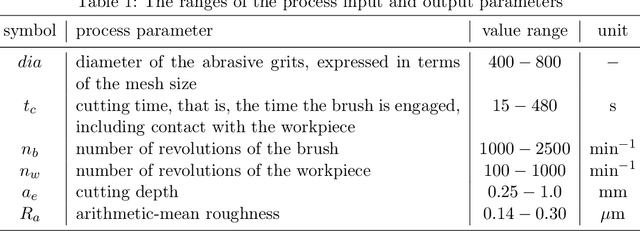
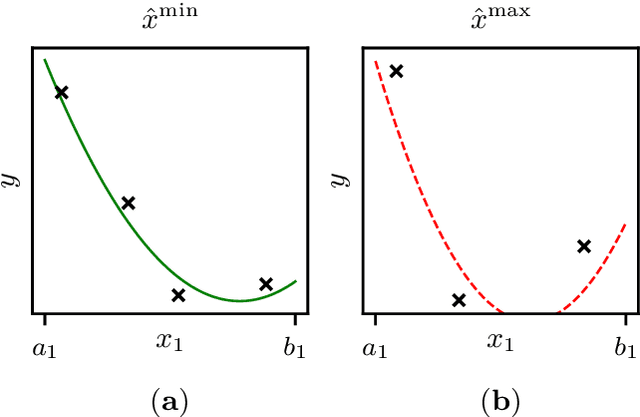
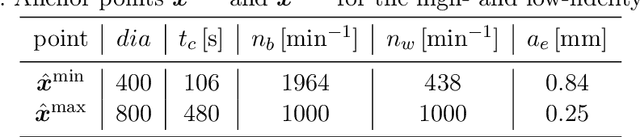
Increasing digitalization enables the use of machine learning methods for analyzing and optimizing manufacturing processes. A main application of machine learning is the construction of quality prediction models, which can be used, among other things, for documentation purposes, as assistance systems for process operators, or for adaptive process control. The quality of such machine learning models typically strongly depends on the amount and the quality of data used for training. In manufacturing, the size of available datasets before start of production is often limited. In contrast to data, expert knowledge commonly is available in manufacturing. Therefore, this study introduces a general methodology for building quality prediction models with machine learning methods on small datasets by integrating shape expert knowledge, that is, prior knowledge about the shape of the input-output relationship to be learned. The proposed methodology is applied to a brushing process with $125$ data points for predicting the surface roughness as a function of five process variables. As opposed to conventional machine learning methods for small datasets, the proposed methodology produces prediction models that strictly comply with all the expert knowledge specified by the involved process specialists. In particular, the direct involvement of process experts in the training of the models leads to a very clear interpretation and, by extension, to a high acceptance of the models. Another merit of the proposed methodology is that, in contrast to most conventional machine learning methods, it involves no time-consuming and often heuristic hyperparameter tuning or model selection step.
Calibrated Simplex Mapping Classification
Mar 04, 2021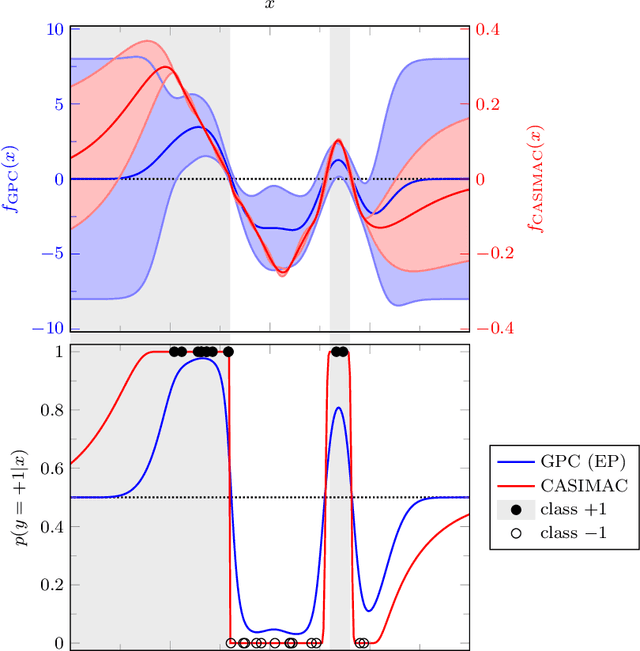
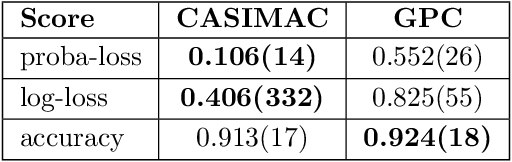
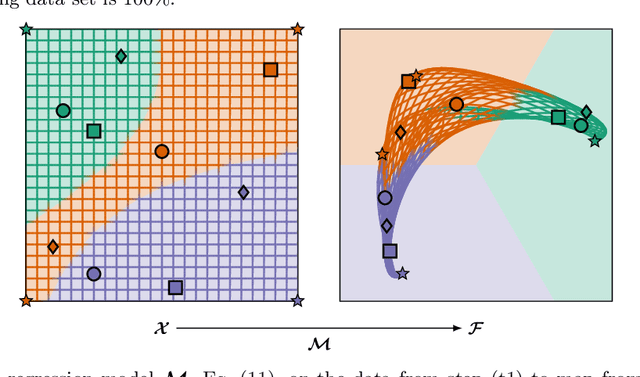
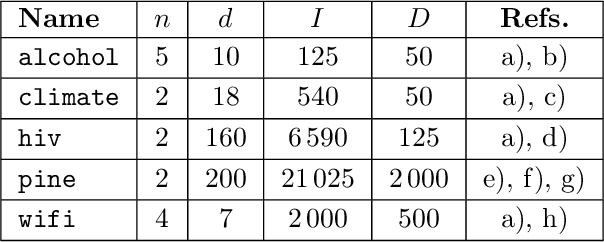
We propose a novel supervised multi-class/single-label classifier that maps training data onto a linearly separable latent space with a simplex-like geometry. This approach allows us to transform the classification problem into a well-defined regression problem. For its solution we can choose suitable distance metrics in feature space and regression models predicting latent space coordinates. A benchmark on various artificial and real-world data sets is used to demonstrate the calibration qualities and prediction performance of our classifier.
Compensating data shortages in manufacturing with monotonicity knowledge
Oct 29, 2020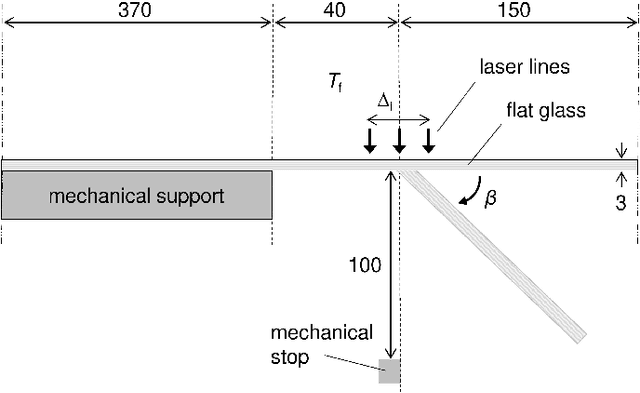

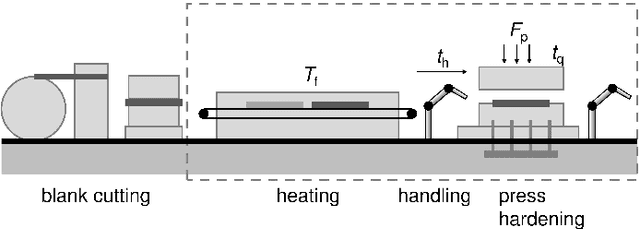
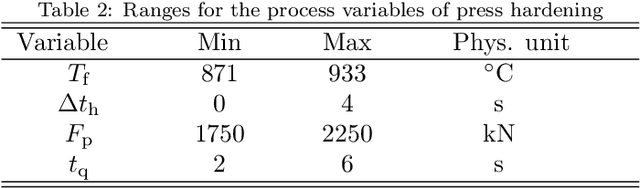
We present a regression method for enhancing the predictive power of a model by exploiting expert knowledge in the form of shape constraints, or more specifically, monotonicity constraints. Incorporating such information is particularly useful when the available data sets are small or do not cover the entire input space, as is often the case in manufacturing applications. We set up the regression subject to the considered monotonicity constraints as a semi-infinite optimization problem, and we propose an adaptive solution algorithm. The method is conceptually simple, applicable in multiple dimensions and can be extended to more general shape constraints. It is tested and validated on two real-world manufacturing processes, namely laser glass bending and press hardening of sheet metal. It is found that the resulting models both comply well with the expert's monotonicity knowledge and predict the training data accurately. The suggested approach leads to lower root-mean-squared errors than comparative methods from the literature for the sparse data sets considered in this work.