 Add to Chrome
 Add to Firefox
 Add to Edge
AnalogAgent: Self-Improving Analog Circuit Design Automation with LLM Agents
Mar 25, 2026
Recent advances in large language models (LLMs) suggest strong potential for automating analog circuit design. Yet most LLM-based approaches rely on a single-model loop of generation, diagnosis, and correction, which favors succinct summaries over domain-specific insight and suffers from context attrition that erases critical technical details. To address these limitations, we propose AnalogAgent, a training-free agentic framework that integrates an LLM-based multi-agent system (MAS) with self-evolving memory (SEM) for analog circuit design automation. AnalogAgent coordinates a Code Generator, Design Optimizer, and Knowledge Curator to distill execution feedback into an adaptive playbook in SEM and retrieve targeted guidance for subsequent generation, enabling cross-task transfer without additional expert feedback, databases, or libraries. Across established benchmarks, AnalogAgent achieves 92% Pass@1 with Gemini and 97.4% Pass@1 with GPT-5. Moreover, with compact models (e.g., Qwen-8B), it yields a +48.8% average Pass@1 gain across tasks and reaches 72.1% Pass@1 overall, indicating that AnalogAgent substantially strengthens open-weight models for high-quality analog circuit design automation.

Time-Series Analysis on Edge-AI Hardware for Healthcare Monitoring
Apr 21, 2025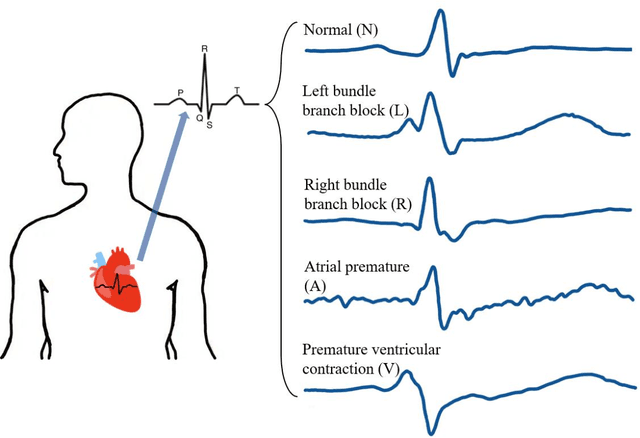
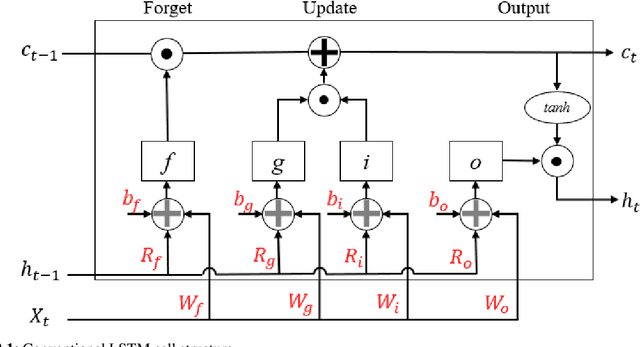
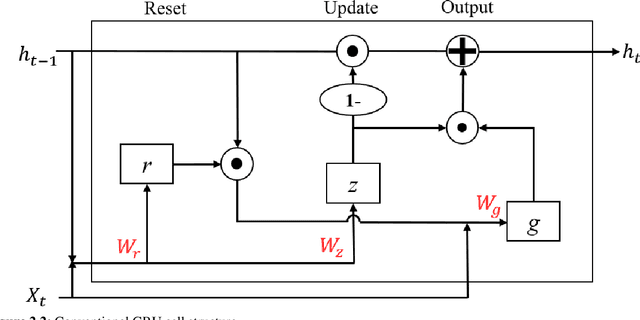
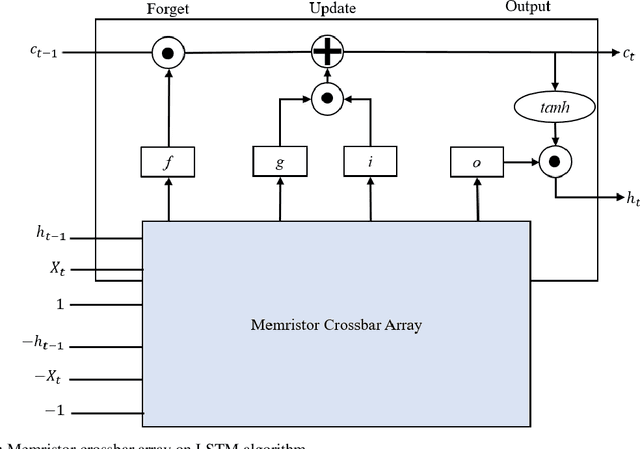
This project addresses the need for efficient, real-time analysis of biomedical signals such as electrocardiograms (ECG) and electroencephalograms (EEG) for continuous health monitoring. Traditional methods rely on long-duration data recording followed by offline analysis, which is power-intensive and delays responses to critical symptoms such as arrhythmia. To overcome these limitations, a time-domain ECG analysis model based on a novel dynamically-biased Long Short-Term Memory (DB-LSTM) neural network is proposed. This model supports simultaneous ECG forecasting and classification with high performance-achieving over 98% accuracy and a normalized mean square error below 1e-3 for forecasting, and over 97% accuracy with faster convergence and fewer training parameters for classification. To enable edge deployment, the model is hardware-optimized by quantizing weights to INT4 or INT3 formats, resulting in only a 2% and 6% drop in classification accuracy during training and inference, respectively, while maintaining full accuracy for forecasting. Extensive simulations using multiple ECG datasets confirm the model's robustness. Future work includes implementing the algorithm on FPGA and CMOS circuits for practical cardiac monitoring, as well as developing a digital hardware platform that supports flexible neural network configurations and on-chip online training for personalized healthcare applications.