 Add to Chrome
 Add to Firefox
 Add to Edge
EpiFlow: A framework for improving the utility of wastewater signals for disease forecasting
Aug 07, 2026
Wastewater-based surveillance is an effective tool for disease monitoring and can provide early warning of outbreaks. Although wastewater viral loads (WVL) correlate with disease burden, their utility for improving real-time forecasting remains under investigation. During the early phases of an epidemic, many indicators can effectively monitor disease spread, but their reliability may decline because of reporting fatigue and low prevalence. Hospital burden can vary substantially even during low-prevalence periods, making accurate forecasting of burden indicators essential for minimizing disease impacts. In this paper, we present principled approaches for processing wastewater data, characterizing its relationship with burden indicators, and generating real-time forecasts. We assess the predictability of WVL using entropy measures. We analyze the relationship between WVL and burden indicators using causality tests that capture temporal dynamics and the leading-indicator behavior of WVL. We incorporate these insights into a time-varying forecasting model that accounts for the evolving relationship between the signals. We also evaluate the effects of delays in WVL reporting through simulations. We test the utility of our methods by forecasting COVID-19 hospital admissions across Virginia and its health regions during periods of varying disease prevalence. Incorporating WVL improves forecast accuracy relative to baseline models, particularly during critical epidemic phases, and results in a 20 percentage point improvement in forecast coverage. Our results demonstrate that WVL signals can improve infectious disease forecasting even under conditions of low prevalence or delayed reporting.

IDOBE: Infectious Disease Outbreak forecasting Benchmark Ecosystem
Apr 20, 2026Epidemic forecasting has become an integral part of real-time infectious disease outbreak response. While collaborative ensembles composed of statistical and machine learning models have become the norm for real-time forecasting, standardized benchmark datasets for evaluating such methods are lacking. Further, there is limited understanding on performance of these methods for novel outbreaks with limited historical data. In this paper, we propose IDOBE, a curated collection of epidemiological time series focused on outbreak forecasting. IDOBE compiles from multiple data repositories spanning over a century of surveillance and across U.S. states and global locations. We perform derivative-based segmentation to generate over 10,000 outbreaks covering multiple outcomes such as cases and hospitalizations for 13 diseases. We consider a variety of information-theoretic and distributional measures to quantify the epidemiological diversity of the dataset. Finally, we perform multi-horizon short-term forecasting (1- to 4-week-ahead) through the progression of the outbreak using 11 baseline models and report on their performance. In addition to standard metrics such as NMSE and MAPE for point forecasts, we include probabilistic scoring rules such as Normalized Weighted Interval Score (NWIS) to quantify the performance. We find that MLP-based methods have the most robust performance, with statistical methods having a slight edge during the pre-peak phase. IDOBE dataset along with baselines are released publicly on https://github.com/NSSAC/IDOBE to enable standardized, reproducible benchmarking of outbreak forecasting methods.
Identification of Predictive Sub-Phenotypes of Acute Kidney Injury using Structured and Unstructured Electronic Health Record Data with Memory Networks
Apr 10, 2019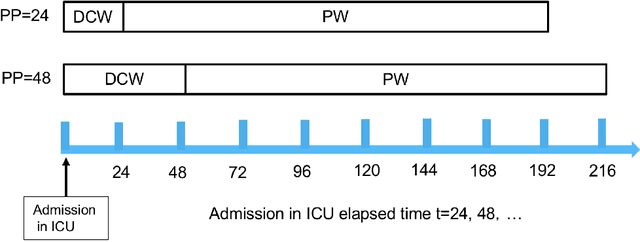
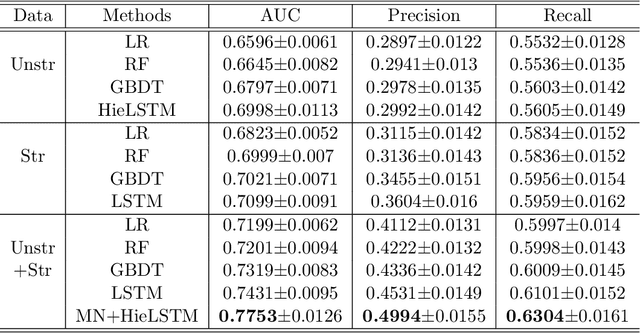
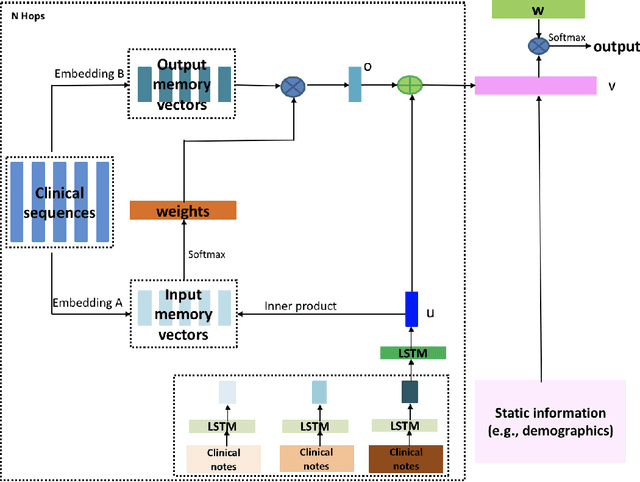
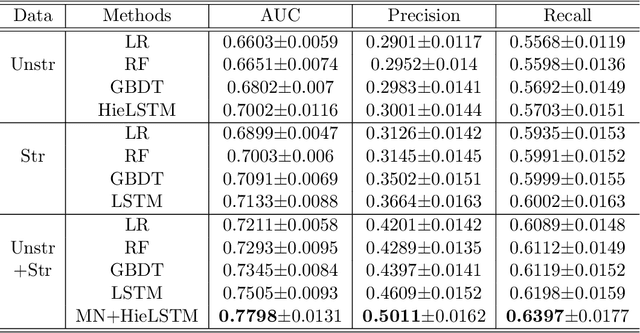
Acute Kidney Injury (AKI) is a common clinical syndrome characterized by the rapid loss of kidney excretory function, which aggravates the clinical severity of other diseases in a large number of hospitalized patients. Accurate early prediction of AKI can enable in-time interventions and treatments. However, AKI is highly heterogeneous, thus identification of AKI sub-phenotypes can lead to an improved understanding of the disease pathophysiology and development of more targeted clinical interventions. This study used a memory network-based deep learning approach to discover predictive AKI sub-phenotypes using structured and unstructured electronic health record (EHR) data of patients before AKI diagnosis. We leveraged a real world critical care EHR corpus including 37,486 ICU stays. Our approach identified three distinct sub-phenotypes: sub-phenotype I is with an average age of 63.03$ \pm 17.25 $ years, and is characterized by mild loss of kidney excretory function (Serum Creatinne (SCr) $1.55\pm 0.34$ mg/dL, estimated Glomerular Filtration Rate Test (eGFR) $107.65\pm 54.98$ mL/min/1.73$m^2$). These patients are more likely to develop stage I AKI. Sub-phenotype II is with average age 66.81$ \pm 10.43 $ years, and was characterized by severe loss of kidney excretory function (SCr $1.96\pm 0.49$ mg/dL, eGFR $82.19\pm 55.92$ mL/min/1.73$m^2$). These patients are more likely to develop stage III AKI. Sub-phenotype III is with average age 65.07$ \pm 11.32 $ years, and was characterized moderate loss of kidney excretory function and thus more likely to develop stage II AKI (SCr $1.69\pm 0.32$ mg/dL, eGFR $93.97\pm 56.53$ mL/min/1.73$m^2$). Both SCr and eGFR are significantly different across the three sub-phenotypes with statistical testing plus postdoc analysis, and the conclusion still holds after age adjustment.
Integrative Analysis of Patient Health Records and Neuroimages via Memory-based Graph Convolutional Network
Oct 07, 2018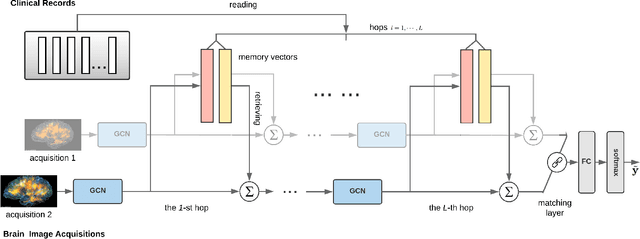
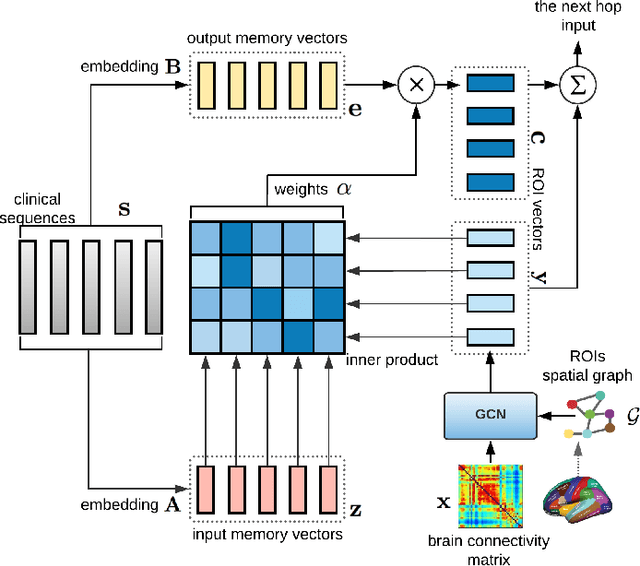
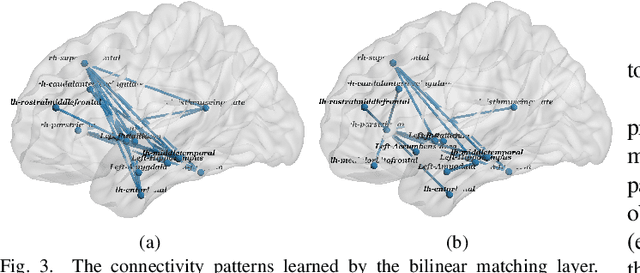
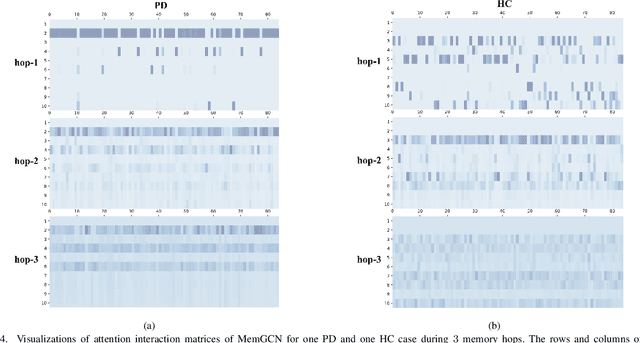
With the arrival of the big data era, more and more data are becoming readily available in various real-world applications and those data are usually highly heterogeneous. Taking computational medicine as an example, we have both Electronic Health Records (EHR) and medical images for each patient. For complicated diseases such as Parkinson's and Alzheimer's, both EHR and neuroimaging information are very important for disease understanding because they contain complementary aspects of the disease. However, EHR and neuroimage are completely different. So far the existing research has been mainly focusing on one of them. In this paper, we proposed a framework, Memory-Based Graph Convolution Network (MemGCN), to perform integrative analysis with such multi-modal data. Specifically, GCN is used to extract useful information from the patients' neuroimages. The information contained in the patient EHRs before the acquisition of each brain image is captured by a memory network because of its sequential nature. The information contained in each brain image is combined with the information read out from the memory network to infer the disease state at the image acquisition timestamp. To further enhance the analytical power of MemGCN, we also designed a multi-hop strategy that allows multiple reading and updating on the memory can be performed at each iteration. We conduct experiments using the patient data from the Parkinson's Progression Markers Initiative (PPMI) with the task of classification of Parkinson's Disease (PD) cases versus controls. We demonstrate that superior classification performance can be achieved with our proposed framework, comparing with existing approaches involving a single type of data.