 Add to Chrome
 Add to Firefox
 Add to Edge
PatientAct: Theory-Grounded Mental Health Client Simulation
Aug 13, 2026
LLM-based simulated clients are increasingly used to train novice counselors, evaluate LLM therapists, and generate synthetic data. However, current simulators produce overly cooperative clients that disclose too readily, accept therapeutic reframes without resistance, and resolve core issues within a single session. We trace these issues to profiles that lack causal depth and behavioral mechanisms that treat all content as equally accessible. We present PatientAct, a framework for client simulation grounded in established clinical theories. Our profiles integrate the 5Ps clinical case formulation, providing causal depth without tying the design to any single therapeutic modality. During simulation, profiles include a dynamic memory layer in which items carry trust thresholds (e.g., symptoms are available early, whereas formative memories require a sustained therapeutic alliance). At each turn, the client's emotional reaction and behavior are modeled before generating a response. If the therapist approaches gated content, PatientAct expresses resistance in terms of quantity, content, and style rather than defaulting to cooperation or a single resistance pattern. We evaluate our framework on 40 clinical situations and demonstrate that it generates diverse profiles with high clinical plausibility. Moreover, PatientAct significantly outperforms the baselines, yielding substantial gains in resistance quality and behavioral realism. Our code and data will be publicly available via github.com/Sahandfer/PatientHub.

Chatbots for Mental Health Support: Exploring the Impact of Emohaa on Reducing Mental Distress in China
Sep 21, 2022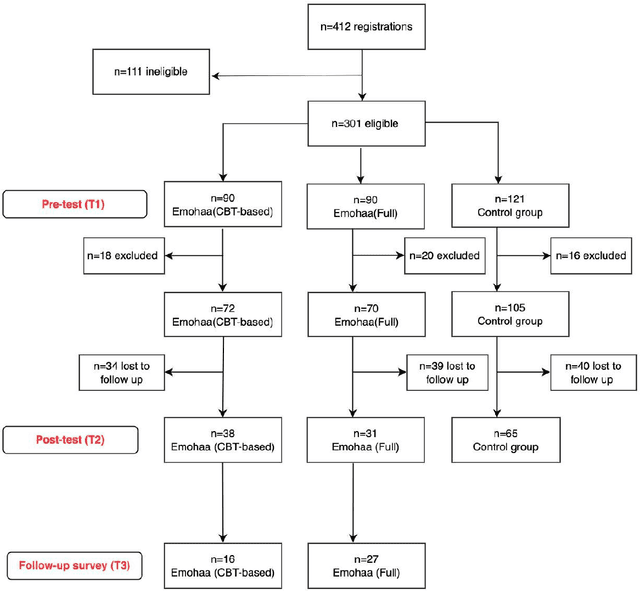
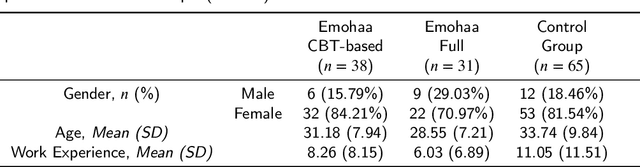
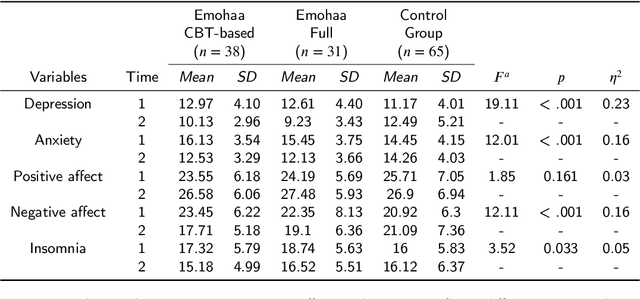
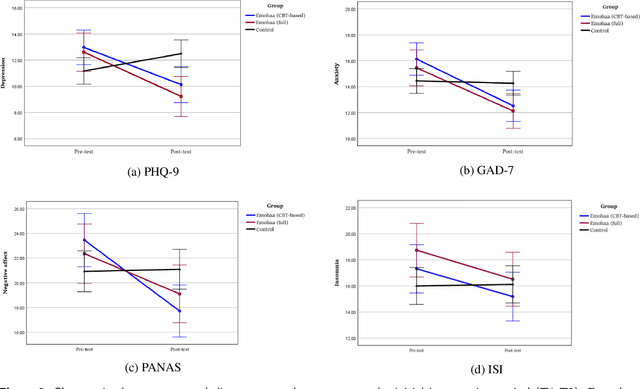
The growing demand for mental health support has highlighted the importance of conversational agents as human supporters worldwide and in China. These agents could increase availability and reduce the relative costs of mental health support. The provided support can be divided into two main types: cognitive and emotional support. Existing work on this topic mainly focuses on constructing agents that adopt Cognitive Behavioral Therapy (CBT) principles. Such agents operate based on pre-defined templates and exercises to provide cognitive support. However, research on emotional support using such agents is limited. In addition, most of the constructed agents operate in English, highlighting the importance of conducting such studies in China. In this study, we analyze the effectiveness of Emohaa in reducing symptoms of mental distress. Emohaa is a conversational agent that provides cognitive support through CBT-based exercises and guided conversations. It also emotionally supports users by enabling them to vent their desired emotional problems. The study included 134 participants, split into three groups: Emohaa (CBT-based), Emohaa (Full), and control. Experimental results demonstrated that compared to the control group, participants who used Emohaa experienced considerably more significant improvements in symptoms of mental distress. We also found that adding the emotional support agent had a complementary effect on such improvements, mainly depression and insomnia. Based on the obtained results and participants' satisfaction with the platform, we concluded that Emohaa is a practical and effective tool for reducing mental distress.