 Add to Chrome
 Add to Firefox
 Add to Edge
V-STC: A Time-Efficient Multi-Vehicle Coordinated Trajectory Planning Approach
Apr 24, 2026
Coordinating the motions of multiple autonomous vehicles (AVs) requires planning frameworks that ensure safety while making efficient use of space and time. This paper presents a new approach, termed variable-time-step spatio-temporal corridor (V-STC), that enhances the temporal efficiency of multi-vehicle coordination. An optimization model is formulated to construct a V-STC for each AV, in which both the spatial configuration of the corridor cubes and their time durations are treated as decision variables. By allowing the corridor's spatial position and time step to vary, the constructed V-STC reduces the overall temporal occupancy of each AV while maintaining collision-free separation in the spatio-temporal domain. Based on the generated V-STC, a dynamically feasible trajectory is then planned independently for each AV. Simulation studies demonstrate that the proposed method achieves safe multi-vehicle coordination and yields more time-efficient motion compared with existing STC approaches.

First Mapping the Canopy Height of Primeval Forests in the Tallest Tree Area of Asia
Apr 23, 2024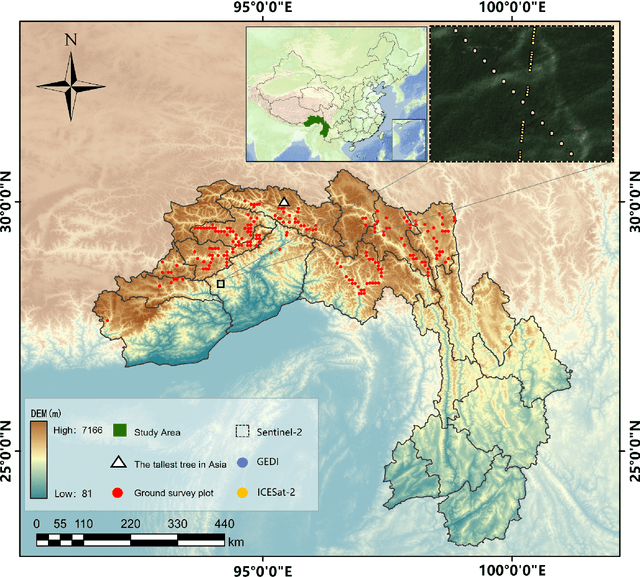
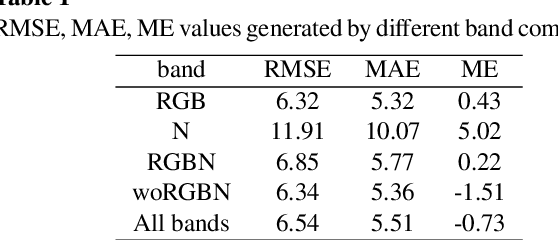
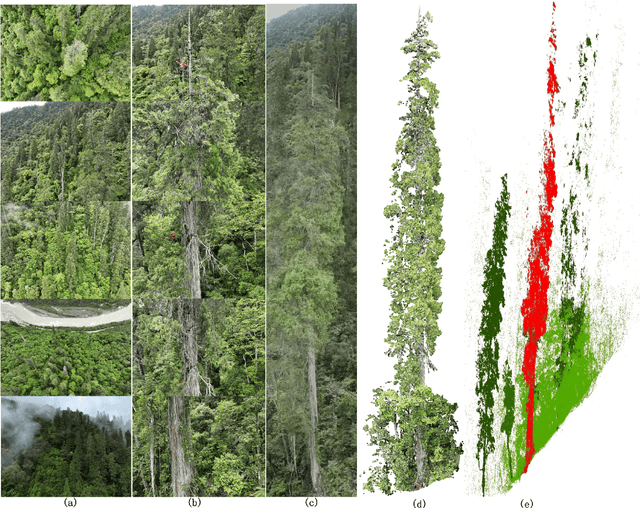
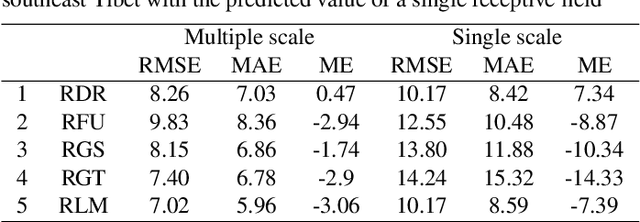
We have developed the world's first canopy height map of the distribution area of world-level giant trees. This mapping is crucial for discovering more individual and community world-level giant trees, and for analyzing and quantifying the effectiveness of biodiversity conservation measures in the Yarlung Tsangpo Grand Canyon (YTGC) National Nature Reserve. We proposed a method to map the canopy height of the primeval forest within the world-level giant tree distribution area by using a spaceborne LiDAR fusion satellite imagery (Global Ecosystem Dynamics Investigation (GEDI), ICESat-2, and Sentinel-2) driven deep learning modeling. And we customized a pyramid receptive fields depth separable CNN (PRFXception). PRFXception, a CNN architecture specifically customized for mapping primeval forest canopy height to infer the canopy height at the footprint level of GEDI and ICESat-2 from Sentinel-2 optical imagery with a 10-meter spatial resolution. We conducted a field survey of 227 permanent plots using a stratified sampling method and measured several giant trees using UAV-LS. The predicted canopy height was compared with ICESat-2 and GEDI validation data (RMSE =7.56 m, MAE=6.07 m, ME=-0.98 m, R^2=0.58 m), UAV-LS point clouds (RMSE =5.75 m, MAE =3.72 m, ME = 0.82 m, R^2= 0.65 m), and ground survey data (RMSE = 6.75 m, MAE = 5.56 m, ME= 2.14 m, R^2=0.60 m). We mapped the potential distribution map of world-level giant trees and discovered two previously undetected giant tree communities with an 89% probability of having trees 80-100 m tall, potentially taller than Asia's tallest tree. This paper provides scientific evidence confirming southeastern Tibet--northwestern Yunnan as the fourth global distribution center of world-level giant trees initiatives and promoting the inclusion of the YTGC giant tree distribution area within the scope of China's national park conservation.