 Add to Chrome
 Add to Firefox
 Add to Edge
Beyond Domains: Reusing Web Skills via Transferable Interaction Patterns
Jun 16, 2026
Large language model (LLM) web agents are usually deployed as tool callers: each turn, the model reads a fresh page observation and emits one structured tool action. When every action is a low-level primitive, horizons grow quickly and so do policy-facing LLM completions, dominating latency and cost on benchmarks such as Mind2Web and WebArena. Recent systems therefore wrap repeated interaction fragments as web skills: callable tools built from successful trajectories or induced programs, so one call can replace several primitives. However, prior skill libraries are still triggered mainly by instruction similarity or coarse site metadata, which yields low skill reuse on held-out sites and leaves much of the potential step and token reduction on the table. We present SkillMigrator, an agent that learns reusable web skills and transfers them across sites by matching layout structure rather than specific element references. Each induced skill is stored as a transferable interaction pattern (TIP): the skill paired with a structural sketch of the snapshot at induction time. At test time, SkillMigrator retrieves TIPs by layout similarity and grounds their references on the live page. The rest of the stack is standard: accessibility-snapshot observations with stable references, and fixed tool calling over primitives plus skill invocations. Compared with the state-of-the-art approaches, SkillMigrator reduces the average LLM-action count on successful trajectories by 8-10% across both WebArena and Mind2Web at matched success rate.

A Recursion-Based SNR Determination Method for Short Packet Transmission: Analysis and Applications
Aug 23, 2024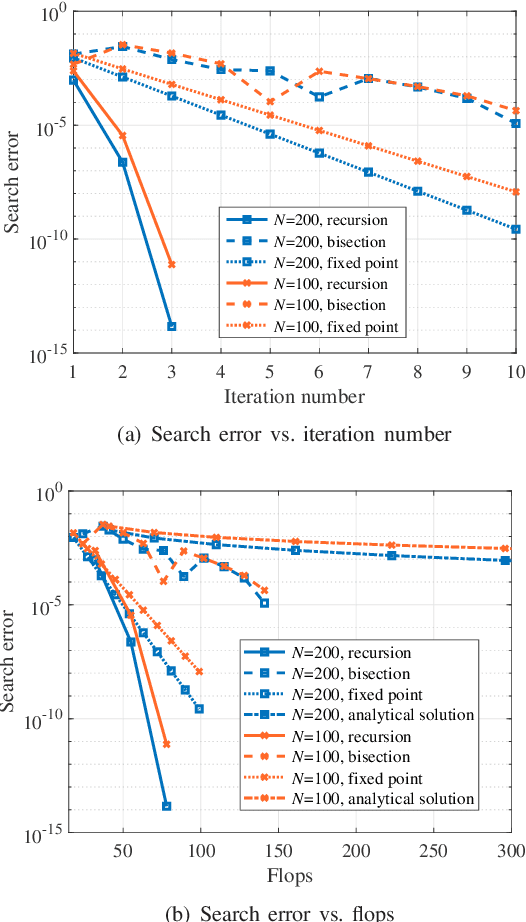
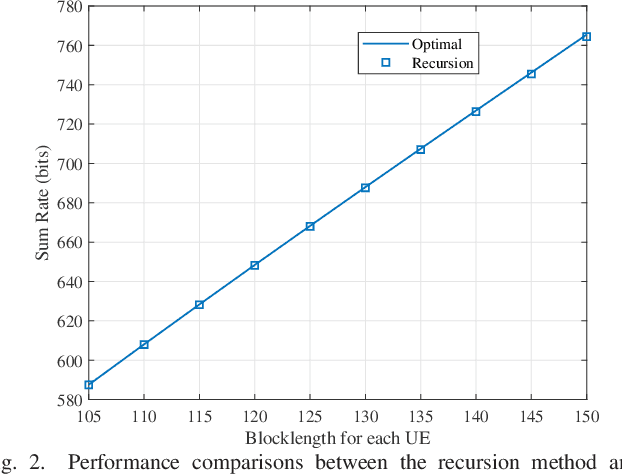
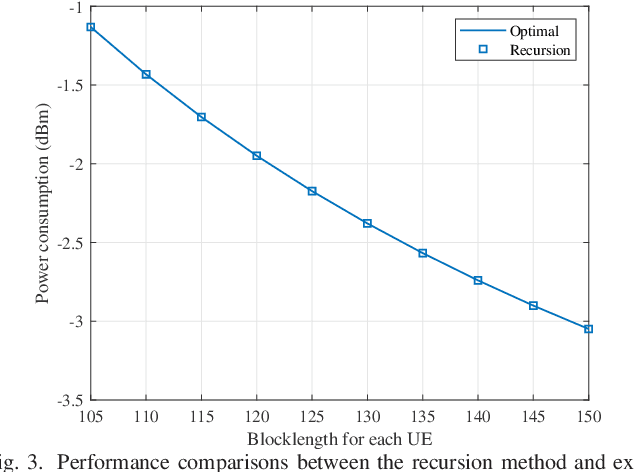
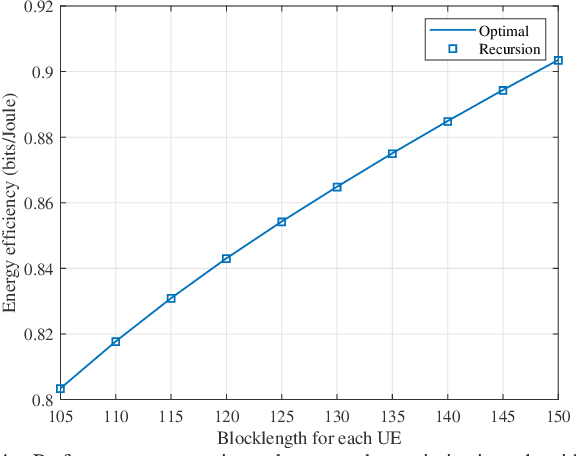
The short packet transmission (SPT) has gained much attention in recent years. In SPT, the most significant characteristic is that the finite blocklength code (FBC) is adopted. With FBC, the signal-to-noise ratio (SNR) cannot be expressed as an explicit function with respect to the other transmission parameters. This raises the following two problems for the resource allocation in SPTs: (i) The exact value of the SNR is hard to determine, and (ii) The property of SNR w.r.t. the other parameters is hard to analyze, which hinders the efficient optimization of them. To simultaneously tackle these problems, we have developed a recursion method in our prior work. To emphasize the significance of this method, we further analyze the convergence rate of the recursion method and investigate the property of the recursion function in this paper. Specifically, we first analyze the convergence rate of the recursion method, which indicates it can determine the SNR with low complexity. Then, we analyze the property of the recursion function, which facilitates the optimization of the other parameters during the recursion. Finally, we also enumerate some applications for the recursion method. Simulation results indicate that the recursion method converges faster than the other SNR determination methods. Besides, the results also show that the recursion-based methods can almost achieve the optimal solution of the application cases.