 Add to Chrome
 Add to Firefox
 Add to Edge
Adoption and Impact of Command-Line AI Coding Agents: A Study of Microsoft's Early 2026 Rollout of Claude Code and GitHub Copilot CLI
Jul 01, 2026
Organizations rolling out agentic command line tools like Anthropic's Claude Code and GitHub's Copilot CLI need to know who will try them, who will keep using them, and whether the tools produce enough output to justify their cost. At organizational scale, token spend can run into millions of dollars annually, so misreading adoption, retention, or impact can make a rollout expensive without changing engineering velocity. Studying tens of thousands of engineers at Microsoft over its early-2026 rollout, we find that first use spread primarily through social networks, retention was associated more with engineers' coding activity than with demographics, and adopters merged roughly 24% more pull requests than they would have otherwise. We use merged pull requests as our proxy for output -- acknowledging that a merged PR is not the same as the value it delivers -- and the lift persists across our four-month window. These results suggest that CLI coding agents are neither uniformly adopted nor mere novelty effects and that organizations should treat visible peer use as central to rollout strategy.

Beyond the Comfort Zone: Emerging Solutions to Overcome Challenges in Integrating LLMs into Software Products
Oct 15, 2024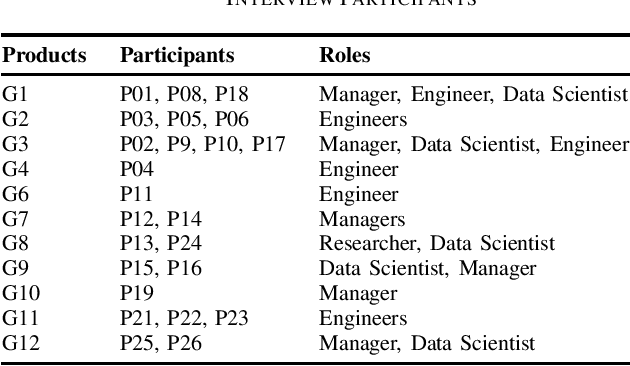
Large Language Models (LLMs) are increasingly embedded into software products across diverse industries, enhancing user experiences, but at the same time introducing numerous challenges for developers. Unique characteristics of LLMs force developers, who are accustomed to traditional software development and evaluation, out of their comfort zones as the LLM components shatter standard assumptions about software systems. This study explores the emerging solutions that software developers are adopting to navigate the encountered challenges. Leveraging a mixed-method research, including 26 interviews and a survey with 332 responses, the study identifies 19 emerging solutions regarding quality assurance that practitioners across several product teams at Microsoft are exploring. The findings provide valuable insights that can guide the development and evaluation of LLM-based products more broadly in the face of these challenges.
Personal Productivity and Well-being -- Chapter 2 of the 2021 New Future of Work Report
Mar 03, 2021We now turn to understanding the impact that COVID-19 had on the personal productivity and well-being of information workers as their work practices were impacted by remote work. This chapter overviews people's productivity, satisfaction, and work patterns, and shows that the challenges and benefits of remote work are closely linked. Looking forward, the infrastructure surrounding work will need to evolve to help people adapt to the challenges of remote and hybrid work.