 Add to Chrome
 Add to Firefox
 Add to Edge
Keystroke Verification Challenge (KVC): Biometric and Fairness Benchmark Evaluation
Nov 10, 2023
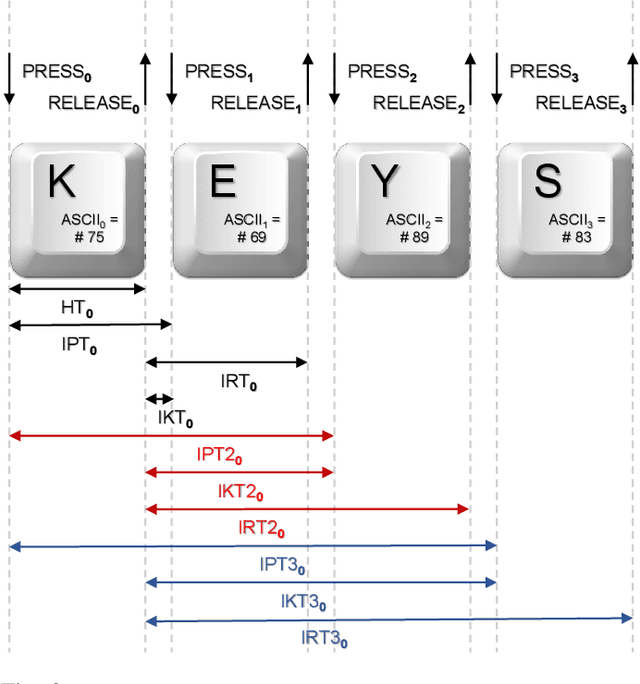
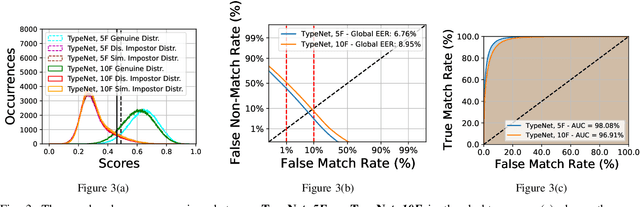
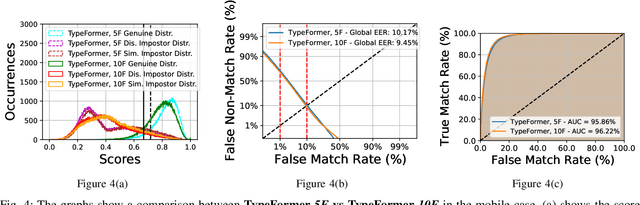
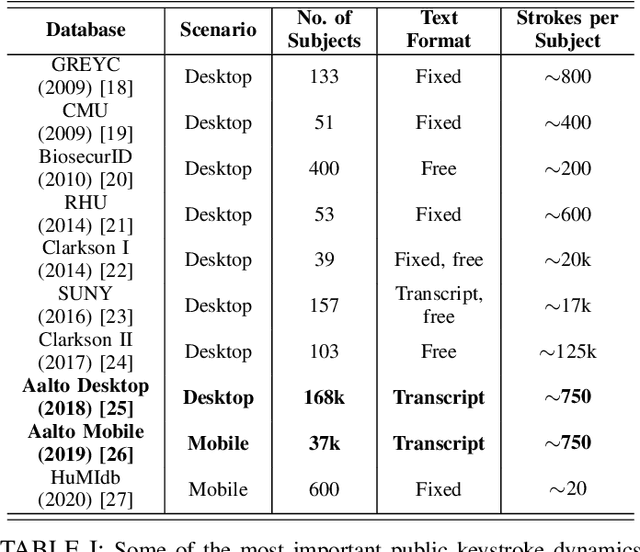
Analyzing keystroke dynamics (KD) for biometric verification has several advantages: it is among the most discriminative behavioral traits; keyboards are among the most common human-computer interfaces, being the primary means for users to enter textual data; its acquisition does not require additional hardware, and its processing is relatively lightweight; and it allows for transparently recognizing subjects. However, the heterogeneity of experimental protocols and metrics, and the limited size of the databases adopted in the literature impede direct comparisons between different systems, thus representing an obstacle in the advancement of keystroke biometrics. To alleviate this aspect, we present a new experimental framework to benchmark KD-based biometric verification performance and fairness based on tweet-long sequences of variable transcript text from over 185,000 subjects, acquired through desktop and mobile keyboards, extracted from the Aalto Keystroke Databases. The framework runs on CodaLab in the form of the Keystroke Verification Challenge (KVC). Moreover, we also introduce a novel fairness metric, the Skewed Impostor Ratio (SIR), to capture inter- and intra-demographic group bias patterns in the verification scores. We demonstrate the usefulness of the proposed framework by employing two state-of-the-art keystroke verification systems, TypeNet and TypeFormer, to compare different sets of input features, achieving a less privacy-invasive system, by discarding the analysis of text content (ASCII codes of the keys pressed) in favor of extended features in the time domain. Our experiments show that this approach allows to maintain satisfactory performance.

AI4Food-NutritionFW: A Novel Framework for the Automatic Synthesis and Analysis of Eating Behaviours
Sep 12, 2023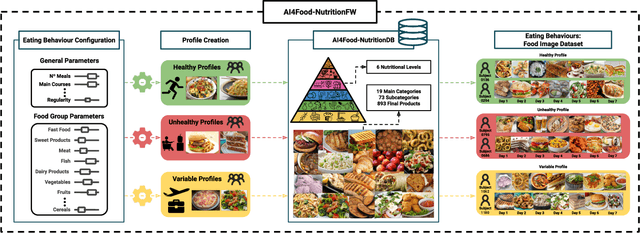
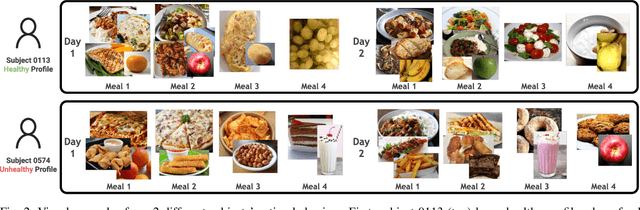
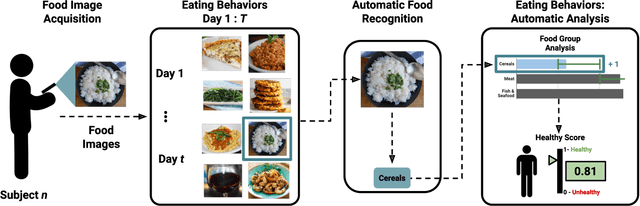
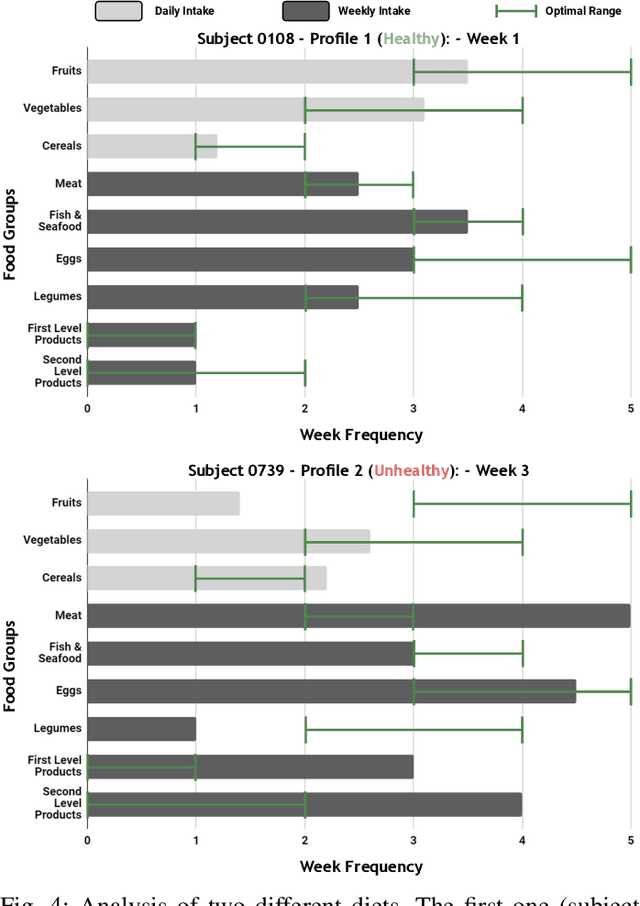
Nowadays millions of images are shared on social media and web platforms. In particular, many of them are food images taken from a smartphone over time, providing information related to the individual's diet. On the other hand, eating behaviours are directly related to some of the most prevalent diseases in the world. Exploiting recent advances in image processing and Artificial Intelligence (AI), this scenario represents an excellent opportunity to: i) create new methods that analyse the individuals' health from what they eat, and ii) develop personalised recommendations to improve nutrition and diet under specific circumstances (e.g., obesity or COVID). Having tunable tools for creating food image datasets that facilitate research in both lines is very much needed. This paper proposes AI4Food-NutritionFW, a framework for the creation of food image datasets according to configurable eating behaviours. AI4Food-NutritionFW simulates a user-friendly and widespread scenario where images are taken using a smartphone. In addition to the framework, we also provide and describe a unique food image dataset that includes 4,800 different weekly eating behaviours from 15 different profiles and 1,200 subjects. Specifically, we consider profiles that comply with actual lifestyles from healthy eating behaviours (according to established knowledge), variable profiles (e.g., eating out, holidays), to unhealthy ones (e.g., excess of fast food or sweets). Finally, we automatically evaluate a healthy index of the subject's eating behaviours using multidimensional metrics based on guidelines for healthy diets proposed by international organisations, achieving promising results (99.53% and 99.60% accuracy and sensitivity, respectively). We also release to the research community a software implementation of our proposed AI4Food-NutritionFW and the mentioned food image dataset created with it.
Exploring Transformers for On-Line Handwritten Signature Verification
Jul 06, 2023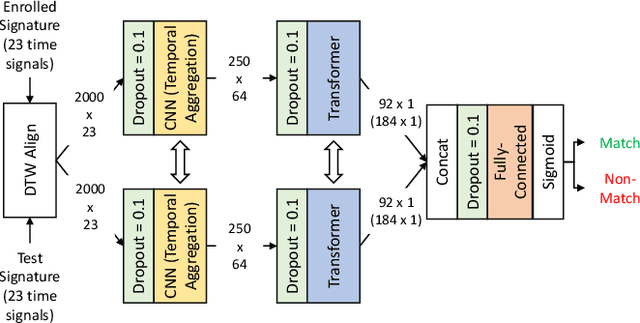
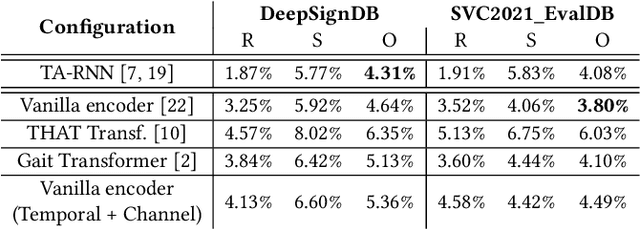
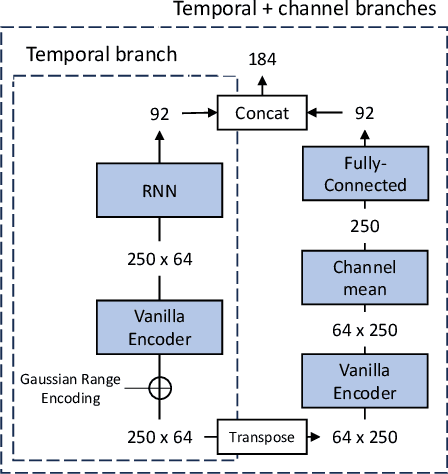
The application of mobile biometrics as a user-friendly authentication method has increased in the last years. Recent studies have proposed novel behavioral biometric recognition systems based on Transformers, which currently outperform the state of the art in several application scenarios. On-line handwritten signature verification aims to verify the identity of subjects, based on their biometric signatures acquired using electronic devices such as tablets or smartphones. This paper investigates the suitability of architectures based on recent Transformers for on-line signature verification. In particular, four different configurations are studied, two of them rely on the Vanilla Transformer encoder, and the two others have been successfully applied to the tasks of gait and activity recognition. We evaluate the four proposed configurations according to the experimental protocol proposed in the SVC-onGoing competition. The results obtained in our experiments are promising, and promote the use of Transformers for on-line signature verification.
Document Layout Annotation: Database and Benchmark in the Domain of Public Affairs
Jun 12, 2023Every day, thousands of digital documents are generated with useful information for companies, public organizations, and citizens. Given the impossibility of processing them manually, the automatic processing of these documents is becoming increasingly necessary in certain sectors. However, this task remains challenging, since in most cases a text-only based parsing is not enough to fully understand the information presented through different components of varying significance. In this regard, Document Layout Analysis (DLA) has been an interesting research field for many years, which aims to detect and classify the basic components of a document. In this work, we used a procedure to semi-automatically annotate digital documents with different layout labels, including 4 basic layout blocks and 4 text categories. We apply this procedure to collect a novel database for DLA in the public affairs domain, using a set of 24 data sources from the Spanish Administration. The database comprises 37.9K documents with more than 441K document pages, and more than 8M labels associated to 8 layout block units. The results of our experiments validate the proposed text labeling procedure with accuracy up to 99%.
Leveraging Large Language Models for Topic Classification in the Domain of Public Affairs
Jun 05, 2023The analysis of public affairs documents is crucial for citizens as it promotes transparency, accountability, and informed decision-making. It allows citizens to understand government policies, participate in public discourse, and hold representatives accountable. This is crucial, and sometimes a matter of life or death, for companies whose operation depend on certain regulations. Large Language Models (LLMs) have the potential to greatly enhance the analysis of public affairs documents by effectively processing and understanding the complex language used in such documents. In this work, we analyze the performance of LLMs in classifying public affairs documents. As a natural multi-label task, the classification of these documents presents important challenges. In this work, we use a regex-powered tool to collect a database of public affairs documents with more than 33K samples and 22.5M tokens. Our experiments assess the performance of 4 different Spanish LLMs to classify up to 30 different topics in the data in different configurations. The results shows that LLMs can be of great use to process domain-specific documents, such as those in the domain of public affairs.
Measuring Bias in AI Models with Application to Face Biometrics: An Statistical Approach
Apr 26, 2023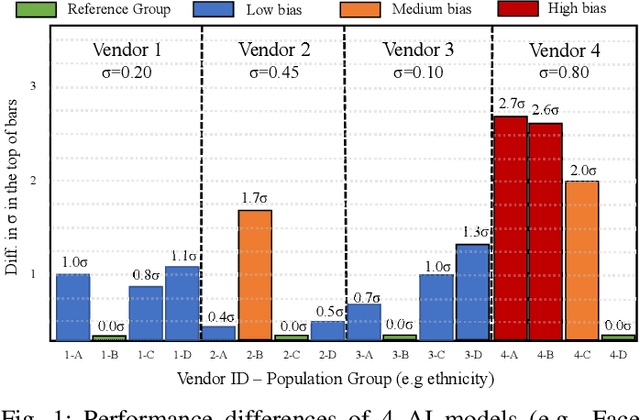
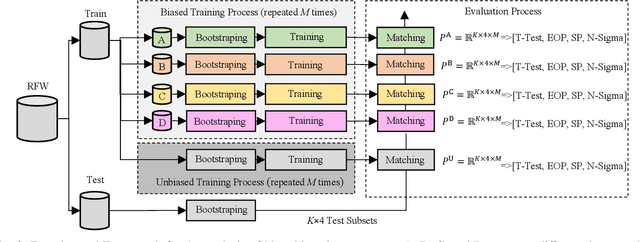
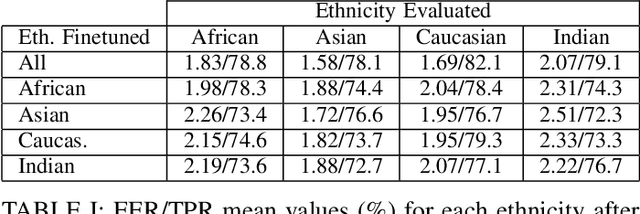
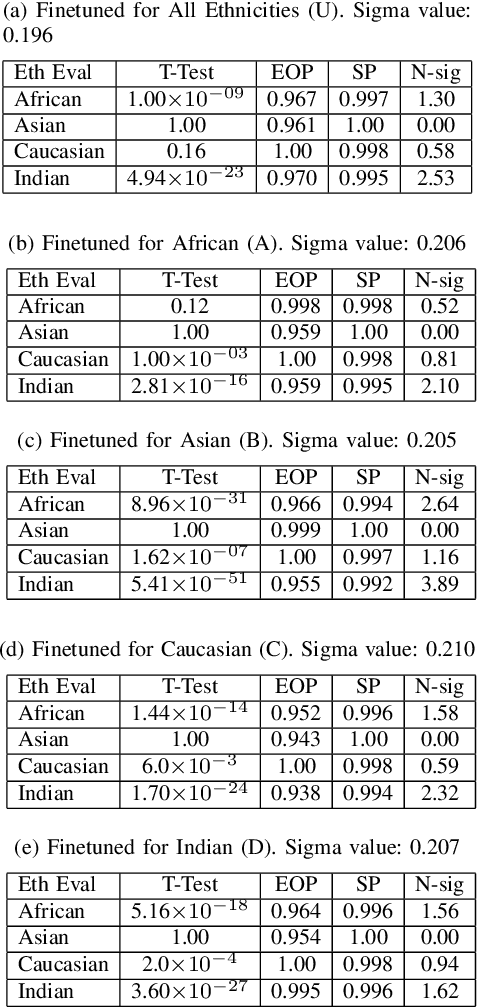
The new regulatory framework proposal on Artificial Intelligence (AI) published by the European Commission establishes a new risk-based legal approach. The proposal highlights the need to develop adequate risk assessments for the different uses of AI. This risk assessment should address, among others, the detection and mitigation of bias in AI. In this work we analyze statistical approaches to measure biases in automatic decision-making systems. We focus our experiments in face recognition technologies. We propose a novel way to measure the biases in machine learning models using a statistical approach based on the N-Sigma method. N-Sigma is a popular statistical approach used to validate hypotheses in general science such as physics and social areas and its application to machine learning is yet unexplored. In this work we study how to apply this methodology to develop new risk assessment frameworks based on bias analysis and we discuss the main advantages and drawbacks with respect to other popular statistical tests.
Introduction to Presentation Attacks in Signature Biometrics and Recent Advances
Feb 16, 2023Applications based on biometric authentication have received a lot of interest in the last years due to the breathtaking results obtained using personal traits such as face or fingerprint. However, it is important not to forget that these biometric systems have to withstand different types of possible attacks. This chapter carries out an analysis of different Presentation Attack (PA) scenarios for on-line handwritten signature verification. The main contributions of this chapter are: i) an updated overview of representative methods for Presentation Attack Detection (PAD) in signature biometrics; ii) a description of the different levels of PAs existing in on-line signature verification regarding the amount of information available to the impostor, as well as the training, effort, and ability to perform the forgeries; and iii) an evaluation of the system performance in signature biometrics under different scenarios considering recent publicly available signature databases, DeepSignDB and SVC2021_EvalDB. This work is in line with recent efforts in the Common Criteria standardization community towards security evaluation of biometric systems.
Human-Centric Multimodal Machine Learning: Recent Advances and Testbed on AI-based Recruitment
Feb 13, 2023The presence of decision-making algorithms in society is rapidly increasing nowadays, while concerns about their transparency and the possibility of these algorithms becoming new sources of discrimination are arising. There is a certain consensus about the need to develop AI applications with a Human-Centric approach. Human-Centric Machine Learning needs to be developed based on four main requirements: (i) utility and social good; (ii) privacy and data ownership; (iii) transparency and accountability; and (iv) fairness in AI-driven decision-making processes. All these four Human-Centric requirements are closely related to each other. With the aim of studying how current multimodal algorithms based on heterogeneous sources of information are affected by sensitive elements and inner biases in the data, we propose a fictitious case study focused on automated recruitment: FairCVtest. We train automatic recruitment algorithms using a set of multimodal synthetic profiles including image, text, and structured data, which are consciously scored with gender and racial biases. FairCVtest shows the capacity of the Artificial Intelligence (AI) behind automatic recruitment tools built this way (a common practice in many other application scenarios beyond recruitment) to extract sensitive information from unstructured data and exploit it in combination to data biases in undesirable (unfair) ways. We present an overview of recent works developing techniques capable of removing sensitive information and biases from the decision-making process of deep learning architectures, as well as commonly used databases for fairness research in AI. We demonstrate how learning approaches developed to guarantee privacy in latent spaces can lead to unbiased and fair automatic decision-making process.
MATT: Multimodal Attention Level Estimation for e-learning Platforms
Jan 22, 2023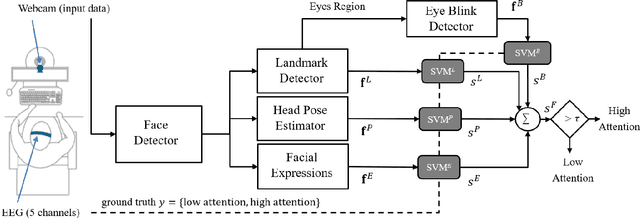
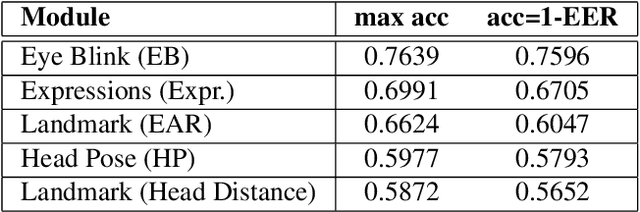
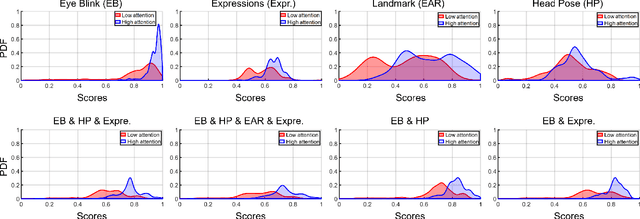

This work presents a new multimodal system for remote attention level estimation based on multimodal face analysis. Our multimodal approach uses different parameters and signals obtained from the behavior and physiological processes that have been related to modeling cognitive load such as faces gestures (e.g., blink rate, facial actions units) and user actions (e.g., head pose, distance to the camera). The multimodal system uses the following modules based on Convolutional Neural Networks (CNNs): Eye blink detection, head pose estimation, facial landmark detection, and facial expression features. First, we individually evaluate the proposed modules in the task of estimating the student's attention level captured during online e-learning sessions. For that we trained binary classifiers (high or low attention) based on Support Vector Machines (SVM) for each module. Secondly, we find out to what extent multimodal score level fusion improves the attention level estimation. The mEBAL database is used in the experimental framework, a public multi-modal database for attention level estimation obtained in an e-learning environment that contains data from 38 users while conducting several e-learning tasks of variable difficulty (creating changes in student cognitive loads).
Secure access system using signature verification over tablet PC
Jan 11, 2023Low-cost portable devices capable of capturing signature signals are being increasingly used. Additionally, the social and legal acceptance of the written signature for authentication purposes is opening a range of new applications. We describe a highly versatile and scalable prototype for Web-based secure access using signature verification. The proposed architecture can be easily extended to work with different kinds of sensors and large-scale databases. Several remarks are also given on security and privacy of network-based signature verification.