 Add to Chrome
 Add to Firefox
 Add to Edge
Evaluating Cross-lingual Knowledge Consistency in Code-Mixed vis-a-vis Indian Languages using IndicKLAR
May 28, 2026
Large language models recall knowledge reliably in English but often fail on the same query posed in a lower-resourced language -- a crosslingual consistency gap that remains underexplored for Indian languages and their code-mixed counterparts. To study this gap, we introduce IndiKLAR, an Indic extension of the KLAR-CLC benchmark covering 18 of the 22 scheduled Indian languages and pairing them with code-mixed variants for 11 widely used language pairs, with native-speaker verification of both monolingual and code-mixed variants for these 11 settings. This three-way alignment offers a unique opportunity to examine how knowledge recall consistency varies across the spectrum of English, code-mixed, and native Indian language inputs. Evaluating across nine open-weight models, we find that the native-language accuracy gap to English can reach $\sim$0.50, while code-mixed inputs close most of it -- bringing performance within $\sim$0.05 of English without any model-level intervention. Motivated by this, we evaluate several prompting strategies that vary in how language conversion is exposed, including a two-stage translate-then-answer setup, a one-stage joint translation-and-answer prompt, and Translate-in-Thought (TinT) -- a single-step strategy in which the model converts the input internally and emits only the final answer. Across the performance trajectory native $\rightarrow$ code-mixed $\rightarrow$ English, we identify a consistent flip point -- the boundary between incorrect and correct prediction -- that lies between the native and code-mixed settings. Interestingly, this holds whether the trajectory is induced by the input surface form or by the model's internal conversion process.

SEEK: Semantic Evidence Extraction via Adaptive ChunKing for Multilingual Fact-Checking
May 27, 2026Multilingual fact verification requires evidence that is both relevant and sufficiently complete for reliable factuality prediction. However, existing systems often rely on search snippets, sentence-level evidence, or locally segmented passages, which can miss decisive context and produce fragmented evidence. To overcome these limitations, we propose SEEK, a Semantic Evidence Extraction with an adaptive chunKing framework that constructs coherent evidence chunks from full fact-checking articles by identifying semantic topic transitions and preserving local verification context. The constructed chunks are encoded using a multilingual encoder and then multilingual LLMs are finetuned using LoRA adapter for veracity prediction. Experiments on X-FACT and RU22Fact show that SEEK improves macro-f1 by up to 10% over semantic chunking, 19% over sentence chunking, and 20% over search-snippet baselines. Evidence completeness and significance analyses further show that SEEK preserves richer verification context and enables more reliable multilingual fact-checking.
Neither Here Nor There: Cross-Lingual Representation Dynamics of Code-Mixed Text in Multilingual Encoders
Mar 20, 2026Multilingual encoder-based language models are widely adopted for code-mixed analysis tasks, yet we know surprisingly little about how they represent code-mixed inputs internally - or whether those representations meaningfully connect to the constituent languages being mixed. Using Hindi-English as a case study, we construct a unified trilingual corpus of parallel English, Hindi (Devanagari), and Romanized code-mixed sentences, and probe cross-lingual representation alignment across standard multilingual encoders and their code-mixed adapted variants via CKA, token-level saliency, and entropy-based uncertainty analysis. We find that while standard models align English and Hindi well, code-mixed inputs remain loosely connected to either language - and that continued pre-training on code-mixed data improves English-code-mixed alignment at the cost of English-Hindi alignment. Interpretability analyses further reveal a clear asymmetry: models process code-mixed text through an English-dominant semantic subspace, while native-script Hindi provides complementary signals that reduce representational uncertainty. Motivated by these findings, we introduce a trilingual post-training alignment objective that brings code-mixed representations closer to both constituent languages simultaneously, yielding more balanced cross-lingual alignment and downstream gains on sentiment analysis and hate speech detection - showing that grounding code-mixed representations in their constituent languages meaningfully helps cross-lingual understanding.
Multimodal Fact Checking with Unified Visual, Textual, and Contextual Representations
Aug 07, 2025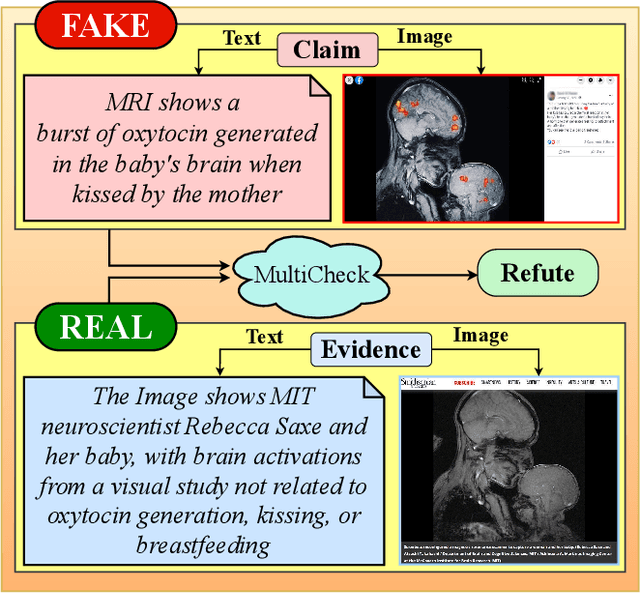
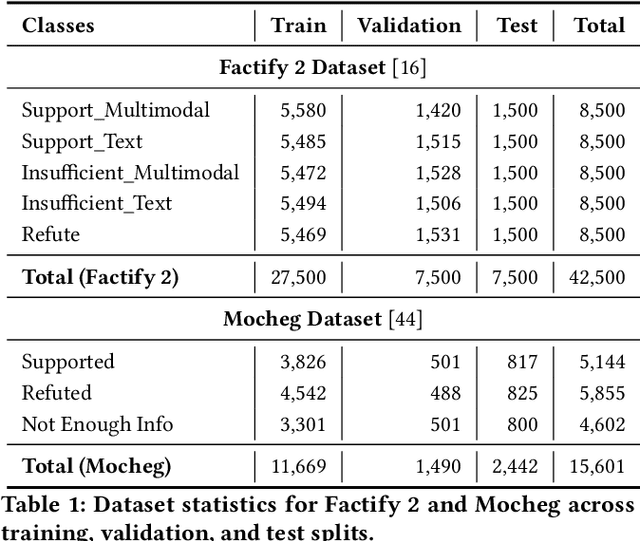
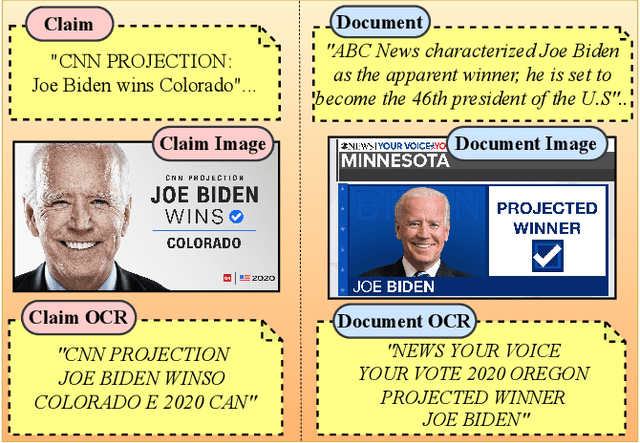
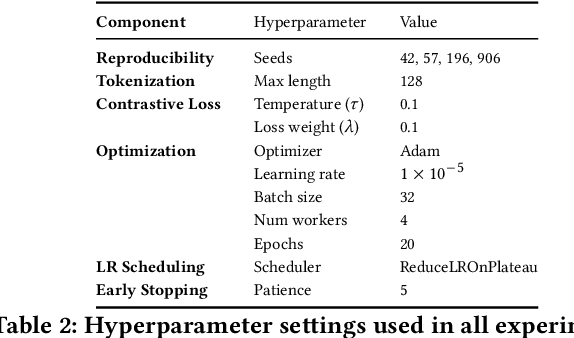
The growing rate of multimodal misinformation, where claims are supported by both text and images, poses significant challenges to fact-checking systems that rely primarily on textual evidence. In this work, we have proposed a unified framework for fine-grained multimodal fact verification called "MultiCheck", designed to reason over structured textual and visual signals. Our architecture combines dedicated encoders for text and images with a fusion module that captures cross-modal relationships using element-wise interactions. A classification head then predicts the veracity of a claim, supported by a contrastive learning objective that encourages semantic alignment between claim-evidence pairs in a shared latent space. We evaluate our approach on the Factify 2 dataset, achieving a weighted F1 score of 0.84, substantially outperforming the baseline. These results highlight the effectiveness of explicit multimodal reasoning and demonstrate the potential of our approach for scalable and interpretable fact-checking in complex, real-world scenarios.
On VLMs for Diverse Tasks in Multimodal Meme Classification
May 27, 2025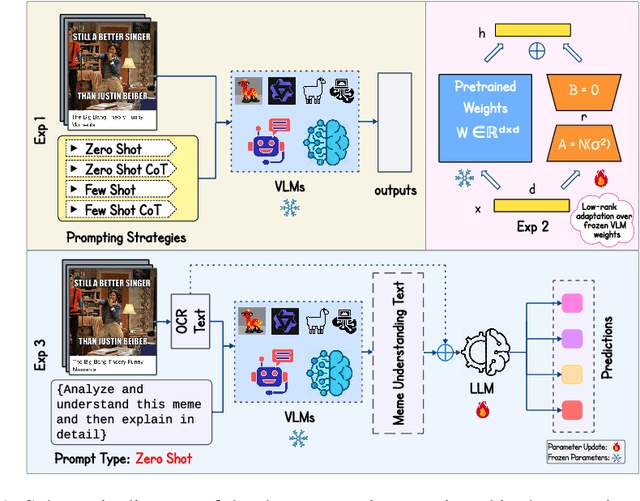
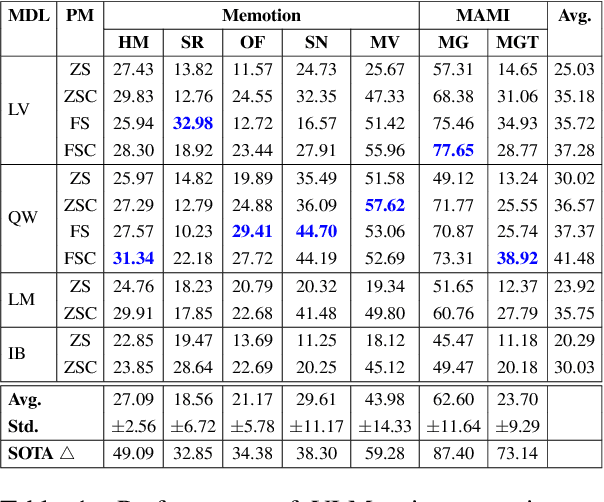
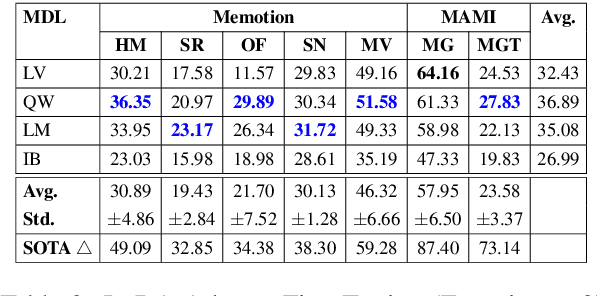
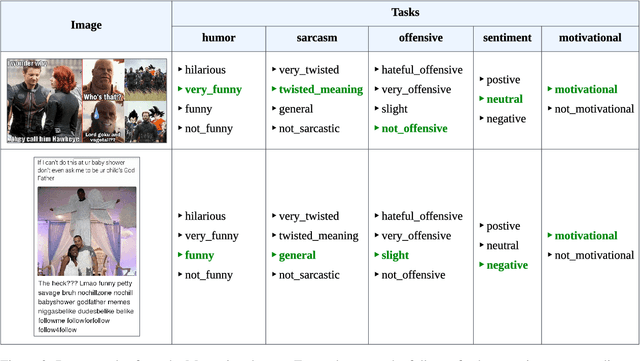
In this paper, we present a comprehensive and systematic analysis of vision-language models (VLMs) for disparate meme classification tasks. We introduced a novel approach that generates a VLM-based understanding of meme images and fine-tunes the LLMs on textual understanding of the embedded meme text for improving the performance. Our contributions are threefold: (1) Benchmarking VLMs with diverse prompting strategies purposely to each sub-task; (2) Evaluating LoRA fine-tuning across all VLM components to assess performance gains; and (3) Proposing a novel approach where detailed meme interpretations generated by VLMs are used to train smaller language models (LLMs), significantly improving classification. The strategy of combining VLMs with LLMs improved the baseline performance by 8.34%, 3.52% and 26.24% for sarcasm, offensive and sentiment classification, respectively. Our results reveal the strengths and limitations of VLMs and present a novel strategy for meme understanding.
Improving the fact-checking performance of language models by relying on their entailment ability
May 21, 2025Automated fact-checking is a crucial task in this digital age. To verify a claim, current approaches majorly follow one of two strategies i.e. (i) relying on embedded knowledge of language models, and (ii) fine-tuning them with evidence pieces. While the former can make systems to hallucinate, the later have not been very successful till date. The primary reason behind this is that fact verification is a complex process. Language models have to parse through multiple pieces of evidence before making a prediction. Further, the evidence pieces often contradict each other. This makes the reasoning process even more complex. We proposed a simple yet effective approach where we relied on entailment and the generative ability of language models to produce ''supporting'' and ''refuting'' justifications (for the truthfulness of a claim). We trained language models based on these justifications and achieved superior results. Apart from that, we did a systematic comparison of different prompting and fine-tuning strategies, as it is currently lacking in the literature. Some of our observations are: (i) training language models with raw evidence sentences registered an improvement up to 8.20% in macro-F1, over the best performing baseline for the RAW-FC dataset, (ii) similarly, training language models with prompted claim-evidence understanding (TBE-2) registered an improvement (with a margin up to 16.39%) over the baselines for the same dataset, (iii) training language models with entailed justifications (TBE-3) outperformed the baselines by a huge margin (up to 28.57% and 44.26% for LIAR-RAW and RAW-FC, respectively). We have shared our code repository to reproduce the results.
Revealing the impact of synthetic native samples and multi-tasking strategies in Hindi-English code-mixed humour and sarcasm detection
Dec 17, 2024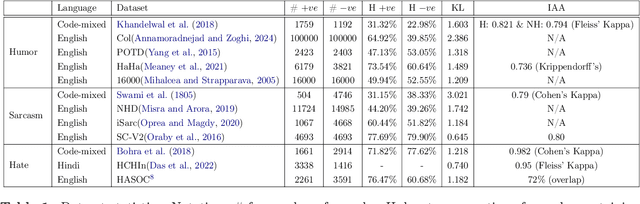
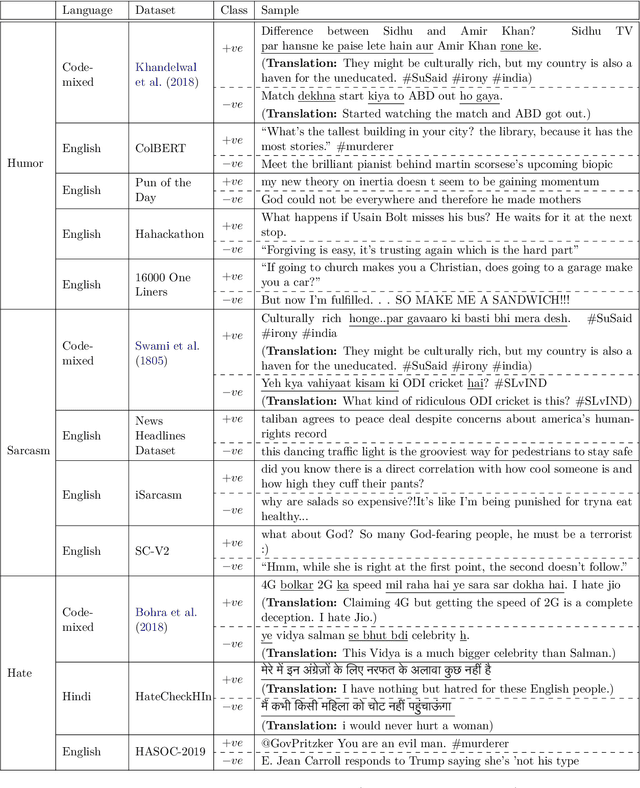
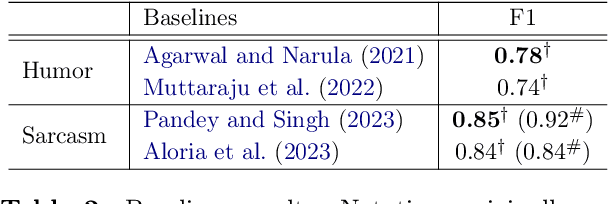
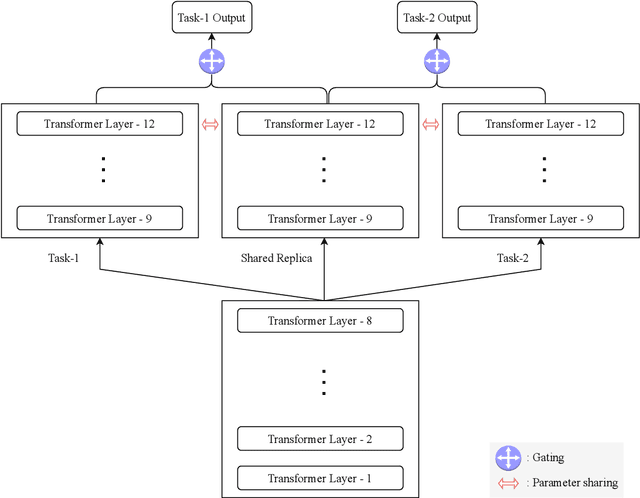
In this paper, we reported our experiments with various strategies to improve code-mixed humour and sarcasm detection. We did all of our experiments for Hindi-English code-mixed scenario, as we have the linguistic expertise for the same. We experimented with three approaches, namely (i) native sample mixing, (ii) multi-task learning (MTL), and (iii) prompting very large multilingual language models (VMLMs). In native sample mixing, we added monolingual task samples in code-mixed training sets. In MTL learning, we relied on native and code-mixed samples of a semantically related task (hate detection in our case). Finally, in our third approach, we evaluated the efficacy of VMLMs via few-shot context prompting. Some interesting findings we got are (i) adding native samples improved humor (raising the F1-score up to 6.76%) and sarcasm (raising the F1-score up to 8.64%) detection, (ii) training MLMs in an MTL framework boosted performance for both humour (raising the F1-score up to 10.67%) and sarcasm (increment up to 12.35% in F1-score) detection, and (iii) prompting VMLMs couldn't outperform the other approaches. Finally, our ablation studies and error analysis discovered the cases where our model is yet to improve. We provided our code for reproducibility.
Improving code-mixed hate detection by native sample mixing: A case study for Hindi-English code-mixed scenario
May 31, 2024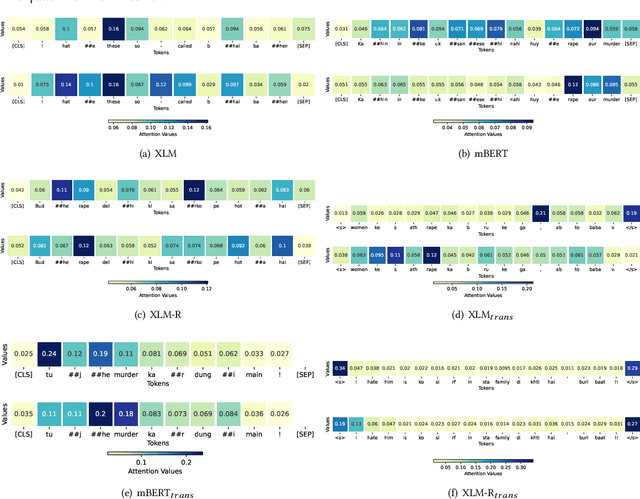


Hate detection has long been a challenging task for the NLP community. The task becomes complex in a code-mixed environment because the models must understand the context and the hate expressed through language alteration. Compared to the monolingual setup, we see very less work on code-mixed hate as large-scale annotated hate corpora are unavailable to make the study. To overcome this bottleneck, we propose using native language hate samples. We hypothesise that in the era of multilingual language models (MLMs), hate in code-mixed settings can be detected by majorly relying on the native language samples. Even though the NLP literature reports the effectiveness of MLMs on hate detection in many cross-lingual settings, their extensive evaluation in a code-mixed scenario is yet to be done. This paper attempts to fill this gap through rigorous empirical experiments. We considered the Hindi-English code-mixed setup as a case study as we have the linguistic expertise for the same. Some of the interesting observations we got are: (i) adding native hate samples in the code-mixed training set, even in small quantity, improved the performance of MLMs for code-mixed hate detection, (ii) MLMs trained with native samples alone observed to be detecting code-mixed hate to a large extent, (iii) The visualisation of attention scores revealed that, when native samples were included in training, MLMs could better focus on the hate emitting words in the code-mixed context, and (iv) finally, when hate is subjective or sarcastic, naively mixing native samples doesn't help much to detect code-mixed hate. We will release the data and code repository to reproduce the reported results.
IISERB Brains at SemEval 2022 Task 6: A Deep-learning Framework to Identify Intended Sarcasm in English
Mar 04, 2022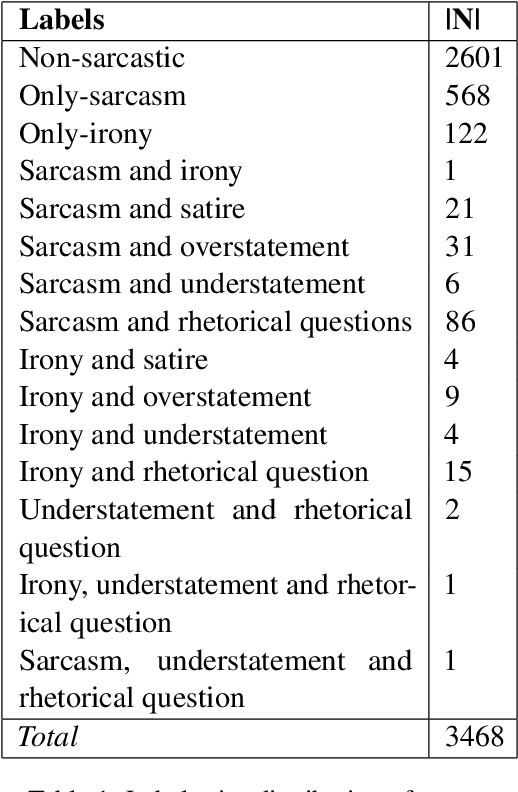
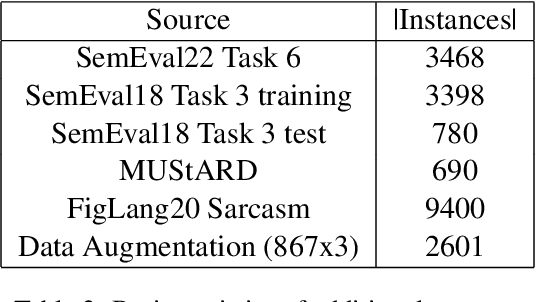
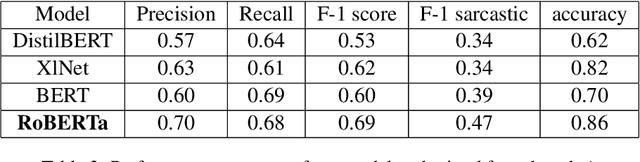
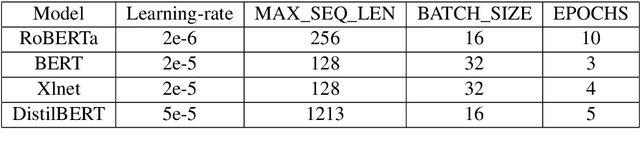
This paper describes the system architectures and the models submitted by our team "IISERBBrains" to SemEval 2022 Task 6 competition. We contested for all three sub-tasks floated for the English dataset. On the leader-board, wegot19th rank out of43 teams for sub-taskA, the 8th rank out of22 teams for sub-task B,and13th rank out of 16 teams for sub-taskC. Apart from the submitted results and models, we also report the other models and results that we obtained through our experiments after organizers published the gold labels of their evaluation data
Code-switching patterns can be an effective route to improve performance of downstream NLP applications: A case study of humour, sarcasm and hate speech detection
May 05, 2020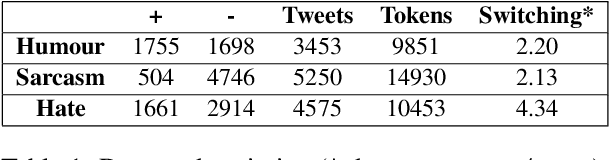
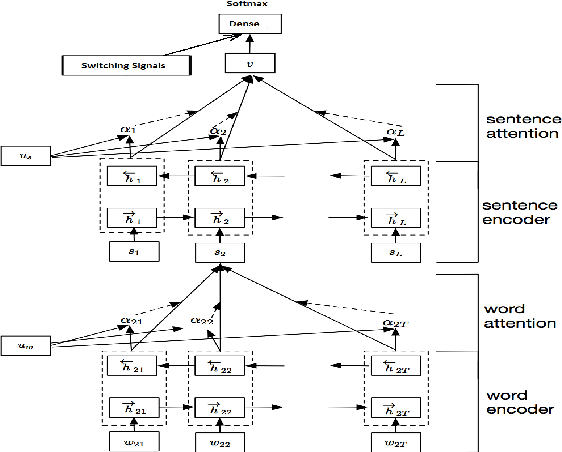
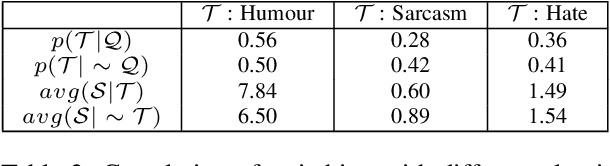
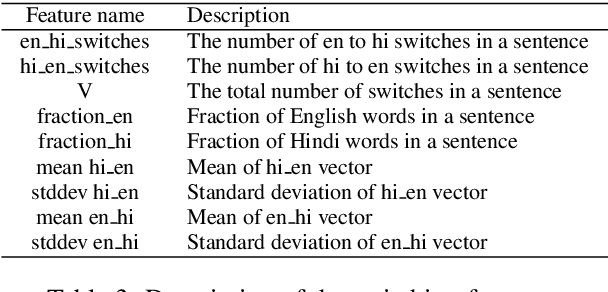
In this paper we demonstrate how code-switching patterns can be utilised to improve various downstream NLP applications. In particular, we encode different switching features to improve humour, sarcasm and hate speech detection tasks. We believe that this simple linguistic observation can also be potentially helpful in improving other similar NLP applications.