 Add to Chrome
 Add to Firefox
 Add to Edge
"Oops! ChatGPT is Temporarily Unavailable!": A Diary Study on Knowledge Workers' Experiences of LLM Withdrawal
Mar 27, 2026
LLMs have become deeply embedded in knowledge work, raising concerns about growing dependency and the potential undermining of human skills. To investigate the pervasiveness of LLMs in work practices, we conducted a four-day diary study with frequent LLM users (N=10), observing how knowledge workers responded to a temporary withdrawal of LLMs. Our findings show how LLM withdrawal disrupted participants' workflows by identifying gaps in task execution, how self-directed work led participants to reclaim professional values, and how everyday practices revealed the extent to which LLM use had become inescapably normative. Conceptualizing LLMs as infrastructural to contemporary knowledge work, this research contributes empirical insights into the often invisible role of LLMs and proposes value-driven appropriation as an approach to supporting professional values in the current LLM-pervasive work environment.

Chart-to-Experience: Benchmarking Multimodal LLMs for Predicting Experiential Impact of Charts
May 23, 2025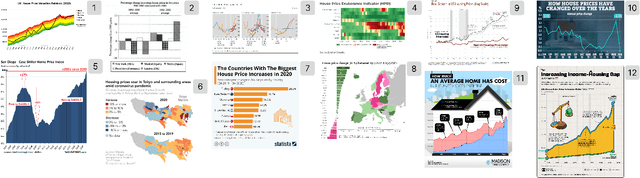
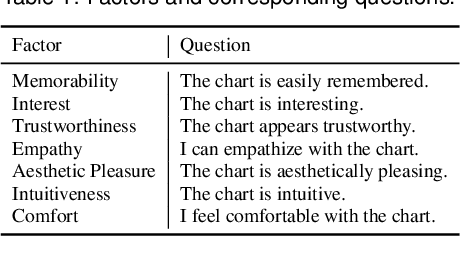
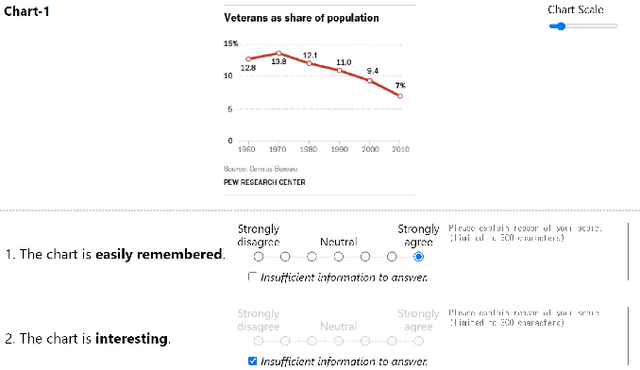
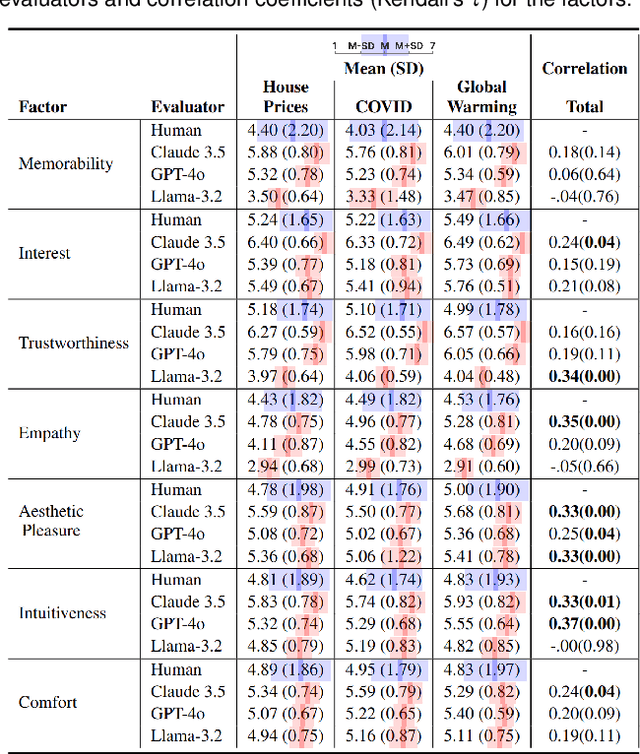
The field of Multimodal Large Language Models (MLLMs) has made remarkable progress in visual understanding tasks, presenting a vast opportunity to predict the perceptual and emotional impact of charts. However, it also raises concerns, as many applications of LLMs are based on overgeneralized assumptions from a few examples, lacking sufficient validation of their performance and effectiveness. We introduce Chart-to-Experience, a benchmark dataset comprising 36 charts, evaluated by crowdsourced workers for their impact on seven experiential factors. Using the dataset as ground truth, we evaluated capabilities of state-of-the-art MLLMs on two tasks: direct prediction and pairwise comparison of charts. Our findings imply that MLLMs are not as sensitive as human evaluators when assessing individual charts, but are accurate and reliable in pairwise comparisons.