 Add to Chrome
 Add to Firefox
 Add to Edge
ACHEM: A Real-Time Digital Twin Framework with Channel and Radio Emulation
Apr 06, 2026
Digital twins are becoming an important tool for designing, developing, testing, and optimizing next-generation wireless communication systems. Over the past decade, system softwarization has become a reality, and wireless communication systems are no exception. Software-Defined Radios (SDRs), in general, and Universal Software Radio Peripherals (USRPs), in particular, are often used for prototyping and testing advanced wireless systems. Unfortunately, there is currently no end-to-end, software-based, general-purpose testing environment for SDR-based systems: developers often rely on benchtop setups or even small testbeds, but those are costly and cumbersome to build. At the other end of the spectrum, simulations often rely on simplified channel/radio models and typically do not execute full-stack production code, which can increase development effort and reduce fidelity. In this paper, we propose ACHEM (A Channel Emulator), the first software-based, end-to-end wireless channel emulation environment and toolset for communication systems based on SDRs, specifically USRPs. With the proposed emulator and toolkit, any USRP-based system can be fully emulated at the I/Q level in a pure digital environment without requiring specialized hardware (e.g., vehicles, USRPs, FPGAs, or GPUs). The proposed emulator supports multiple transmitters and receivers, MIMO communications, multiple frequencies, heterogeneous sampling rates, real-time node mobility through vehicle emulation, antenna radiation patterns, and various channel models. ACHEM facilitates wireless digital twin development and deployment. ACHEM is validated with several popular open-source USRP-based wireless communication applications, including GNU Radio, srsRAN 4G/5G, and OpenAirInterface.

Collection: Datasets from AFAR Challenge
May 11, 2025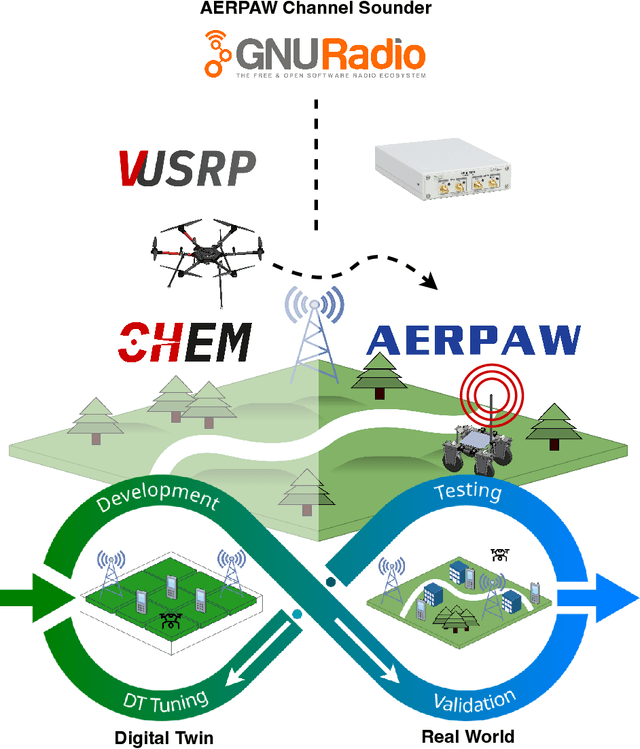
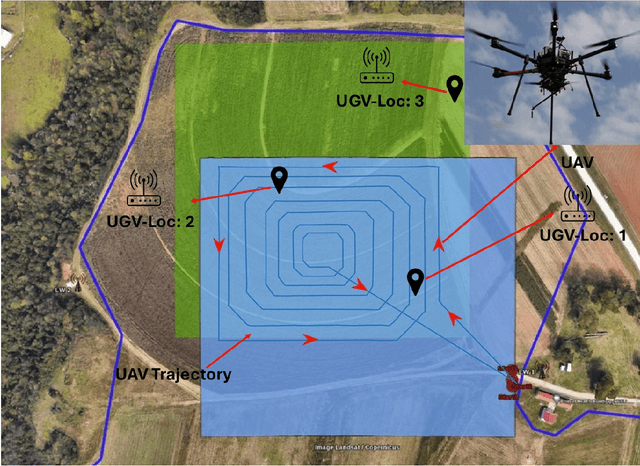
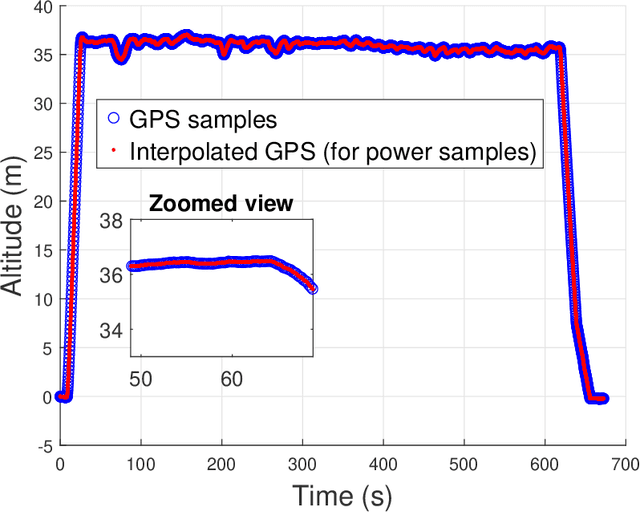
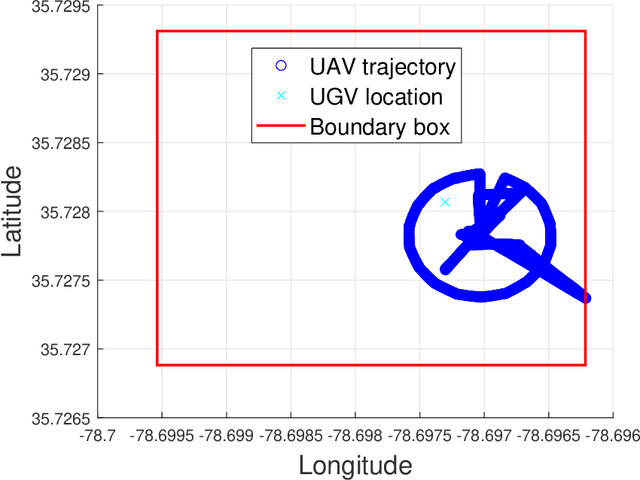
This paper presents a comprehensive real-world and Digital Twin (DT) dataset collected as part of the Find A Rover (AFAR) Challenge, organized by the NSF Aerial Experimentation and Research Platform for Advanced Wireless (AERPAW) testbed and hosted at the Lake Wheeler Field in Raleigh, North Carolina. The AFAR Challenge was a competition involving five finalist university teams, focused on promoting innovation in UAV-assisted radio frequency (RF) source localization. Participating teams were tasked with designing UAV flight trajectories and localization algorithms to detect the position of a hidden unmanned ground vehicle (UGV), also referred to as a rover, emitting wireless probe signals generated by GNU Radio. The competition was structured to evaluate solutions in a DT environment first, followed by deployment and testing in AERPAW's outdoor wireless testbed. For each team, the UGV was placed at three different positions, resulting in a total of 30 datasets, 15 collected in a DT simulation environment and 15 in a physical outdoor testbed. Each dataset contains time-synchronized measurements of received signal strength (RSS), received signal quality (RSQ), GPS coordinates, UAV velocity, and UAV orientation (roll, pitch, and yaw). Data is organized into structured folders by team, environment (DT and real-world), and UGV location. The dataset supports research in UAV-assisted RF source localization, air-to-ground (A2G) wireless propagation modeling, trajectory optimization, signal prediction, autonomous navigation, and DT validation. With approximately 300k time-synchronized samples collected from real-world experiments, the dataset provides a substantial foundation for training and evaluating deep learning (DL) models. Overall, the AFAR dataset serves as a valuable resource for advancing robust, real-world solutions in UAV-enabled wireless communications and sensing systems.