 Add to Chrome
 Add to Firefox
 Add to Edge
Enginuity: A Dataset and Benchmark for Vision-Language Understanding of Engineering Diagrams
Jun 02, 2026
Engineering diagrams pose a distinct challenge for vision-language models: unlike natural images or general documents, they encode information through dense spatial layouts, domain-specific symbols, and cross-references between visual callouts and structured parts tables. Despite their centrality to service, repair, and design workflows, there is no public benchmark for measuring VLM capabilities in this domain; existing datasets primarily focus on flowcharts, scientific figures, or business documents. To address this gap, we introduce Enginuity, the first open dataset and benchmark for evaluating VLMs on complex engineering diagrams. We define two tasks over a corpus of U.S. military service and repair manuals: structured parts-table extraction (Task 1) and free-form visual diagram question answering (VQA)(Task 2) for benchmarking. We evaluate four frontier VLMs (GPT-5.2 Chat, Claude Opus 4.7, Gemma 4, Qwen3-VL-32B-Instruct) under zero-shot and chain-of-thought prompting. On Task 1, models reach Recall@all of 0.61-0.87 but Token F1pen of only 0.03-0.18, exposing a systematic gap between part identification and description fidelity. Task 2 reveals a consistent factual-reasoning gap across all models. A supporting analysis shows that token-overlap metrics under-report model capability on technical descriptions by 2-6x relative to semantic similarity, motivating LLM-as-judge calibration for domain-specific evaluation. We release the dataset, annotations, evaluation harness, and per-sample model outputs to support a reproducible study of VLM capability on engineering content.

PerSEval: Assessing Personalization in Text Summarizers
Jun 29, 2024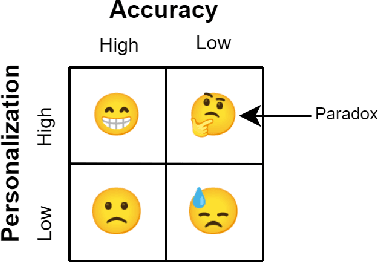


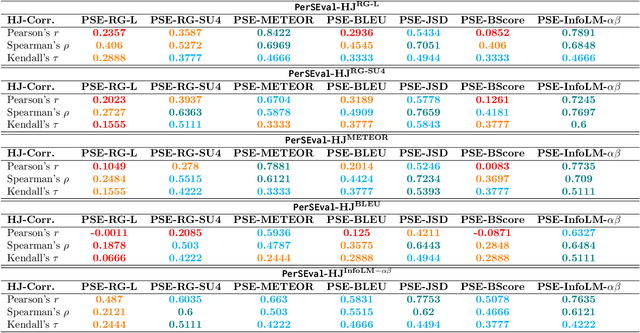
Personalized summarization models cater to individuals' subjective understanding of saliency, as represented by their reading history and current topics of attention. Existing personalized text summarizers are primarily evaluated based on accuracy measures such as BLEU, ROUGE, and METEOR. However, a recent study argued that accuracy measures are inadequate for evaluating the degree of personalization of these models and proposed EGISES, the first metric to evaluate personalized text summaries. It was suggested that accuracy is a separate aspect and should be evaluated standalone. In this paper, we challenge the necessity of an accuracy leaderboard, suggesting that relying on accuracy-based aggregated results might lead to misleading conclusions. To support this, we delve deeper into EGISES, demonstrating both theoretically and empirically that it measures the degree of responsiveness, a necessary but not sufficient condition for degree-of-personalization. We subsequently propose PerSEval, a novel measure that satisfies the required sufficiency condition. Based on the benchmarking of ten SOTA summarization models on the PENS dataset, we empirically establish that -- (i) PerSEval is reliable w.r.t human-judgment correlation (Pearson's r = 0.73; Spearman's $\rho$ = 0.62; Kendall's $\tau$ = 0.42), (ii) PerSEval has high rank-stability, (iii) PerSEval as a rank-measure is not entailed by EGISES-based ranking, and (iv) PerSEval can be a standalone rank-measure without the need of any aggregated ranking.