 Add to Chrome
 Add to Firefox
 Add to Edge
Topic-Guided Sampling For Data-Efficient Multi-Domain Stance Detection
Jun 01, 2023
Stance Detection is concerned with identifying the attitudes expressed by an author towards a target of interest. This task spans a variety of domains ranging from social media opinion identification to detecting the stance for a legal claim. However, the framing of the task varies within these domains, in terms of the data collection protocol, the label dictionary and the number of available annotations. Furthermore, these stance annotations are significantly imbalanced on a per-topic and inter-topic basis. These make multi-domain stance detection a challenging task, requiring standardization and domain adaptation. To overcome this challenge, we propose $\textbf{T}$opic $\textbf{E}$fficient $\textbf{St}$anc$\textbf{E}$ $\textbf{D}$etection (TESTED), consisting of a topic-guided diversity sampling technique and a contrastive objective that is used for fine-tuning a stance classifier. We evaluate the method on an existing benchmark of $16$ datasets with in-domain, i.e. all topics seen and out-of-domain, i.e. unseen topics, experiments. The results show that our method outperforms the state-of-the-art with an average of $3.5$ F1 points increase in-domain, and is more generalizable with an averaged increase of $10.2$ F1 on out-of-domain evaluation while using $\leq10\%$ of the training data. We show that our sampling technique mitigates both inter- and per-topic class imbalances. Finally, our analysis demonstrates that the contrastive learning objective allows the model a more pronounced segmentation of samples with varying labels.

Faithfulness Tests for Natural Language Explanations
May 29, 2023Explanations of neural models aim to reveal a model's decision-making process for its predictions. However, recent work shows that current methods giving explanations such as saliency maps or counterfactuals can be misleading, as they are prone to present reasons that are unfaithful to the model's inner workings. This work explores the challenging question of evaluating the faithfulness of natural language explanations (NLEs). To this end, we present two tests. First, we propose a counterfactual input editor for inserting reasons that lead to counterfactual predictions but are not reflected by the NLEs. Second, we reconstruct inputs from the reasons stated in the generated NLEs and check how often they lead to the same predictions. Our tests can evaluate emerging NLE models, proving a fundamental tool in the development of faithful NLEs.
Measuring Intersectional Biases in Historical Documents
May 21, 2023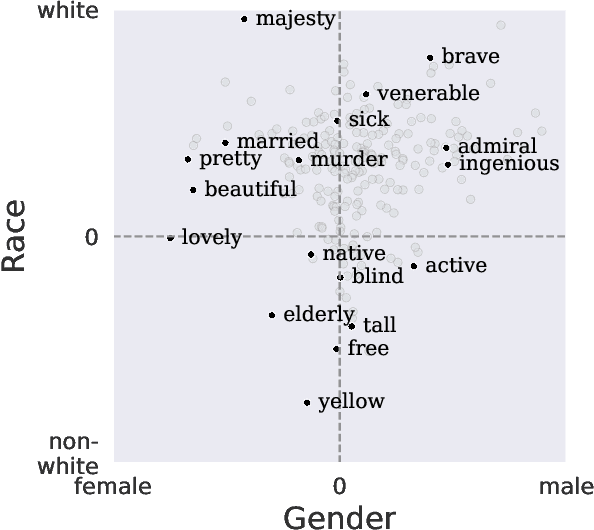
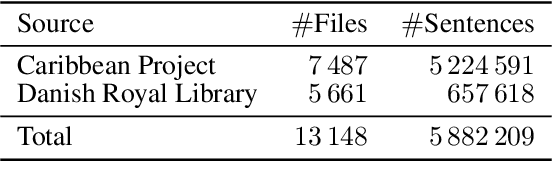

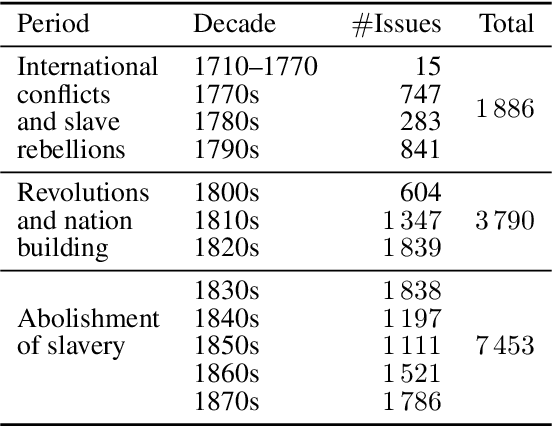
Data-driven analyses of biases in historical texts can help illuminate the origin and development of biases prevailing in modern society. However, digitised historical documents pose a challenge for NLP practitioners as these corpora suffer from errors introduced by optical character recognition (OCR) and are written in an archaic language. In this paper, we investigate the continuities and transformations of bias in historical newspapers published in the Caribbean during the colonial era (18th to 19th centuries). Our analyses are performed along the axes of gender, race, and their intersection. We examine these biases by conducting a temporal study in which we measure the development of lexical associations using distributional semantics models and word embeddings. Further, we evaluate the effectiveness of techniques designed to process OCR-generated data and assess their stability when trained on and applied to the noisy historical newspapers. We find that there is a trade-off between the stability of the word embeddings and their compatibility with the historical dataset. We provide evidence that gender and racial biases are interdependent, and their intersection triggers distinct effects. These findings align with the theory of intersectionality, which stresses that biases affecting people with multiple marginalised identities compound to more than the sum of their constituents.
Multilingual Event Extraction from Historical Newspaper Adverts
May 18, 2023
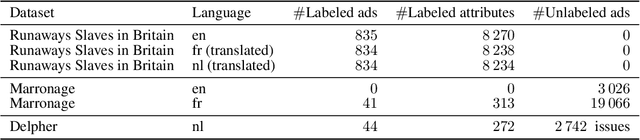
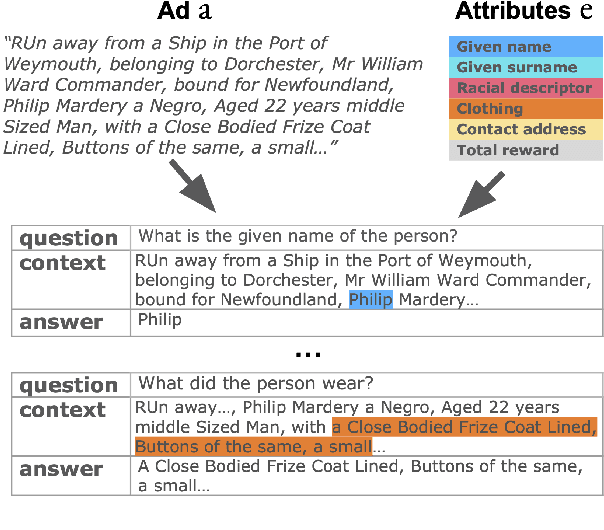
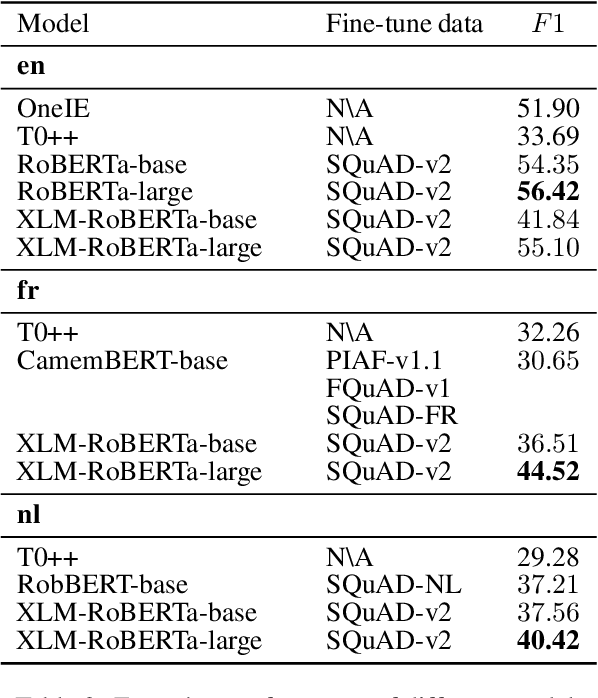
NLP methods can aid historians in analyzing textual materials in greater volumes than manually feasible. Developing such methods poses substantial challenges though. First, acquiring large, annotated historical datasets is difficult, as only domain experts can reliably label them. Second, most available off-the-shelf NLP models are trained on modern language texts, rendering them significantly less effective when applied to historical corpora. This is particularly problematic for less well studied tasks, and for languages other than English. This paper addresses these challenges while focusing on the under-explored task of event extraction from a novel domain of historical texts. We introduce a new multilingual dataset in English, French, and Dutch composed of newspaper ads from the early modern colonial period reporting on enslaved people who liberated themselves from enslavement. We find that: 1) even with scarce annotated data, it is possible to achieve surprisingly good results by formulating the problem as an extractive QA task and leveraging existing datasets and models for modern languages; and 2) cross-lingual low-resource learning for historical languages is highly challenging, and machine translation of the historical datasets to the considered target languages is, in practice, often the best-performing solution.
Thorny Roses: Investigating the Dual Use Dilemma in Natural Language Processing
Apr 17, 2023
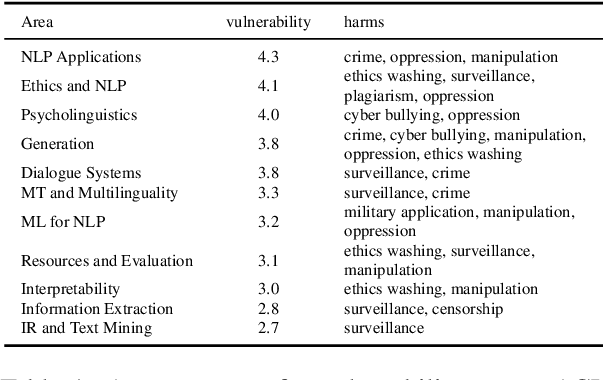

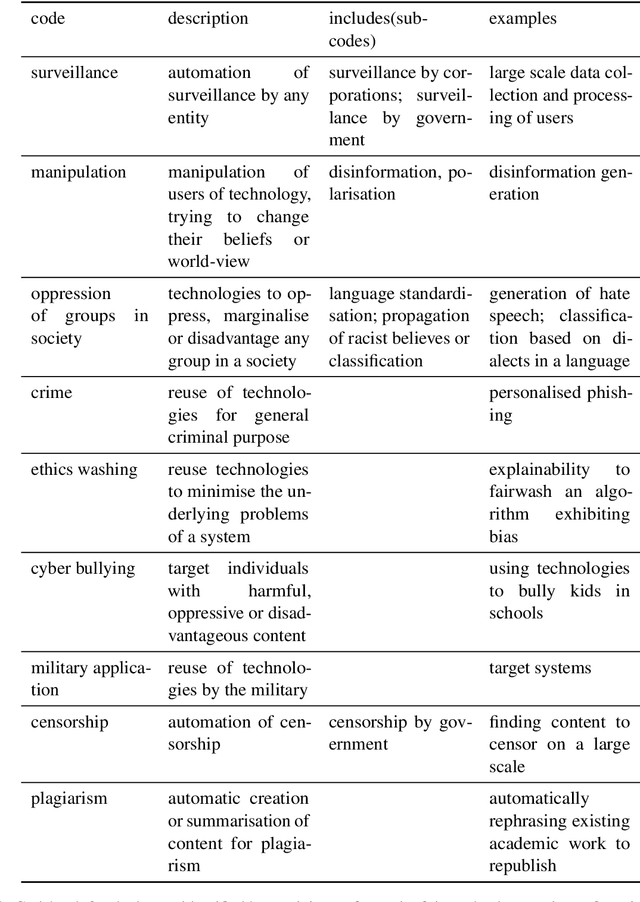
Dual use, the intentional, harmful reuse of technology and scientific artefacts, is a problem yet to be well-defined within the context of Natural Language Processing (NLP). However, as NLP technologies continue to advance and become increasingly widespread in society, their inner workings have become increasingly opaque. Therefore, understanding dual use concerns and potential ways of limiting them is critical to minimising the potential harms of research and development. In this paper, we conduct a survey of NLP researchers and practitioners to understand the depth and their perspective of the problem as well as to assess existing available support. Based on the results of our survey, we offer a definition of dual use that is tailored to the needs of the NLP community. The survey revealed that a majority of researchers are concerned about the potential dual use of their research but only take limited action toward it. In light of the survey results, we discuss the current state and potential means for mitigating dual use in NLP and propose a checklist that can be integrated into existing conference ethics-frameworks, e.g., the ACL ethics checklist.
Measuring Gender Bias in West Slavic Language Models
Apr 13, 2023Pre-trained language models have been known to perpetuate biases from the underlying datasets to downstream tasks. However, these findings are predominantly based on monolingual language models for English, whereas there are few investigative studies of biases encoded in language models for languages beyond English. In this paper, we fill this gap by analysing gender bias in West Slavic language models. We introduce the first template-based dataset in Czech, Polish, and Slovak for measuring gender bias towards male, female and non-binary subjects. We complete the sentences using both mono- and multilingual language models and assess their suitability for the masked language modelling objective. Next, we measure gender bias encoded in West Slavic language models by quantifying the toxicity and genderness of the generated words. We find that these language models produce hurtful completions that depend on the subject's gender. Perhaps surprisingly, Czech, Slovak, and Polish language models produce more hurtful completions with men as subjects, which, upon inspection, we find is due to completions being related to violence, death, and sickness.
TempEL: Linking Dynamically Evolving and Newly Emerging Entities
Feb 05, 2023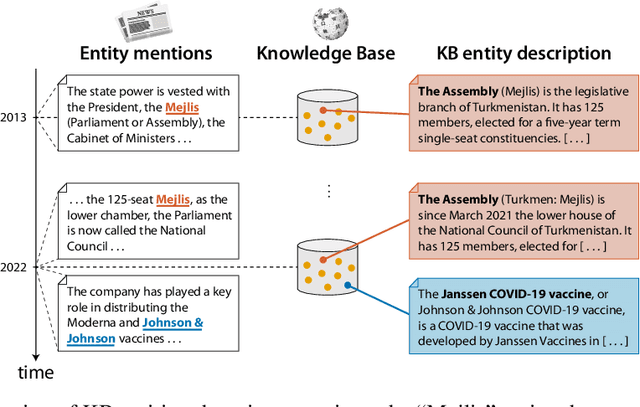
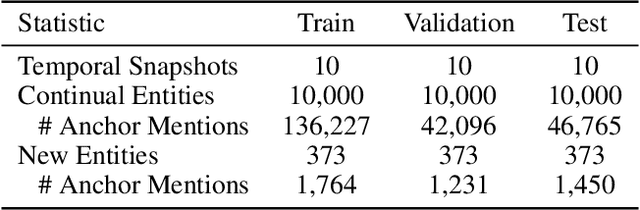
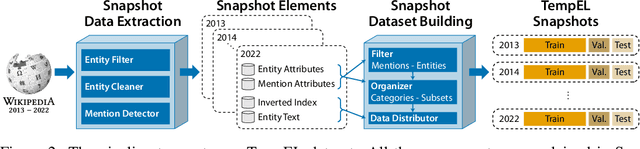
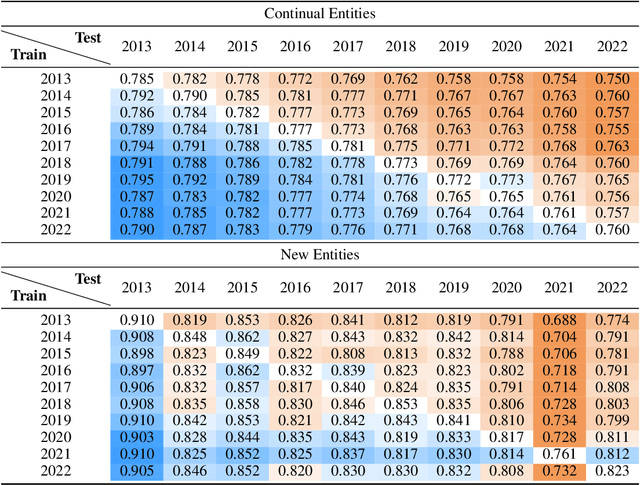
In our continuously evolving world, entities change over time and new, previously non-existing or unknown, entities appear. We study how this evolutionary scenario impacts the performance on a well established entity linking (EL) task. For that study, we introduce TempEL, an entity linking dataset that consists of time-stratified English Wikipedia snapshots from 2013 to 2022, from which we collect both anchor mentions of entities, and these target entities' descriptions. By capturing such temporal aspects, our newly introduced TempEL resource contrasts with currently existing entity linking datasets, which are composed of fixed mentions linked to a single static version of a target Knowledge Base (e.g., Wikipedia 2010 for CoNLL-AIDA). Indeed, for each of our collected temporal snapshots, TempEL contains links to entities that are continual, i.e., occur in all of the years, as well as completely new entities that appear for the first time at some point. Thus, we enable to quantify the performance of current state-of-the-art EL models for: (i) entities that are subject to changes over time in their Knowledge Base descriptions as well as their mentions' contexts, and (ii) newly created entities that were previously non-existing (e.g., at the time the EL model was trained). Our experimental results show that in terms of temporal performance degradation, (i) continual entities suffer a decrease of up to 3.1% EL accuracy, while (ii) for new entities this accuracy drop is up to 17.9%. This highlights the challenge of the introduced TempEL dataset and opens new research prospects in the area of time-evolving entity disambiguation.
Adapting Neural Link Predictors for Complex Query Answering
Jan 29, 2023Answering complex queries on incomplete knowledge graphs is a challenging task where a model needs to answer complex logical queries in the presence of missing knowledge. Recently, Arakelyan et al. (2021); Minervini et al. (2022) showed that neural link predictors could also be used for answering complex queries: their Continuous Query Decomposition (CQD) method works by decomposing complex queries into atomic sub-queries, answers them using neural link predictors and aggregates their scores via t-norms for ranking the answers to each complex query. However, CQD does not handle negations and only uses the training signal from atomic training queries: neural link prediction scores are not calibrated to interact together via fuzzy logic t-norms during complex query answering. In this work, we propose to address this problem by training a parameter-efficient score adaptation model to re-calibrate neural link prediction scores: this new component is trained on complex queries by back-propagating through the complex query-answering process. Our method, CQD$^{A}$, produces significantly more accurate results than current state-of-the-art methods, improving from $34.4$ to $35.1$ Mean Reciprocal Rank values averaged across all datasets and query types while using $\leq 35\%$ of the available training query types. We further show that CQD$^{A}$ is data-efficient, achieving competitive results with only $1\%$ of the training data, and robust in out-of-domain evaluations.
Multi-View Knowledge Distillation from Crowd Annotations for Out-of-Domain Generalization
Dec 19, 2022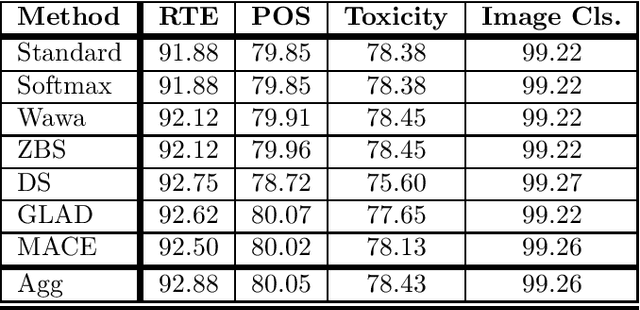
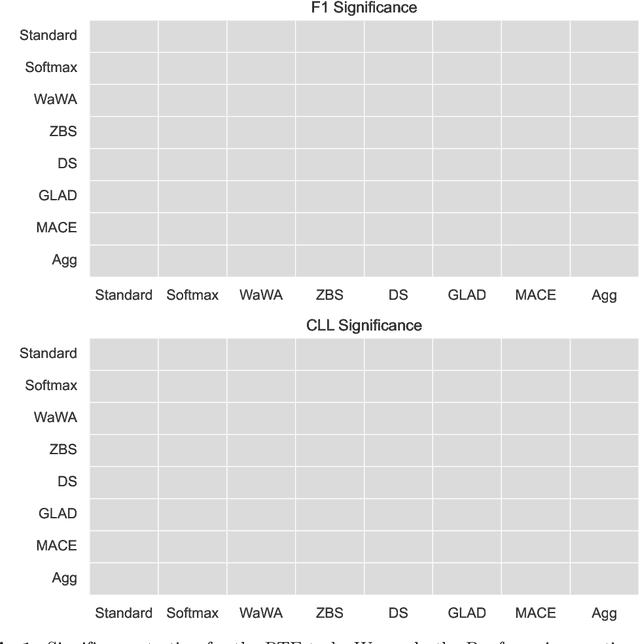
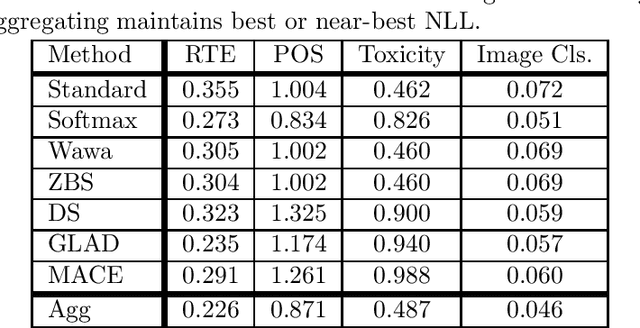
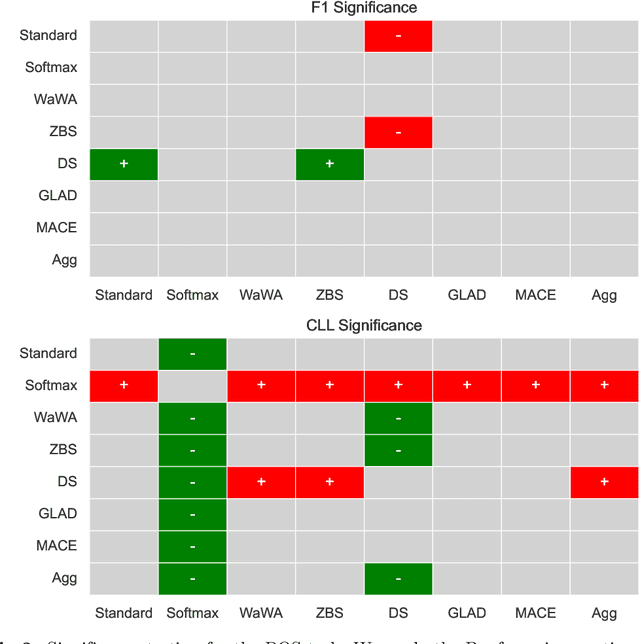
Selecting an effective training signal for tasks in natural language processing is difficult: collecting expert annotations is expensive, and crowd-sourced annotations may not be reliable. At the same time, recent work in machine learning has demonstrated that learning from soft-labels acquired from crowd annotations can be effective, especially when there is distribution shift in the test set. However, the best method for acquiring these soft labels is inconsistent across tasks. This paper proposes new methods for acquiring soft-labels from crowd-annotations by aggregating the distributions produced by existing methods. In particular, we propose to find a distribution over classes by learning from multiple-views of crowd annotations via temperature scaling and finding the Jensen-Shannon centroid of their distributions. We demonstrate that using these aggregation methods leads to best or near-best performance across four NLP tasks on out-of-domain test sets, mitigating fluctuations in performance when using the constituent methods on their own. Additionally, these methods result in best or near-best uncertainty estimation across tasks. We argue that aggregating different views of crowd-annotations as soft-labels is an effective way to ensure performance which is as good or better than the best individual view, which is useful given the inconsistency in performance of the individual methods.
Revisiting Softmax for Uncertainty Approximation in Text Classification
Oct 25, 2022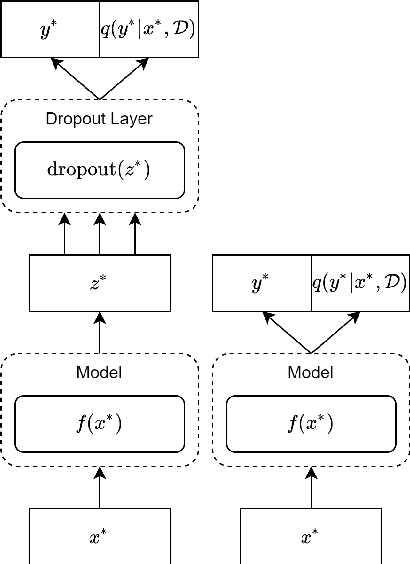
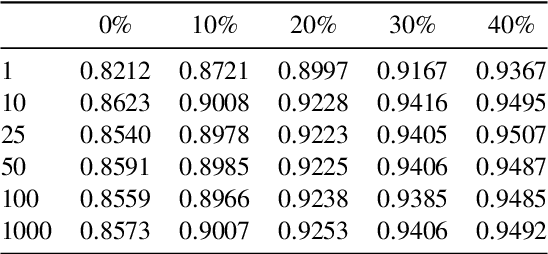
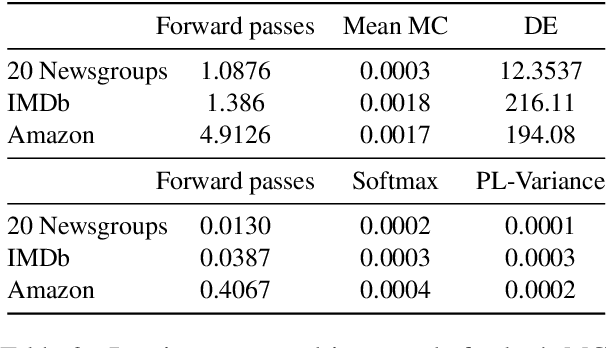
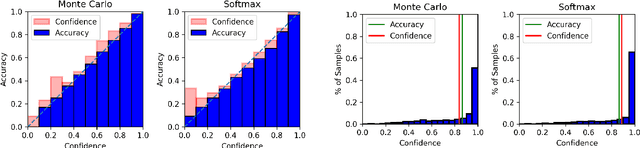
Uncertainty approximation in text classification is an important area with applications in domain adaptation and interpretability. The most widely used uncertainty approximation method is Monte Carlo Dropout, which is computationally expensive as it requires multiple forward passes through the model. A cheaper alternative is to simply use a softmax to estimate model uncertainty. However, prior work has indicated that the softmax can generate overconfident uncertainty estimates and can thus be tricked into producing incorrect predictions. In this paper, we perform a thorough empirical analysis of both methods on five datasets with two base neural architectures in order to reveal insight into the trade-offs between the two. We compare the methods' uncertainty approximations and downstream text classification performance, while weighing their performance against their computational complexity as a cost-benefit analysis, by measuring runtime (cost) and the downstream performance (benefit). We find that, while Monte Carlo produces the best uncertainty approximations, using a simple softmax leads to competitive uncertainty estimation for text classification at a much lower computational cost, suggesting that softmax can in fact be a sufficient uncertainty estimate when computational resources are a concern.