 Add to Chrome
 Add to Firefox
 Add to Edge
CTFusion: A CTF-based Benchmark for LLM Agent Evaluation
May 12, 2026
Recent advances in Large Language Models (LLMs) have enabled agentic systems for complex, multi-step tasks; cybersecurity is emerging as a prominent application. To evaluate such agents, researchers widely adopt Capture The Flag (CTF) benchmarks. However, current CTF benchmarks reuse existing challenges, which exposes them to data contamination and potential cheating. Notably, we confirmed these issues in practice by integrating web search tools into an existing agent. To address these limitations, we present CTFusion, a streaming evaluation framework built on Live CTFs. To achieve this, CTFusion preserves per-agent independence under a single team account and reduces competition impact by forwarding only the first correct flag per challenge. Moreover, we implement CTFusion as a Model Context Protocol (MCP) server on the widely used CTFd platform, which offers broad applicability to diverse CTF events and agent types. Through experiments with three LLMs, two agents, and five Live CTFs, we demonstrate that existing CTF benchmarks can be unreliable in assessing LLM-based agents, while CTFusion can serve as a robust solution for evaluating cybersecurity agents. We release CTFusion as open source to foster future research in this area.

ATLANTIS: AI-driven Threat Localization, Analysis, and Triage Intelligence System
Sep 18, 2025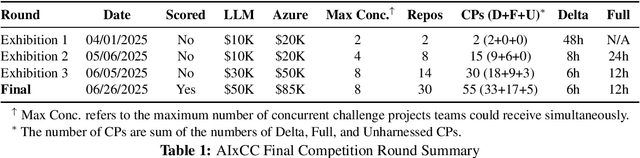
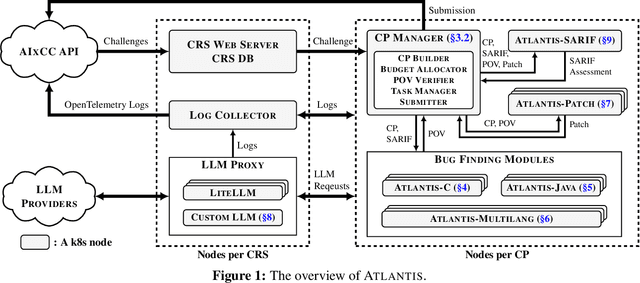
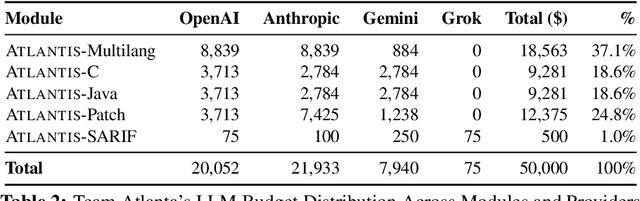
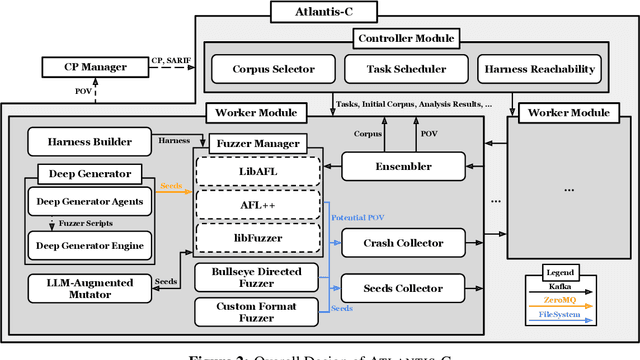
We present ATLANTIS, the cyber reasoning system developed by Team Atlanta that won 1st place in the Final Competition of DARPA's AI Cyber Challenge (AIxCC) at DEF CON 33 (August 2025). AIxCC (2023-2025) challenged teams to build autonomous cyber reasoning systems capable of discovering and patching vulnerabilities at the speed and scale of modern software. ATLANTIS integrates large language models (LLMs) with program analysis -- combining symbolic execution, directed fuzzing, and static analysis -- to address limitations in automated vulnerability discovery and program repair. Developed by researchers at Georgia Institute of Technology, Samsung Research, KAIST, and POSTECH, the system addresses core challenges: scaling across diverse codebases from C to Java, achieving high precision while maintaining broad coverage, and producing semantically correct patches that preserve intended behavior. We detail the design philosophy, architectural decisions, and implementation strategies behind ATLANTIS, share lessons learned from pushing the boundaries of automated security when program analysis meets modern AI, and release artifacts to support reproducibility and future research.