 Add to Chrome
 Add to Firefox
 Add to Edge
High-Altitude Platform Station-Aided Terahertz Satellite Communication Systems with Hardware Impairments
Jul 27, 2026
The utilization of terahertz (THz) frequencies in satellite-aerial-ground communication systems stands out as a promising solution to accomplish both global connectivity and extreme data rates requirements of the sixth-generation networks. In the current literature, the impact of non-ideal equipment on the performance of THz satellite-aerial-ground communication systems remains unexplored, which is critical for practical implementations. Hence, this paper analyzes the performance of high-altitude platform station (HAPS)-aided THz satellite communication system in the presence of $α$-$μ$ fading, pointing errors, absorption loss, and hardware impairments for different atmospheric conditions. In the system of interest, it is assumed that variable-gain amplify-and-forward protocol is utilized at HAPS nodes (systems), and the HAPS system, which provides the maximum end-to-end signal-to-noise ratio (SNR), is selected for transmission. To evaluate the outage, asymptotic outage, and ergodic capacity bounds for the system, the probability density function, cumulative distribution function (CDF), and asymptotic CDF related to the upper bound of the end-to-end SNR are obtained. By using these statistics, the effects of hardware impairment levels, zenith angles, and atmospheric conditions on the system performance are examined. The results have shown that hardware impairments cause power loss in outage performance and reduce the system capacity. Moreover, it is demonstrated that the outage probability depends on either fading or pointing error characteristics in high SNR region and also that the system performance almost remains the same for lower zenith angles in HAPS-to-ground link regardless of the atmospheric conditions.

A Holistic Link Budget Analysis for mmWave and THz Communications in Non-Terrestrial Networks
Jun 28, 2026The non-terrestrial network (NTN) architecture has gained significant interest from the academia owing to its versatility and the ability to provide worldwide service. To achieve extremely high data rates in NTNs, as intended in the sixth-generation (6G) communication systems, millimeter wave (mmWave) and terahertz (THz) frequencies can be considered, enabling substantial bandwidth and data transmission capacity, which makes them highly suitable for NTN applications. However, these high-frequency signals suffer from significant propagation challenges, including atmospheric attenuation, pointing errors, and various environmental effects. Therefore, a comprehensive link budget analysis is essential to accurately assess the feasibility of mmWave/THz-based NTN systems. Existing studies in the literature often fail to fully capture certain frequency-, altitude-, and direction-dependent effects observed in mmWave/THz transmission or possible communication scenarios within the NTN architecture. In particular, while most prior works primarily focus on free-space loss or atmospheric attenuation, this study adopts a much more comprehensive approach. In this work, a detailed link budget analysis is conducted for mmWave/THz NTNs, considering free-space loss, atmospheric absorption, weather-induced effects, ionospheric disturbances, polarization mismatches, feeder losses, antenna and circuitry constraints, fading, pointing errors, and non-white noise characteristics. The results have revealed that the multi-layer structure of the NTN architecture can help reducing the excessive loss levels to a certain level that can be tolerated by high-gain directional antennas/arrays, providing multi-gigabit links and making mmWave/THz NTNs feasible for 6G communication systems.
A Novel Piecewise Atmospheric Attenuation Model for Free Space Optical Links in Vertical Heterogeneous Networks
Apr 20, 2026Free-space optical (FSO) communication is emerging as a key backhaul technology for next-generation vertical heterogeneous networks (VHetNets), whose architecture spans satellites, high-altitude platform stations (HAPS), unmanned aerial vehicles (UAVs), and terrestrial nodes. Along these vertical and slant paths, optical beams traverse successive atmospheric layers that may contain clouds, fog, rain, and aerosols, conditions that conventional single-coefficient Beer-Lambert models typically handle only in isolation. Instead of such simplified formulas, we present a unified attenuation model that incorporates aerosols, fog, rain, cloud layers, and drizzle, accounts for the zenith angle, and provides a holistic estimate of the cumulative power loss across atmospheric layers. Numerical results show several-decibel attenuation variations across representative weather scenarios, while the difference between the proposed model predictions and the layer-resolved MODTRAN simulations remains within 1 dB, thereby validating the accuracy of the proposed model and its practical relevance for VHetNet link-budget studies.
Over-the-Air Beamforming with Reconfigurable Intelligent Surfaces
Aug 22, 2022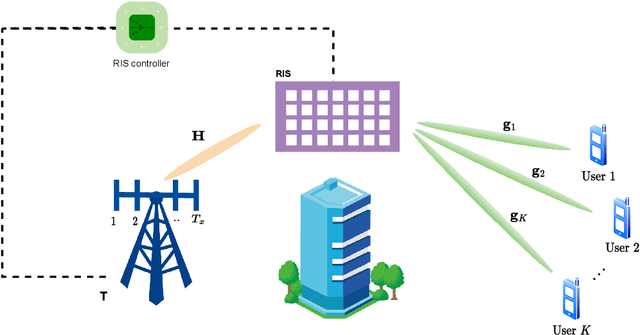


Reconfigurable intelligent surface (RIS)-empowered communication is a revolutionary technology that enables to manipulate wireless propagation environment via smartly controllable low-cost reflecting surfaces. However, in order to outperform conventional communication systems, an RIS-aided system with solely passive reflection requires an extremely large surface. To meet this challenge, the concept of active RIS, which performs simultaneous amplification and reflection on the incident signal at the expense of additional power consumption, has been recently introduced. In this paper, deploying an active RIS, we propose a novel beamforming concept, over-the-air beamforming, for RIS-aided multi-user multiple-input single-output (MISO) transmission schemes without requiring any pre/post signal processing hardware designs at the transmitter and receiver sides. In the proposed over-the-air beamforming-based transmission scheme, the reflection coefficients of the active RIS elements are customized to maximize the sum-rate gain. To tackle this issue, first, a non-convex quadratically constrained quadratic programming (QCQP) problem is formulated. Then, using semidefinite relaxation (SDR) approach, this optimization problem is converted to a convex feasibility problem, which is efficiently solved using the CVX optimization toolbox. Moreover, taking inspiration from this beamforming technique, a novel high-rate receive index modulation (IM) scheme with a low-complexity sub-optimal detector is developed. Through comprehensive simulation results, the sum-rate and bit error rate (BER) performance of the proposed designs are investigated.
On the Performance of UAV Relaying with Reconfigurable Antenna and Media Based Modulation in the Presence of Shadowed Fading
Jun 09, 2022


Unmanned aerial vehicles (UAVs) have attracted significant interest from the academia and industry most recently. Motivated by the wide usage of UAVs, this paper considers UAV communication with reconfigurable antenna (RA) in the presence of fading and shadowing effects which occur due to tall buildings and skyscrapers in urban areas. More precisely, RA offers to receive information through mirror activation patterns (MAPs) so that it can achieve a receive diversity with decreased error probability by using only one radio frequency (RF) chain. Also, media based modulation (MBM) technique for data transmission with MAPs can be exploited by using RAs with reduced cost. To quantify the performance of the proposed UAV system, we derive a tight upper bound for the overall error probability by considering approximated channel model to the standardization studies for UAVs. The results have shown that RAs can make the overall system more resilient to shadowing and fading effects in terms of error performance, and they are energy efficient.
Cooperation in Space: HAPS-Aided Optical Inter-Satellite Connectivity with Opportunistic Scheduling
Dec 28, 2021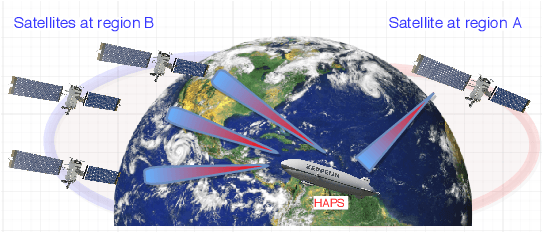
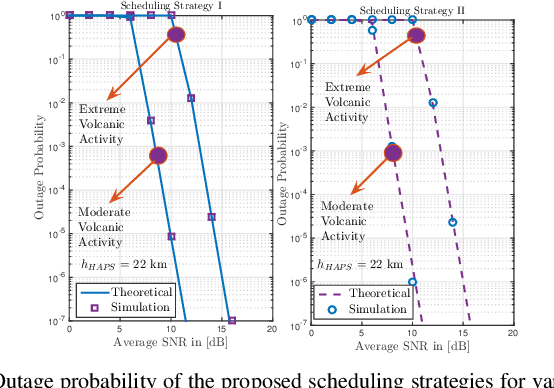
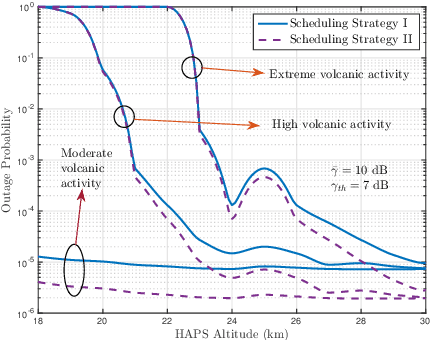
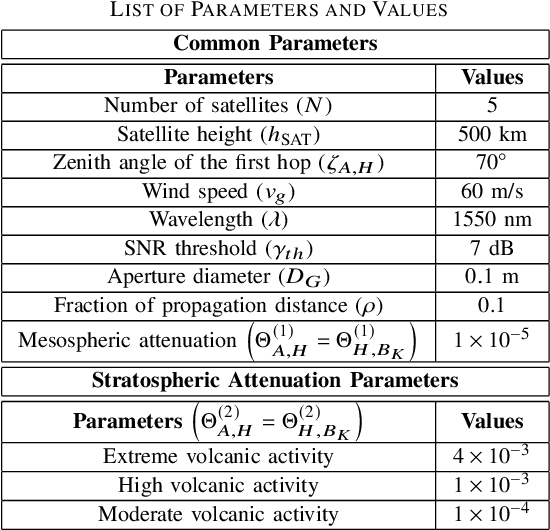
Issues with tracking, precision pointing, and Doppler shift are the major sources of performance loss in laser inter-satellite communication that can severely decrease the coverage and overall performance of satellite constellations. As a solution to these problems, we propose a cooperation strategy in which a high altitude platform station (HAPS) staying at a quasi-stationary position contributes to the inter-satellite connectivity. In this setup, the HAPS node uses two different scheduling approaches: one that relies on the zenith angle; the other on instantaneous signal-to-noise ratio. To quantify the performance of the proposed scheme, overall outage probabilities for the two scheduling methods are obtained. In addition, guidelines for the design of practical inter-satellite networks are provided.
Optical Satellite Eavesdropping
Dec 09, 2021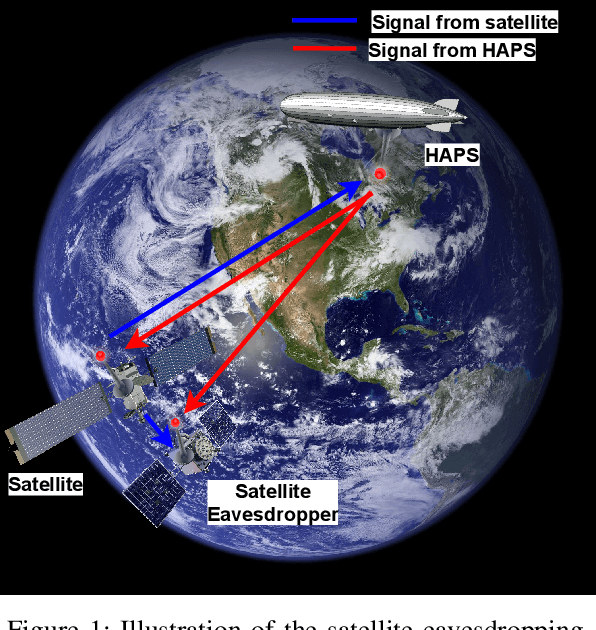
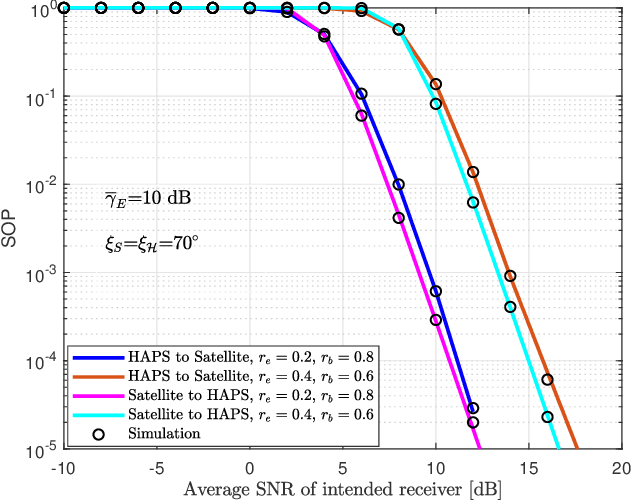
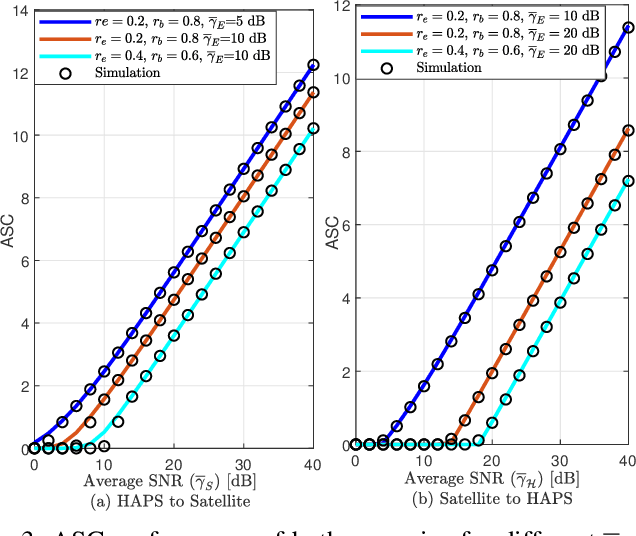
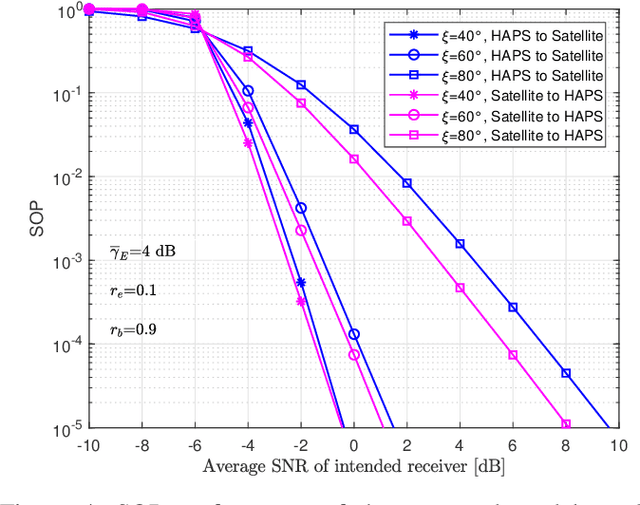
In recent years, satellite communication (SatCom) systems have been widely used for navigation, broadcasting application, disaster recovery, weather sensing, and even spying on the Earth. As the number of satellites is highly increasing and with the radical revolution in wireless technology, eavesdropping on SatCom will be possible in next-generation networks. In this context, we introduce the satellite eavesdropping approach, where an eavesdropping satellite can intercept optical communications established between a low Earth orbit (LEO) satellite and a high altitude platform station (HAPS). Specifically, we propose two practical eavesdropping scenarios for satellite-to-HAPS (downlink) and HAPS-to-satellite (uplink) optical communications, where the eavesdropper satellite can eavesdrop on the transmitted signal or the received signal. To quantify the secrecy performance of the scenarios, the average secrecy capacity (ASC) and secrecy outage probability (SOP) expressions are derived and validated with Monte Carlo (MC) simulations. We observe that turbulence-induced fading significantly impacts the secrecy performance of free-space optical (FSO) communication.
Hybrid Reflection Modulation
Nov 16, 2021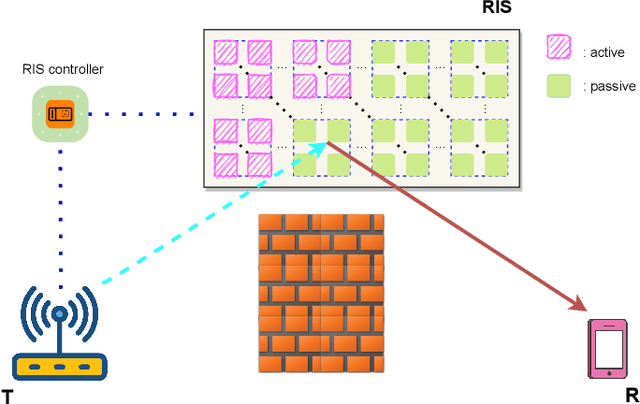
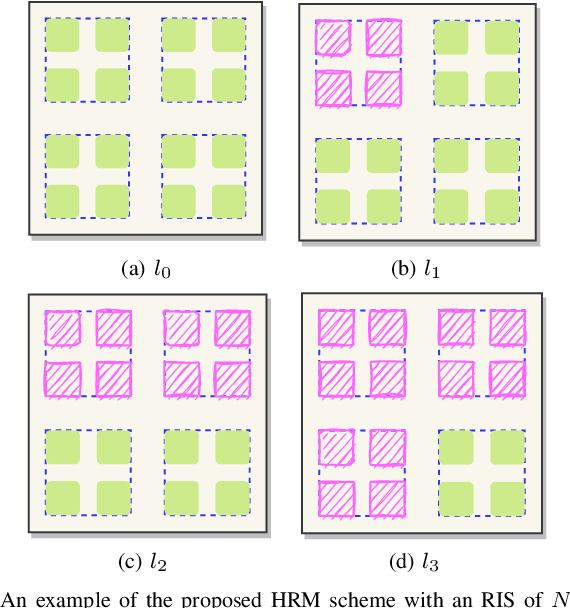
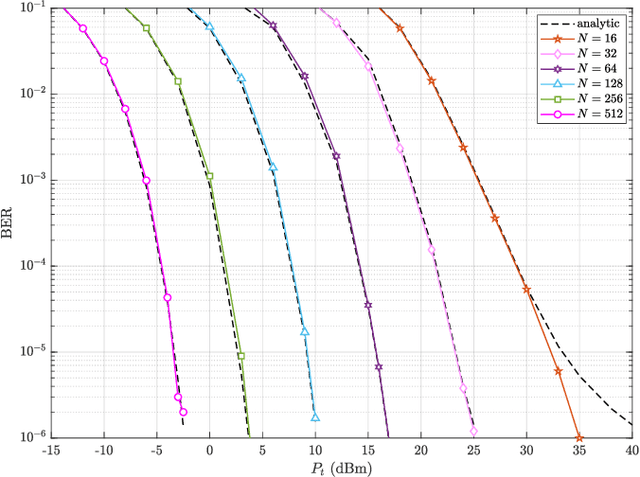
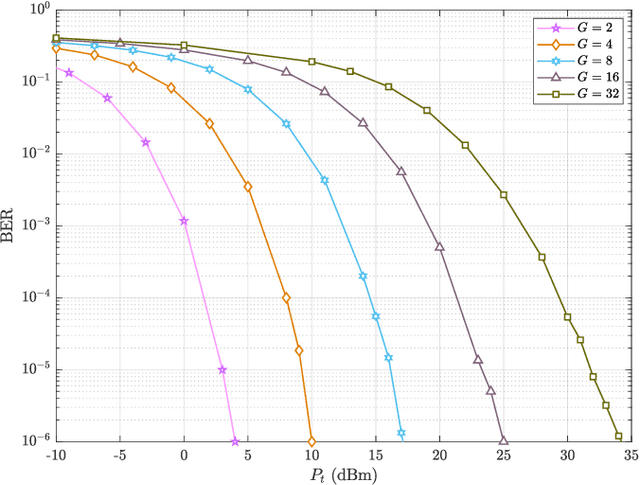
Reconfigurable intelligent surface (RIS)-empowered communication has emerged as a novel concept for customizing future wireless environments in a cost- and energy-efficient way. However, due to double path loss, existing fully passive RIS systems that purely reflect the incident signals into preferred directions attain an unsatisfactory performance improvement over the traditional wireless networks in certain conditions. To overcome this bottleneck, we propose a novel transmission scheme, named hybrid reflection modulation (HRM), exploiting both active and passive reflecting elements at the RIS and their combinations, which enables to convey information without using any radio frequency (RF) chains. In the HRM scheme, the active reflecting elements using additional power amplifiers are able to amplify and reflect the incoming signal, while the remaining passive elements can simply reflect the signals with appropriate phase shifts. Based on this novel transmission model, we obtain an upper bound for the average bit error probability (ABEP), and derive achievable rate of the system using an information theoretic approach. Moreover, comprehensive computer simulations are performed to prove the superiority of the proposed HRM scheme over existing fully passive, fully active and reflection modulation (RM) systems.
HAPS Selection for Hybrid RF/FSO Satellite Networks
Jul 27, 2021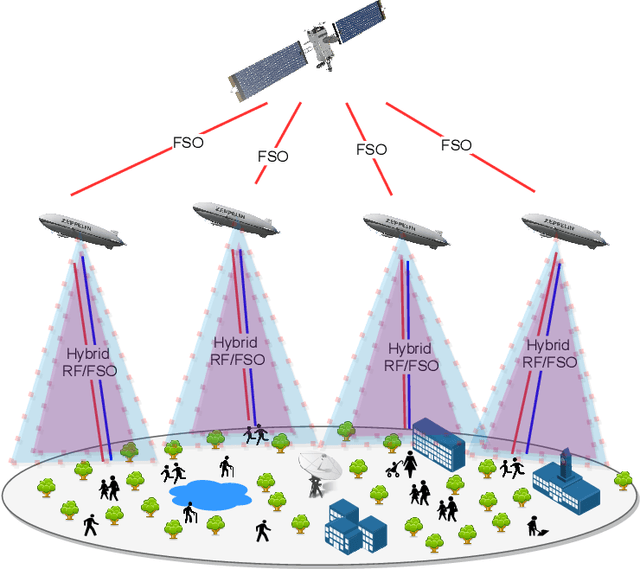
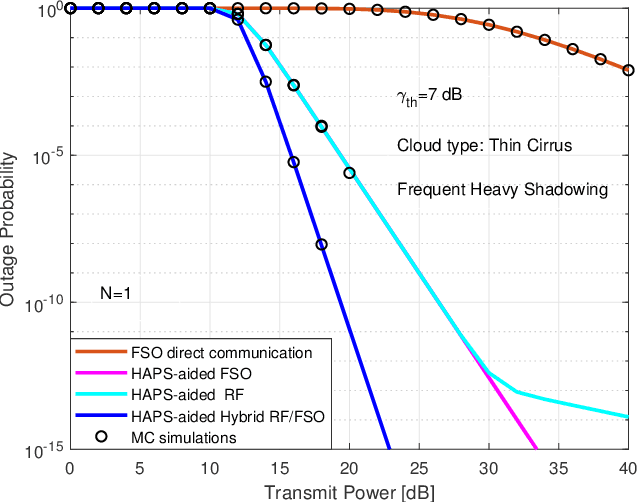
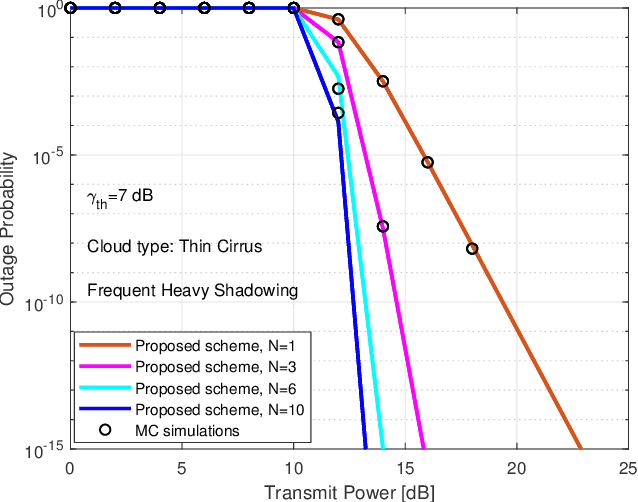
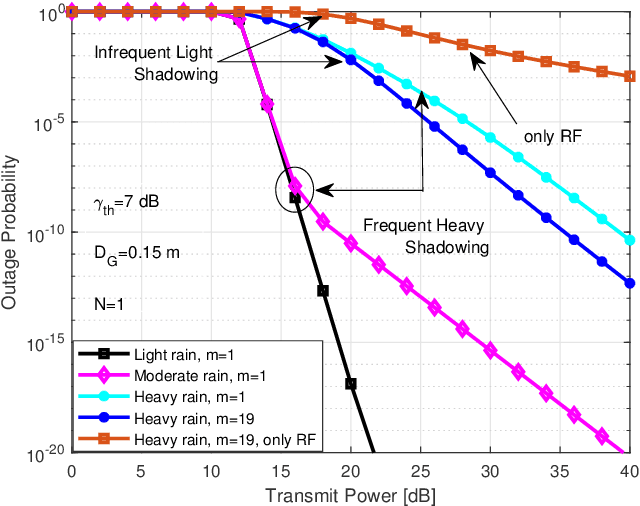
Non-terrestrial networks have been attracting much interest from the industry and academia. Satellites and high altitude platform station (HAPS) systems are expected to be the key enablers of next-generation wireless networks. In this paper, we introduce a novel downlink satellite communication (SatCom) model where free-space optical (FSO) communication is used between a satellite and HAPS node, and a hybrid FSO/radio-frequency (RF) transmission model is used between the HAPS node and ground station (GS). In the first phase of transmission, the satellite selects the HAPS node that provides the highest signal-to-noise ratio (SNR). In the second phase, the selected HAPS decodes and forwards the signal to the GS. To evaluate the performance of the proposed system, outage probability expressions are derived for exponentiated Weibull (EW) and shadowed-Rician fading models while considering the atmospheric turbulence, stratospheric attenuation, and attenuation due to scattering, path loss, and pointing errors. Furthermore, the impact of aperture averaging, temperature, and wind speed are investigated. Finally, we provide some important guidelines that can be helpful for the design of practical HAPS-aided SatCom.
A Weather-Dependent Hybrid RF/FSO Satellite Communication for Improved Power Efficiency
Jul 09, 2021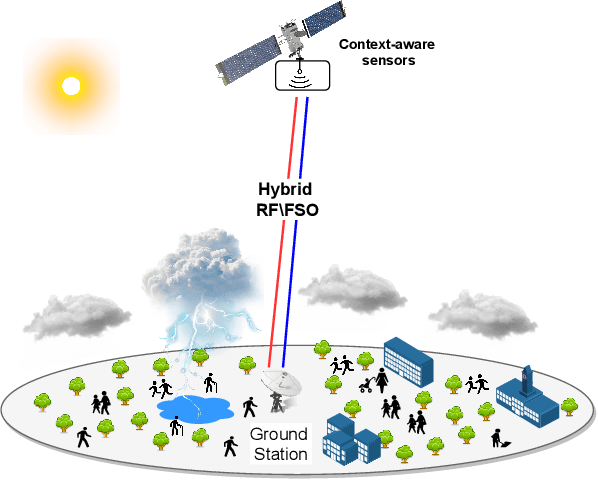
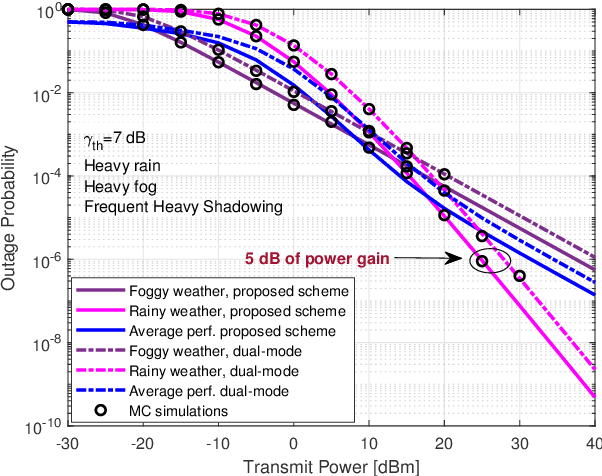
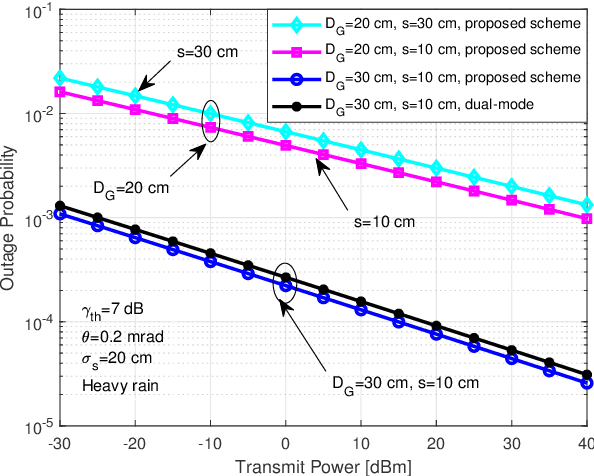
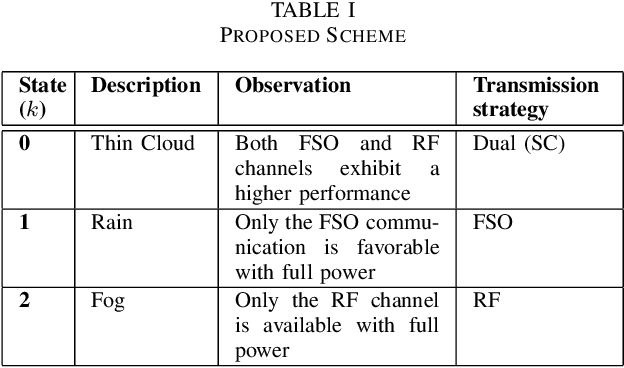
Recent studies have shown that satellite communication (SatCom) will have a fundamental role in the next generation non-terrestrial networks (NTN). In SatCom, radio-frequency (RF) or free-space optical (FSO) communications can be used depending on the communication environment. Motivated by the complementary nature of RF and FSO communication, we propose a hybrid RF/FSO transmission strategy for SatCom, where the satellite selects RF or FSO link depending on the weather conditions obtained from the context-aware sensor. To quantify the performance of the proposed network, we derive the outage probability by considering different weather conditions. Furthermore, we investigate the impact of non-zero boresight pointing errors and illustrate the benefits of the aperture averaging to mitigate the effect of misalignment. Finally, we suggest effective design guidelines that can be useful for system designers. The results have shown that the proposed strategy performs better than the dual-mode conventional hybrid RF/FSO communication in terms of outage probability, offering almost 5 dB gain.