 Add to Chrome
 Add to Firefox
 Add to Edge
Proof-or-Stop: Don't Trust the Agent, Trust the Evidence -- Loop Engineering for Verifiable Evidence-Gated Lifecycle Control
Jul 16, 2026
Autonomous coding agents increasingly execute multi-step software work, but lifecycle states such as reviewed, tested, DONE, and ready-to-merge remain claims unless supported by current evidence. We present Proof-or-Stop Lifecycle Control, a method that permits lifecycle transitions only when fresh, tracked-source-state-bound, mechanically verifiable evidence satisfies the relevant gate. The method treats agent outputs as claims rather than lifecycle state, and uses proof operationally to mean gate-admissible evidence under a stated trust model, not semantic program correctness. We evaluate an open-source implementation through mechanism tests, a powered control-policy ablation, and operated self-application evidence. The unattended-loop engine passed 10 of 10 scenarios with zero false-DONE, and local-key receipt bundles rejected 18 tamper classes with zero false accepts. In a 9,240-cell ablation, the pre-registered A4 versus A2-prime comparison reduced visible-pass/hidden-fail amplification from 31 of 1,800 injected cells under a compute-budgeted naive loop to 2 of 1,800 under the gated loop, a 1.6 percentage-point improvement in not-amplified rate with a 95 percent confidence interval of [0.8, 2.5]. A near-compute A3 versus A4 comparison, 14 of 1,800 versus 2 of 1,800, indicates that the gain is associated with enforcing review as a lifecycle gate rather than merely adding a reviewer. The self-application corpus contains 565 stories and 1,007 review findings, with 94.8 percent resolved, plus a 68-row high/critical cross-vendor exhibit. These results support Proof-or-Stop as a model-agnostic, host-neutral control layer for deciding which autonomous-agent claims a lifecycle may act on. The evaluation is limited to one model family, 24 ablation tasks, and a self-hosted corpus.

A Novel Terabit Grid-of-Beam Optical Wireless Multi-User Access Network With Beam Clustering
Apr 05, 2024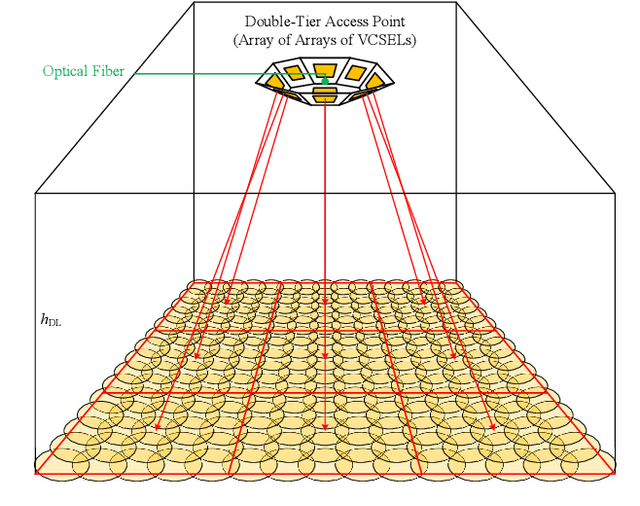
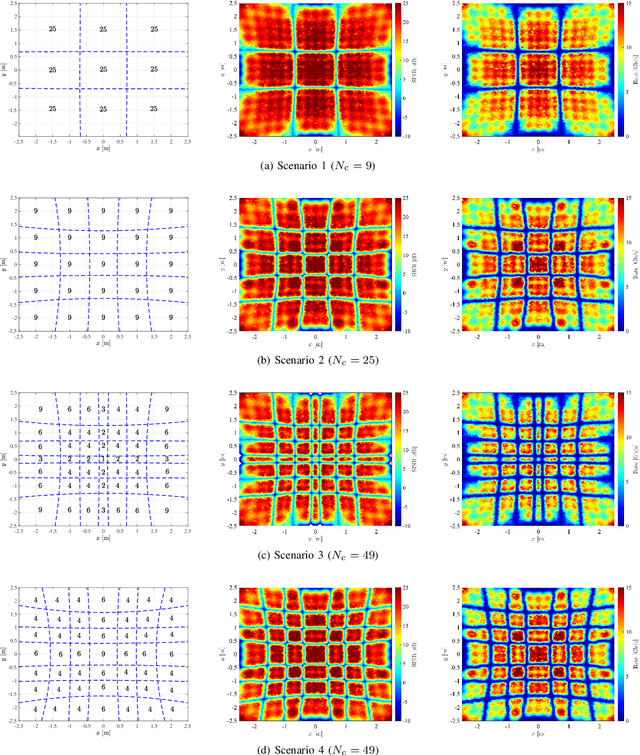
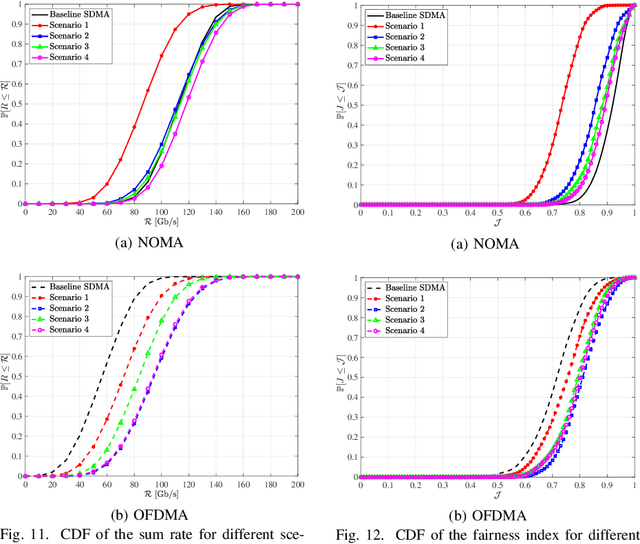
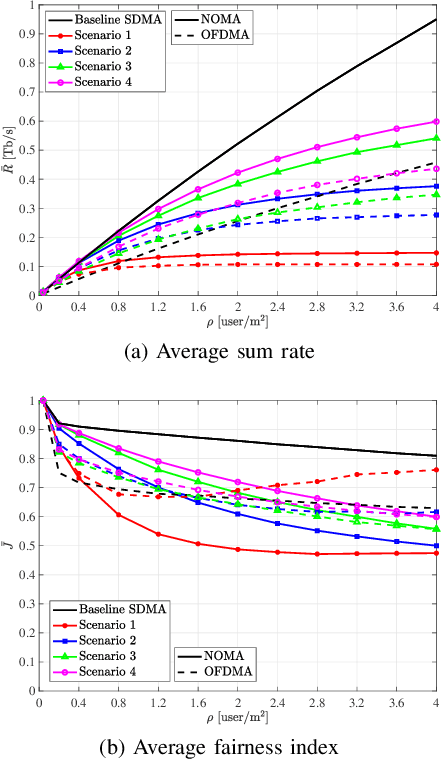
In this paper, we put forward a proof of concept for sixth generation (6G) Terabit infrared (IR) laser-based indoor optical wireless networks. We propose a novel double-tier access point (AP) architecture based on an array of arrays of vertical cavity surface emitting lasers (VCSELs) to provide a seamless grid-of-beam coverage with multi-Gb/s per beam. We present systematic design and thorough analytical modeling of the AP architecture, which are then applied to downlink system modeling using non-imaging angle diversity receivers (ADRs). We propose static beam clustering with coordinated multi-beam joint transmission (CoMB-JT) for network interference management and devise various clustering strategies to address inter-beam interference (IBI) and inter-cluster interference (ICI). Non-orthogonal multiple access (NOMA) and orthogonal frequency division multiple access (OFDMA) schemes are also adopted to handle intra-cluster interference, and the resulting signal-to-interference-plus-noise ratio (SINR) and achievable data rate are derived. The network performance is studied in terms of spatial distributions and statistics of the downlink SINR and data rate through extensive computer simulations. The results demonstrate that data rates up to 15 Gb/s are achieved within the coverage area and a properly devised clustering strikes a balance between the sum rate and fairness depending on the number of users.
Multi-User Rate Splitting in Optical Wireless Networks
Jul 23, 2022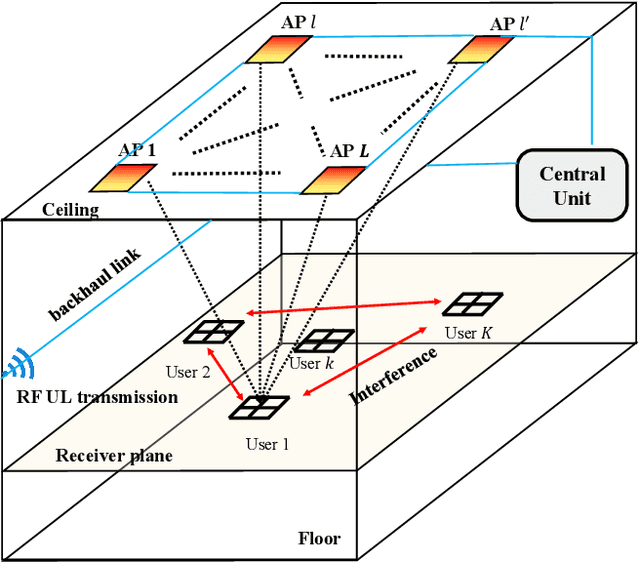
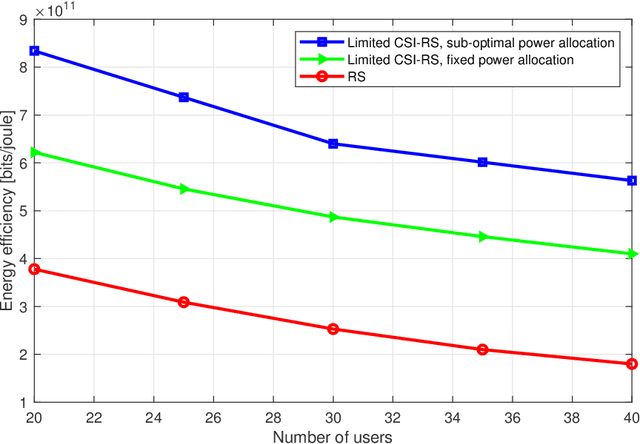
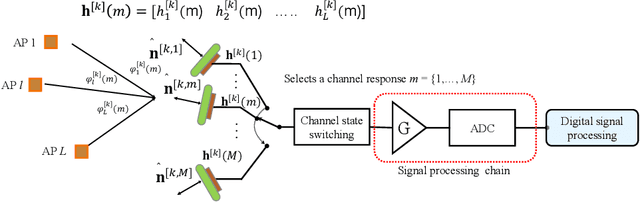
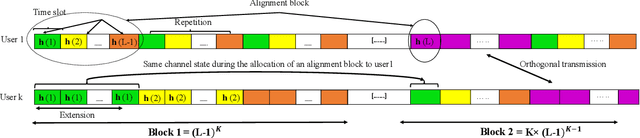
Optical wireless communication (OWC) has recently received massive interest as a new technology that can support the enormous data traffic increasing on daily basis. Laser-based OWC networks can provide terabits per second (Tbps) aggregate data rates. However, the emerging OWC networks require clusters of optical transmitters to provide uniform coverage for multiple users. In this context, multi-user interference (MUI) is a crucial issue that must be managed efficiently to provide high spectral efficiency. Rate splitting (RS) is proposed as a transmission scheme to serve multiple users simultaneously by splitting the message of a given user into common and private messages, and then, each user decodes the desired message following a certain procedure. In radio frequency (RF) networks, RS provides higher spectral efficiency compared with orthogonal and non-orthogonal transmission schemes. Considering the high density of OWC networks, the performance of RS is limited by the cost of providing channel state information (CSI) at transmitters and by the noise resulting from interference cancellation. In this work, a user-grouping algorithm is proposed and used to form multiple groups, each group contains users spatially clustered. Then, an outer precoder is designed to manage inter-group interference following the methodology of blind interference alignment (BIA), which reduces the requirements of CSI at RF or optical transmitters. For intra-group interference, RS is applied within each group where the users belonging to a given group receive a unique common message on which their private messages are superimposed. Furthermore, an optimization problem is formulated to allocate the power among the private messages intended to all users such that the sum rate of the network is maximized.
High-Speed Imaging Receiver Design for 6G Optical Wireless Communications: A Rate-FOV Trade-Off
May 11, 2022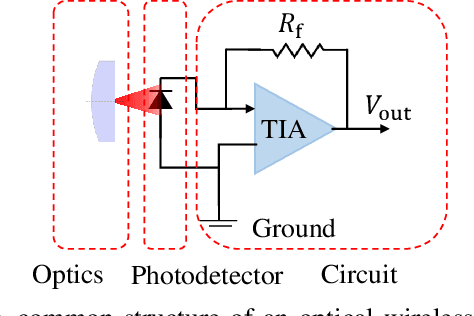
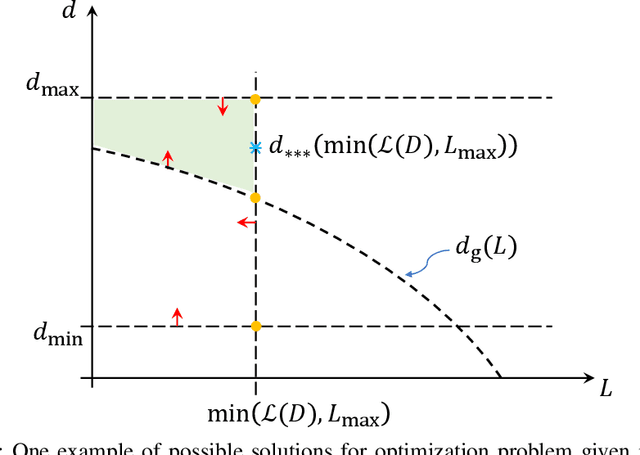
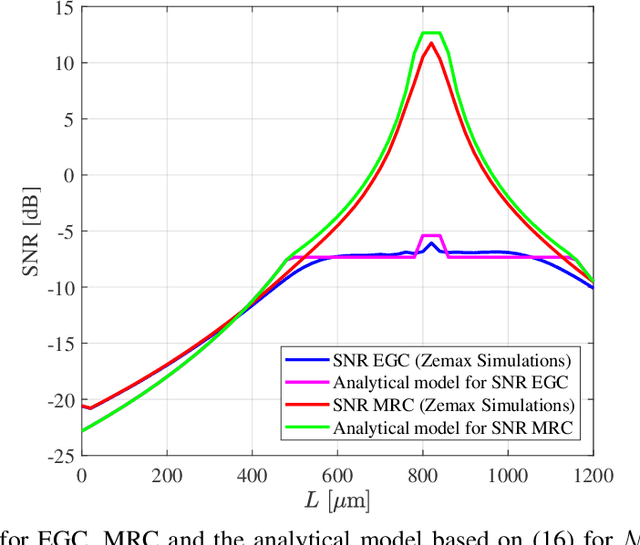
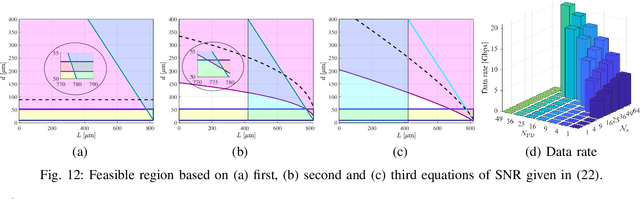
The design of a compact high-speed and wide field of view (FOV) receiver is challenging due to the presence of two well-known trade-offs. The first one is the area-bandwidth trade-off of photodetectors (PDs) and the second one is the gain-FOV trade-off due to the use of optics. The combined effects of these two trade-offs imply that the achievable data rate of an imaging optical receiver is limited by its FOV, i.e., a rate-FOV trade-off. To control the area-bandwidth trade-off, an array of small PDs can be used instead of a single PD. Moreover, in practice, a large-area lens is required to ensure sufficient power collection, which in turn limits the receiver FOV (i.e., gain-FOV trade-off). We propose an imaging receiver design in the form of an array of arrays. To achieve a reasonable receiver FOV, we use individual focusing lens for each PD array rather than a single collection lens for the whole receiver. The proposed array of arrays structure provides an effective method to control both gain-FOV trade-off (via an array of lenses) and area-bandwidth trade-off (via arrays of PDs). We first derive a tractable analytical model for the SNR of an array of PDs where the maximum ratio combining has been employed. Then, we extend the model for the proposed array of arrays structure and the accuracy of the analytical model is verified based on several Optic Studio-based simulations. Next, we formulate an optimization problem to maximize the achievable data rate of the imaging receiver subject to a minimum required FOV. The optimization problem is solved for two commonly used modulation techniques, namely, OOK and direct current biased optical orthogonal frequency division multiplexing with variable rate quadrature amplitude modulation. It is demonstrated that a data rate of ~ 24 Gbps with a FOV of 15 is achievable using OOK with a total receiver size of 2 cm by 2 cm.