 Add to Chrome
 Add to Firefox
 Add to Edge
EEG-Based Emergency Braking Intensity Prediction Using Blind Source Separation
Apr 20, 2026
Electroencephalography (EEG) signals have been promising for long-term braking intensity prediction but are prone to various artifacts that limit their reliability. Here, we propose a novel framework that models EEG signals as mixtures of independent blind sources and identifies those strongly correlated with braking action. Our method employs independent component analysis to decompose EEG into different components and combines time-frequency analysis with Pearson correlations to select braking-related components. Furthermore, we utilize hierarchical clustering to group braking-related components into two clusters, each characterized by a distinct spatial pattern. Additionally, these components exhibit trial-invariant temporal patterns and demonstrate stable and common neural signatures of the emergency braking process. Using power features from these components and historical braking data, we predict braking intensity at a 200 ms horizon. Evaluations on the open source dataset (O.D.) and human-in-the-loop simulation (H.S.) show that our method outperforms state-of-the-art approaches, achieving RMSE reductions of 8.0% (O.D.) and 23.8% (H.S.).

Cyclegan Network for Sheet Metal Welding Drawing Translation
Sep 28, 2022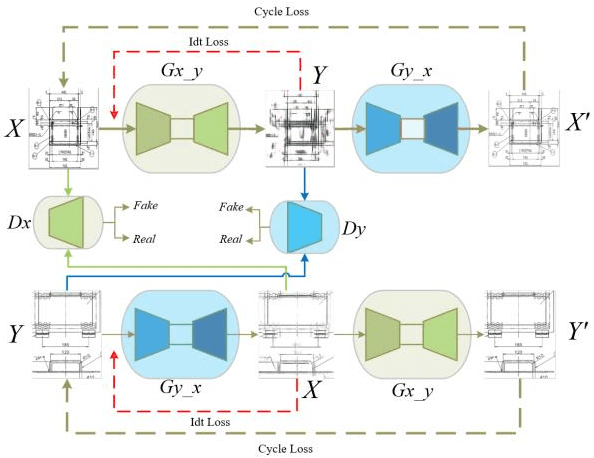
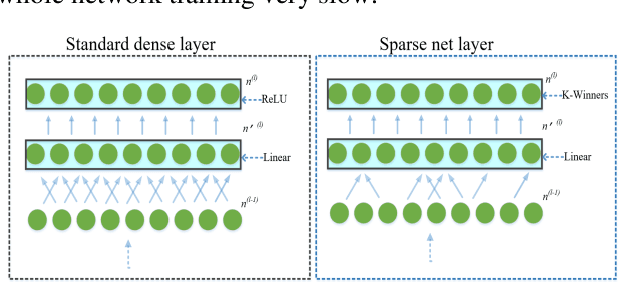
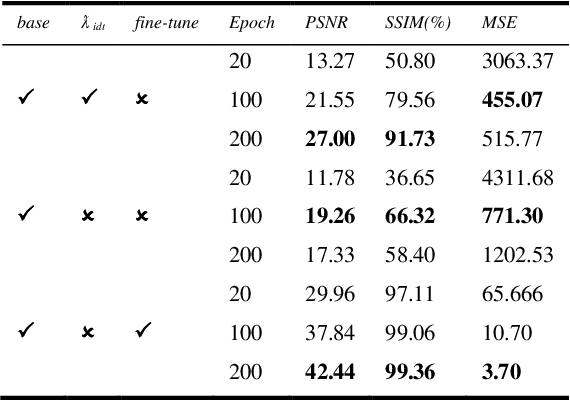
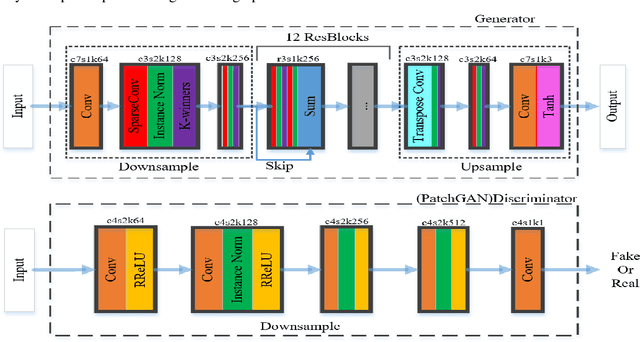
In intelligent manufacturing, the quality of machine translation engineering drawings will directly affect its manufacturing accuracy. Currently, most of the work is manually translated, greatly reducing production efficiency. This paper proposes an automatic translation method for welded structural engineering drawings based on Cyclic Generative Adversarial Networks (CycleGAN). The CycleGAN network model of unpaired transfer learning is used to learn the feature mapping of real welding engineering drawings to realize automatic translation of engineering drawings. U-Net and PatchGAN are the main network for the generator and discriminator, respectively. Based on removing the identity mapping function, a high-dimensional sparse network is proposed to replace the traditional dense network for the Cyclegan generator to improve noise robustness. Increase the residual block hidden layer to increase the resolution of the generated graph. The improved and fine-tuned network models are experimentally validated, computing the gap between real and generated data. It meets the welding engineering precision standard and solves the main problem of low drawing recognition efficiency in the welding manufacturing process. The results show. After training with our model, the PSNR, SSIM and MSE of welding engineering drawings reach about 44.89%, 99.58% and 2.11, respectively, which are superior to traditional networks in both training speed and accuracy.
CSSAM: U-net Network for Application and Segmentation of Welding Engineering Drawings
Sep 28, 2022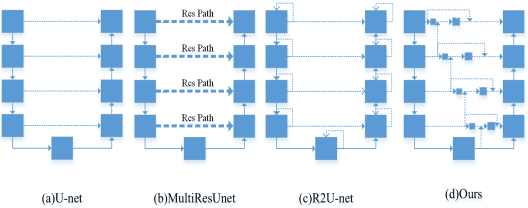
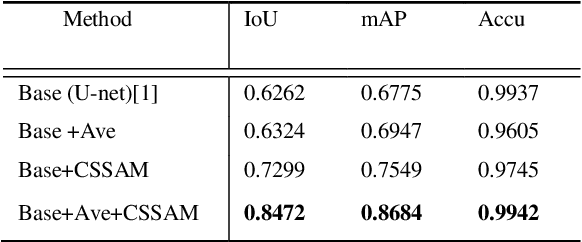
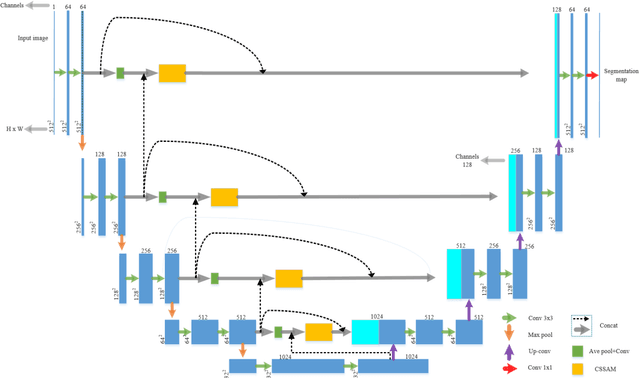

Heavy equipment manufacturing splits specific contours in drawings and cuts sheet metal to scale for welding. Currently, most of the segmentation and extraction of weld map contours is achieved manually. Its efficiency is greatly reduced. Therefore, we propose a U-net-based contour segmentation and extraction method for welding engineering drawings. The contours of the parts required for engineering drawings can be automatically divided and blanked, which significantly improves manufacturing efficiency. U-net includes an encoder-decoder, which implements end-to-end mapping through semantic differences and spatial location feature information between the encoder and decoder. While U-net excels at segmenting medical images, our extensive experiments on the Welding Structural Diagram dataset show that the classic U-Net architecture falls short in segmenting welding engineering drawings. Therefore, we design a novel Channel Spatial Sequence Attention Module (CSSAM) and improve on the classic U-net. At the same time, vertical max pooling and average horizontal pooling are proposed. Pass the pooling operation through two equal convolutions into the CSSAM module. The output and the features before pooling are fused by semantic clustering, which replaces the traditional jump structure and effectively narrows the semantic gap between the encoder and the decoder, thereby improving the segmentation performance of welding engineering drawings. We use vgg16 as the backbone network. Compared with the classic U-net, our network has good performance in engineering drawing dataset segmentation.