 Add to Chrome
 Add to Firefox
 Add to Edge
SDDMO-Bench: A Benchmark Suite for Streaming Data-Driven Dynamic Multi-Objective Optimization
Aug 01, 2026
Streaming data-driven dynamic multi-objective optimization requires algorithms to track time-varying Pareto fronts using only sequential observations under concept drift. However, systematic evaluation remains difficult because real-world problems usually lack ground-truth optima, drift annotations, and controllable conditions, while existing benchmarks provide limited support for standardized comparison. This paper proposes SDDMO-Bench, a benchmark suite that transforms classical dynamic multi-objective test problems into streaming environments by combining intrinsic objective-mapping evolution, controllable distributional drift, and sequential data revelation. By combining five representative time-dependent base functions with six distributional drift patterns, SDDMO-Bench constructs 30 scenarios with diverse levels of non-stationarity, problem complexity, sample-distribution variation, and Pareto-front evolution. Experiments with representative evolutionary algorithms demonstrate that SDDMO-Bench provides challenging and discriminative test scenarios, offering a standardized, controllable, and reproducible benchmark for evaluating adaptability, robustness, and Pareto-front tracking in streaming data-driven dynamic multi-objective optimization.

Decision Variable Analysis-Guided Differentiated Fuzzy Search for Large-Scale Multi-Objective Optimization
Jul 18, 2026Large-scale multi-objective optimization problems (LSMOPs) are challenging due to their high-dimensional decision spaces. Fuzzy search is an effective technique for improving search efficiency, while decision variable analysis can reveal the distinct roles of variables in promoting convergence and maintaining diversity. However, existing fuzzy search methods generally employ a uniform search granularity for all variables, overlooking the heterogeneous search requirements implied by variable roles. To address this limitation, this paper proposes a Decision variable analysis-guided Differentiated Fuzzy Search method, termed DDFS. The proposed method establishes an explicit mapping between decision-variable roles and fuzzy search granularities. Decision variable analysis is employed to identify variable roles and search sensitivities, enabling different variable groups to adopt differentiated fuzzy search behaviors during offspring generation. Furthermore, a Dual-Indicator Stage Transition Mechanism is developed to dynamically adjust fuzzy-updating intensity throughout the evolutionary process, balancing early-stage search-space compression and late-stage convergence refinement. Extensive experiments on the LSMOP and UF benchmark suites with up to 1000 decision variables show that DDFS generally achieves competitive performance against several representative large-scale multi-objective evolutionary algorithms. The results suggest that explicitly incorporating decision-variable roles into fuzzy search can help improve optimization performance in high-dimensional decision spaces.
The Art of Socratic Inquiry: A Framework for Proactive Template-Guided Therapeutic Conversation Generation
Feb 02, 2026Proactive questioning, where therapists deliberately initiate structured, cognition-guiding inquiries, is a cornerstone of cognitive behavioral therapy (CBT). Yet, current psychological large language models (LLMs) remain overwhelmingly reactive, defaulting to empathetic but superficial responses that fail to surface latent beliefs or guide behavioral change. To bridge this gap, we propose the \textbf{Socratic Inquiry Framework (SIF)}, a lightweight, plug-and-play therapeutic intent planner that transforms LLMs from passive listeners into active cognitive guides. SIF decouples \textbf{when to ask} (via Strategy Anchoring) from \textbf{what to ask} (via Template Retrieval), enabling context-aware, theory-grounded questioning without end-to-end retraining. Complementing SIF, we introduce \textbf{Socratic-QA}, a high-quality dataset of strategy-aligned Socratic sequences that provides explicit supervision for proactive reasoning. Experiments show that SIF significantly enhances proactive questioning frequency, conversational depth, and therapeutic alignment, marking a clear shift from reactive comfort to proactive exploration. Our work establishes a new paradigm for psychologically informed LLMs: not just to respond, but to guide.
Generalized Population-Based Training for Hyperparameter Optimization in Reinforcement Learning
Apr 12, 2024Hyperparameter optimization plays a key role in the machine learning domain. Its significance is especially pronounced in reinforcement learning (RL), where agents continuously interact with and adapt to their environments, requiring dynamic adjustments in their learning trajectories. To cater to this dynamicity, the Population-Based Training (PBT) was introduced, leveraging the collective intelligence of a population of agents learning simultaneously. However, PBT tends to favor high-performing agents, potentially neglecting the explorative potential of agents on the brink of significant advancements. To mitigate the limitations of PBT, we present the Generalized Population-Based Training (GPBT), a refined framework designed for enhanced granularity and flexibility in hyperparameter adaptation. Complementing GPBT, we further introduce Pairwise Learning (PL). Instead of merely focusing on elite agents, PL employs a comprehensive pairwise strategy to identify performance differentials and provide holistic guidance to underperforming agents. By integrating the capabilities of GPBT and PL, our approach significantly improves upon traditional PBT in terms of adaptability and computational efficiency. Rigorous empirical evaluations across a range of RL benchmarks confirm that our approach consistently outperforms not only the conventional PBT but also its Bayesian-optimized variant.
Evolutionary Reinforcement Learning: A Survey
Mar 10, 2023Reinforcement learning (RL) is a machine learning approach that trains agents to maximize cumulative rewards through interactions with environments. The integration of RL with deep learning has recently resulted in impressive achievements in a wide range of challenging tasks, including board games, arcade games, and robot control. Despite these successes, there remain several crucial challenges, including brittle convergence properties caused by sensitive hyperparameters, difficulties in temporal credit assignment with long time horizons and sparse rewards, a lack of diverse exploration, especially in continuous search space scenarios, difficulties in credit assignment in multi-agent reinforcement learning, and conflicting objectives for rewards. Evolutionary computation (EC), which maintains a population of learning agents, has demonstrated promising performance in addressing these limitations. This article presents a comprehensive survey of state-of-the-art methods for integrating EC into RL, referred to as evolutionary reinforcement learning (EvoRL). We categorize EvoRL methods according to key research fields in RL, including hyperparameter optimization, policy search, exploration, reward shaping, meta-RL, and multi-objective RL. We then discuss future research directions in terms of efficient methods, benchmarks, and scalable platforms. This survey serves as a resource for researchers and practitioners interested in the field of EvoRL, highlighting the important challenges and opportunities for future research. With the help of this survey, researchers and practitioners can develop more efficient methods and tailored benchmarks for EvoRL, further advancing this promising cross-disciplinary research field.
Lamarckian Platform: Pushing the Boundaries of Evolutionary Reinforcement Learning towards Asynchronous Commercial Games
Sep 21, 2022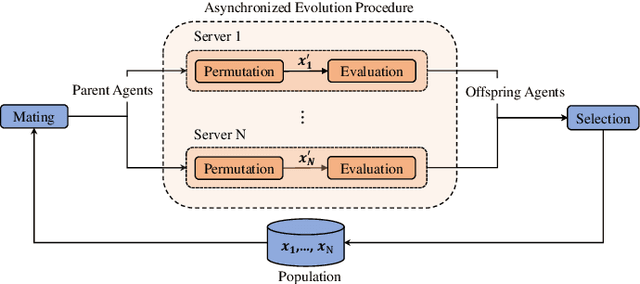
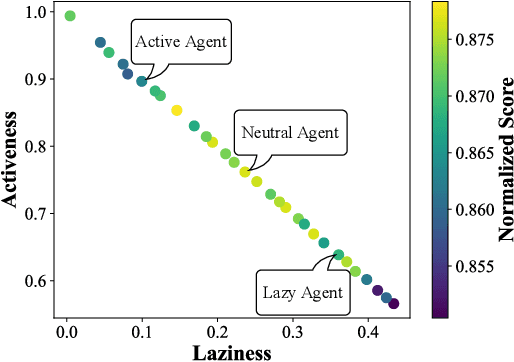
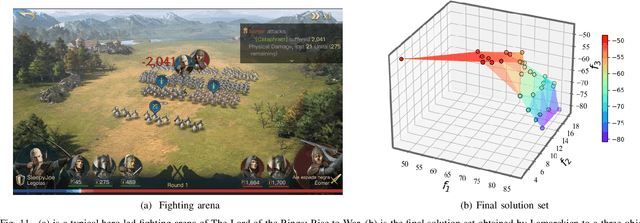
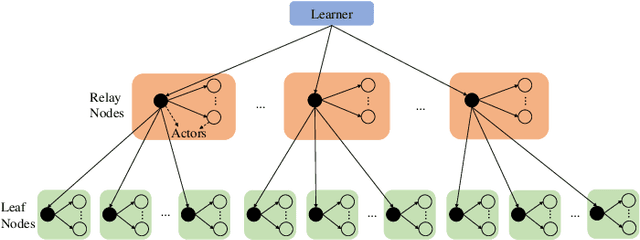
Despite the emerging progress of integrating evolutionary computation into reinforcement learning, the absence of a high-performance platform endowing composability and massive parallelism causes non-trivial difficulties for research and applications related to asynchronous commercial games. Here we introduce Lamarckian - an open-source platform featuring support for evolutionary reinforcement learning scalable to distributed computing resources. To improve the training speed and data efficiency, Lamarckian adopts optimized communication methods and an asynchronous evolutionary reinforcement learning workflow. To meet the demand for an asynchronous interface by commercial games and various methods, Lamarckian tailors an asynchronous Markov Decision Process interface and designs an object-oriented software architecture with decoupled modules. In comparison with the state-of-the-art RLlib, we empirically demonstrate the unique advantages of Lamarckian on benchmark tests with up to 6000 CPU cores: i) both the sampling efficiency and training speed are doubled when running PPO on Google football game; ii) the training speed is 13 times faster when running PBT+PPO on Pong game. Moreover, we also present two use cases: i) how Lamarckian is applied to generating behavior-diverse game AI; ii) how Lamarckian is applied to game balancing tests for an asynchronous commercial game.