 Add to Chrome
 Add to Firefox
 Add to Edge
GradMAP: Gradient-Based Multi-Agent Proximal Learning for Grid-Edge Flexibility
Apr 27, 2026
Coordinating large populations of grid-edge devices requires learning methods that remain fully decentralised in deployment while still respecting three-phase AC distribution-network physics. This paper proposes gradient-based multi-agent proximal learning (GradMAP) to address this challenge. GradMAP trains independent neural-network policies for each agent without any parameter sharing, and each agent uses only its own local observation for online decision-making without communication. During offline training, GradMAP embeds a differentiable three-phase AC power-flow model in a primal-dual learning loop and uses implicit differentiation to propagate exact network-constraint violations to update the policy parameters. To speed up training, GradMAP reuses expensive environment gradients through a proximal surrogate within a trust region defined in the more direct policy-output (action) space, instead of the probability distribution space used in other works, such as PPO. In case studies with 1,000 agents managing batteries, heat pumps, and controllable generators on the IEEE 123-bus feeder, GradMAP learns decentralised policies that minimise three-phase AC load-flow constraint violations within 15 minutes of training on a single workstation-class NVIDIA RTX PRO 5000 Blackwell 48GB GPU. This is a 3--5x training speed-up over gradient-based self-supervised learning benchmarks and substantially better training efficiency than multi-agent reinforcement-learning benchmarks. In out-of-sample tests, GradMAP also delivers among the lowest operating cost and constraint violations.

GLinSAT: The General Linear Satisfiability Neural Network Layer By Accelerated Gradient Descent
Sep 26, 2024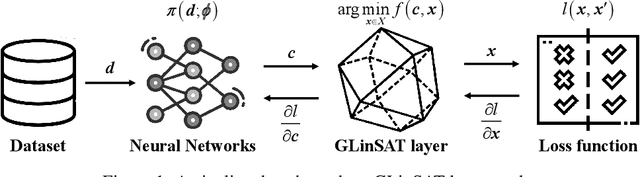
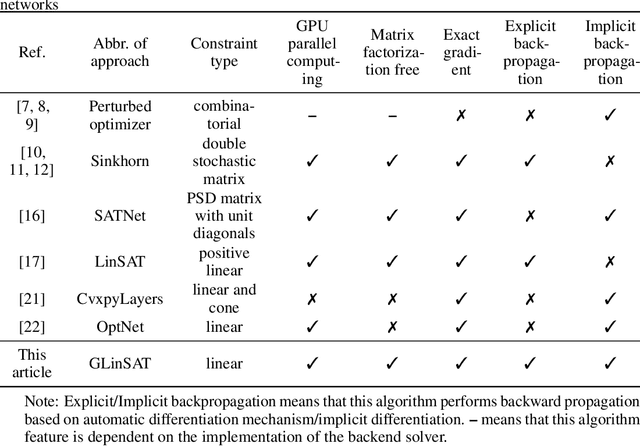
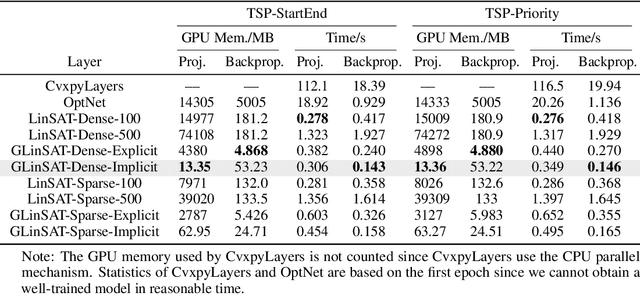
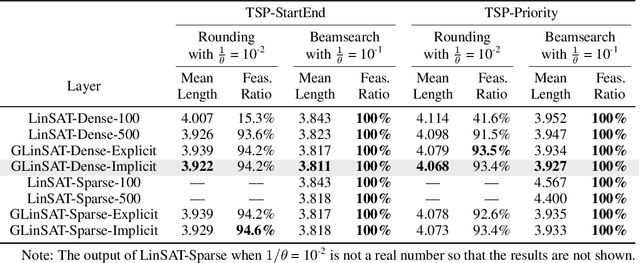
Ensuring that the outputs of neural networks satisfy specific constraints is crucial for applying neural networks to real-life decision-making problems. In this paper, we consider making a batch of neural network outputs satisfy bounded and general linear constraints. We first reformulate the neural network output projection problem as an entropy-regularized linear programming problem. We show that such a problem can be equivalently transformed into an unconstrained convex optimization problem with Lipschitz continuous gradient according to the duality theorem. Then, based on an accelerated gradient descent algorithm with numerical performance enhancement, we present our architecture, GLinSAT, to solve the problem. To the best of our knowledge, this is the first general linear satisfiability layer in which all the operations are differentiable and matrix-factorization-free. Despite the fact that we can explicitly perform backpropagation based on automatic differentiation mechanism, we also provide an alternative approach in GLinSAT to calculate the derivatives based on implicit differentiation of the optimality condition. Experimental results on constrained traveling salesman problems, partial graph matching with outliers, predictive portfolio allocation and power system unit commitment demonstrate the advantages of GLinSAT over existing satisfiability layers.