 Add to Chrome
 Add to Firefox
 Add to Edge
Effect of Antenna Deployment on Achievable Rate in Cooperative Magnetic Induction Communication
Jul 16, 2026
Magnetic Induction (MI) communication can be applied in some through-the-earth scenarios such as mines and underground rivers. To increase the transmission rate of MI communications, we propose a cooperative MI (CMI) scheme with an amplify-and-forward (AF) relay. Different from existing studies, we mainly focus on the relay with arbitrary antenna position and orientation (antenna deployment, AD). We derive the closed-form expression of CMI achievable data rate gain (CMG) for the relay and the closed-form expression of CMI channel bandwidth. Simulations reveal that a relay with appropriate AD could yield a significant increase in the achievable rate for MI systems.
* This work was published in IEEE Communications Letters, with the DOI: 10.1109/LCOMM.2019.2929790

Antenna Optimization for Decode-and-Forward Relay in Magnetic Induction Communications
Jul 06, 2026Magnetic Induction (MI) communication is effective in underground tunnels for emergency rescue vehicle due to the small-size antenna. It can highly benefit from a cooperative decode-and-forward (DF) relay to achieve a higher data rate. However, its channel gain is extremely position-and-orientation-selective. The unreachable space increases the complexity of the antenna deployment. To find the best antenna position and orientation (PO) of the relay achieving the higher data rate, this paper formulates the optimization problem of the relay MI antenna PO with tunnel constraints. To solve the problem more quickly, we propose to use geometric modeling to eliminate the tunnel constraints and develop a random-search algorithm achieving a fast convergence and excellent global search ability. Simulations show that the proposed algorithm can quickly converge to one optimum which signifies a noticeable improvement of data rate for vehicle MI systems with weak signals.
* This is the author's accepted manuscript, which has been published in IEEE Transactions on Vehicular Technology. The final published version can be accessed at https://doi.org/10.1109/TVT.2019.2963357
Fast-Fading Channel and Power Optimization of the Magnetic Inductive Cellular Network
Jun 07, 2024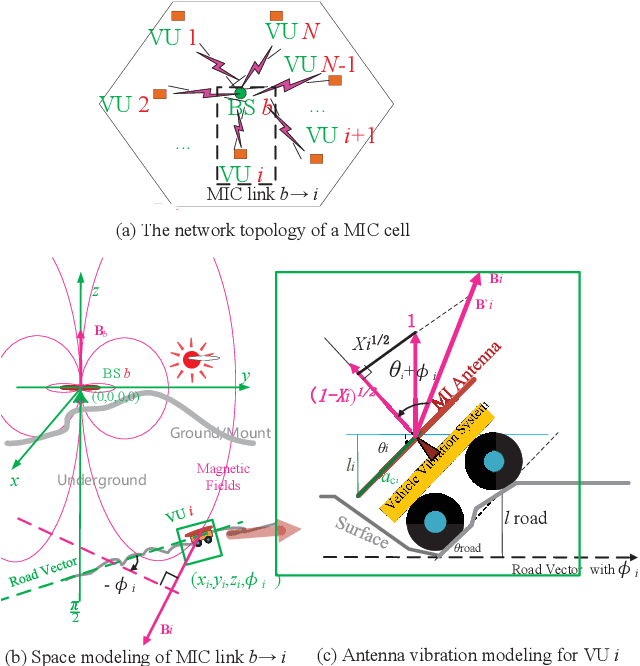
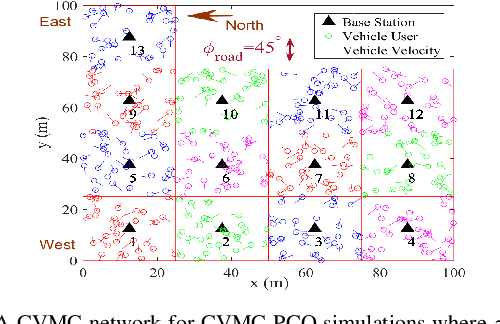
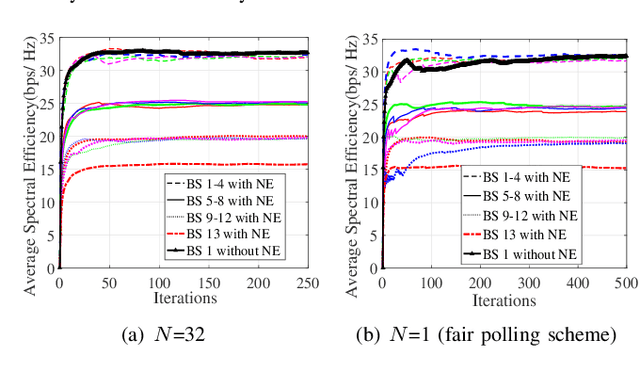
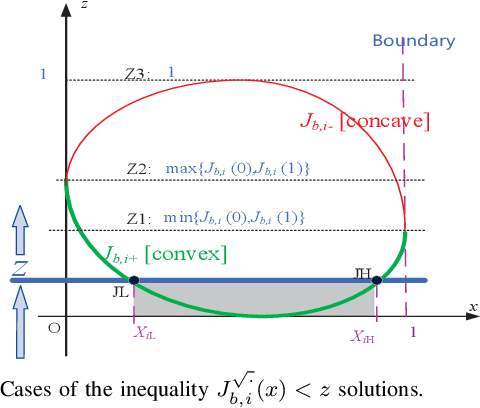
The cellular network of magnetic Induction (MI) communication holds promise in long-distance underground environments. In the traditional MI communication, there is no fast-fading channel since the MI channel is treated as a quasi-static channel. However, for the vehicle (mobile) MI (VMI) communication, the unpredictable antenna vibration brings the remarkable fast-fading. As such fast-fading cannot be modeled by the central limit theorem, it differs radically from other wireless fast-fading channels. Unfortunately, few studies focus on this phenomenon. In this paper, using a novel space modeling based on the electromagnetic field theorem, we propose a 3-dimension model of the VMI antenna vibration. By proposing ``conjugate pseudo-piecewise functions'' and boundary $p(x)$ distribution, we derive the cumulative distribution function (CDF), probability density function (PDF) and the expectation of the VMI fast-fading channel. We also theoretically analyze the effects of the VMI fast-fading on the network throughput, including the VMI outage probability which can be ignored in the traditional MI channel study. We draw several intriguing conclusions different from those in wireless fast-fading studies. For instance, the fast-fading brings more uniformly distributed channel coefficients. Finally, we propose the power control algorithm using the non-cooperative game and multiagent Q-learning methods to optimize the throughput of the cellular VMI network. Simulations validate the derivation and the proposed algorithm.