 Add to Chrome
 Add to Firefox
 Add to Edge
Identifiability in Blind Source Separation through Stabilizer Shrinkage: Unifying Non-Gaussianity and Observation Diversity
Mar 17, 2026
Identifiability is a central issue in blind source separation (BSS), determining whether latent sources can be uniquely recovered from observed mixtures. Classical approaches address identifiability either by exploiting source non-Gaussianity via higher-order statistics (HOS) or by enriching the observation structure through temporal, spatial, or multi-channel diversity using second-order statistics (SOS), and these routes are often regarded as fundamentally different. In this paper, we revisit identifiability in BSS from a structural perspective, interpreting it as constraint-induced reduction of residual ambiguity in the mixing model. Within this framework, the observation mechanism is viewed broadly to include both input-side statistical constraints and output-side observation structures. HOS-based and SOS-based approaches are then unified as mechanisms of stabilizer shrinkage, in which observation-induced constraints reduce an initially continuous ambiguity to a finite residual one. To connect this structural viewpoint with finite-sample regimes, we introduce a Jacobian-based sensitivity probe as a numerical diagnostic of local identifiability. Numerical experiments show that increasing non-Gaussianity or observation diversity suppresses the same residual symmetry, revealing a structural trade-off between source statistics and observation design. These results provide a unified interpretation of classical BSS methods and clarify how observation constraints govern identifiability.

Unfolded Laplacian Spectral Embedding: A Theoretically Grounded Approach to Dynamic Network Representation
Aug 18, 2025
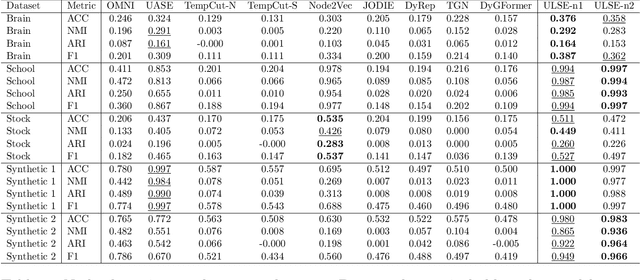
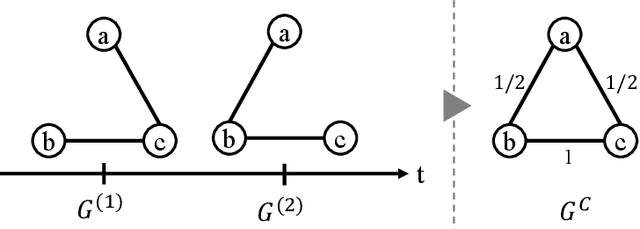
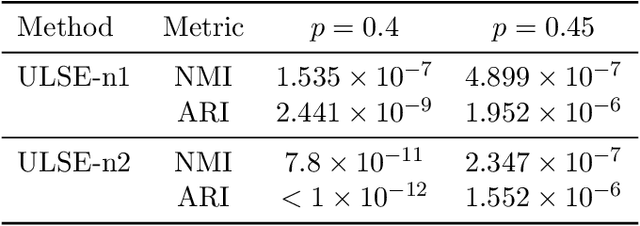
Dynamic relational structures play a central role in many AI tasks, but their evolving nature presents challenges for consistent and interpretable representation. A common approach is to learn time-varying node embeddings, whose effectiveness depends on satisfying key stability properties. In this paper, we propose Unfolded Laplacian Spectral Embedding, a new method that extends the Unfolded Adjacency Spectral Embedding framework to normalized Laplacians while preserving both cross-sectional and longitudinal stability. We provide formal proof that our method satisfies these stability conditions. In addition, as a bonus of using the Laplacian matrix, we establish a new Cheeger-style inequality that connects the embeddings to the conductance of the underlying dynamic graphs. Empirical evaluations on synthetic and real-world datasets support our theoretical findings and demonstrate the strong performance of our method. These results establish a principled and stable framework for dynamic network representation grounded in spectral graph theory.
Hierarchical Narrative Analysis: Unraveling Perceptions of Generative AI
Sep 17, 2024

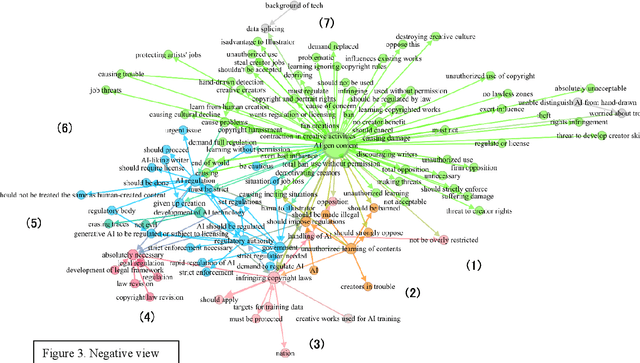
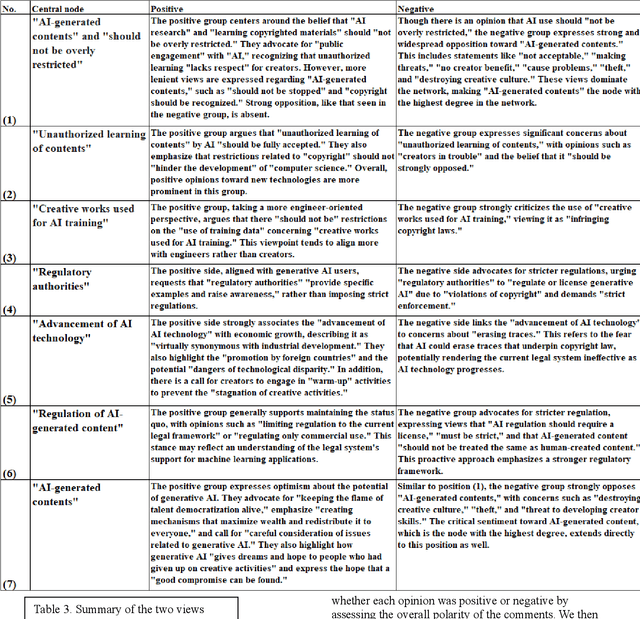
Written texts reflect an author's perspective, making the thorough analysis of literature a key research method in fields such as the humanities and social sciences. However, conventional text mining techniques like sentiment analysis and topic modeling are limited in their ability to capture the hierarchical narrative structures that reveal deeper argumentative patterns. To address this gap, we propose a method that leverages large language models (LLMs) to extract and organize these structures into a hierarchical framework. We validate this approach by analyzing public opinions on generative AI collected by Japan's Agency for Cultural Affairs, comparing the narratives of supporters and critics. Our analysis provides clearer visualization of the factors influencing divergent opinions on generative AI, offering deeper insights into the structures of agreement and disagreement.