 Add to Chrome
 Add to Firefox
 Add to Edge
Bridging the Know-Act Gap via Task-Level Autoregressive Reasoning
Mar 23, 2026
LLMs often generate seemingly valid answers to flawed or ill-posed inputs. This is not due to missing knowledge: under discriminative prompting, the same models can mostly identify such issues, yet fail to reflect this in standard generative responses. This reveals a fundamental know-act gap between discriminative recognition and generative behavior. Prior work largely characterizes this issue in narrow settings, such as math word problems or question answering, with limited focus on how to integrate these two modes. In this work, we present a comprehensive analysis using FaultyScience, a newly constructed large-scale, cross-disciplinary benchmark of faulty scientific questions. We show that the gap is pervasive and stems from token-level autoregression, which entangles task selection (validate vs. answer) with content generation, preventing discriminative knowledge from being utilized. To address this, we propose DeIllusionLLM, a task-level autoregressive framework that explicitly models this decision. Through self-distillation, the model unifies discriminative judgment and generative reasoning within a single backbone. Empirically, DeIllusionLLM substantially reduces answer-despite-error failures under natural prompting while maintaining general reasoning performance, demonstrating that self-distillation is an effective and scalable solution for bridging the discriminative-generative know-act gap

Accelerated Evaluation of Ollivier-Ricci Curvature Lower Bounds: Bridging Theory and Computation
May 22, 2024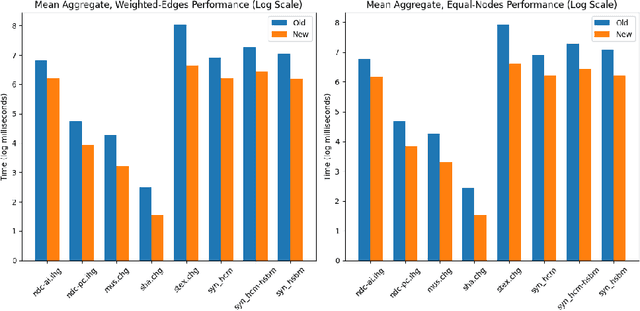
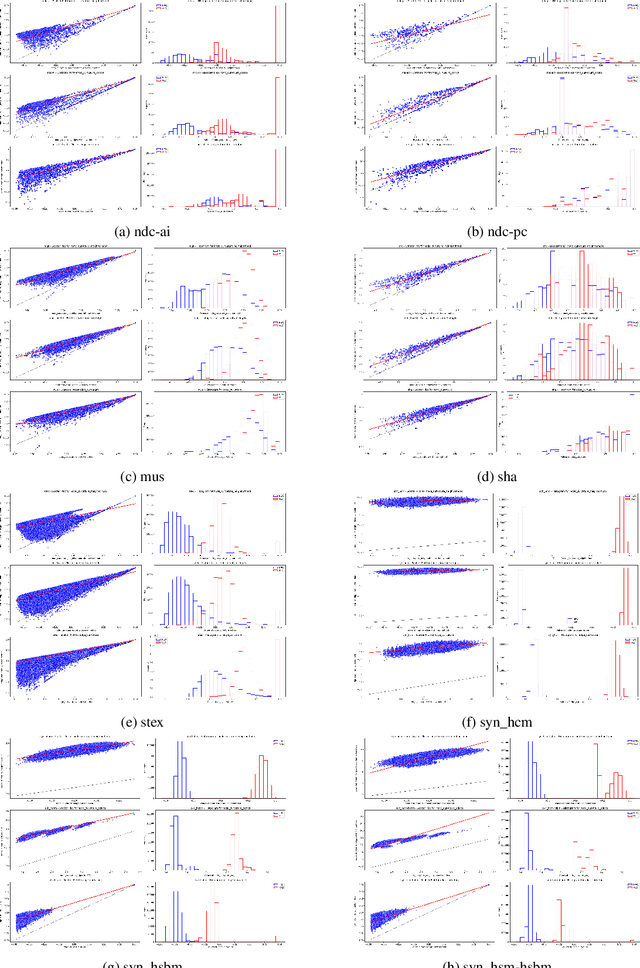
Curvature serves as a potent and descriptive invariant, with its efficacy validated both theoretically and practically within graph theory. We employ a definition of generalized Ricci curvature proposed by Ollivier, which Lin and Yau later adapted to graph theory, known as Ollivier-Ricci curvature (ORC). ORC measures curvature using the Wasserstein distance, thereby integrating geometric concepts with probability theory and optimal transport. Jost and Liu previously discussed the lower bound of ORC by showing the upper bound of the Wasserstein distance. We extend the applicability of these bounds to discrete spaces with metrics on integers, specifically hypergraphs. Compared to prior work on ORC in hypergraphs by Coupette, Dalleiger, and Rieck, which faced computational challenges, our method introduces a simplified approach with linear computational complexity, making it particularly suitable for analyzing large-scale networks. Through extensive simulations and application to synthetic and real-world datasets, we demonstrate the significant improvements our method offers in evaluating ORC.