 Add to Chrome
 Add to Firefox
 Add to Edge
AEC-Bench: A Multimodal Benchmark for Agentic Systems in Architecture, Engineering, and Construction
Mar 31, 2026
The AEC-Bench is a multimodal benchmark for evaluating agentic systems on real-world tasks in the Architecture, Engineering, and Construction (AEC) domain. The benchmark covers tasks requiring drawing understanding, cross-sheet reasoning, and construction project-level coordination. This report describes the benchmark motivation, dataset taxonomy, evaluation protocol, and baseline results across several domain-specific foundation model harnesses. We use AEC-Bench to identify consistent tools and harness design techniques that uniformly improve performance across foundation models in their own base harnesses, such as Claude Code and Codex. We openly release our benchmark dataset, agent harness, and evaluation code for full replicability at https://github.com/nomic-ai/aec-bench under an Apache 2 license.

Trustworthy Conceptual Explanations for Neural Networks in Robot Decision-Making
Sep 16, 2024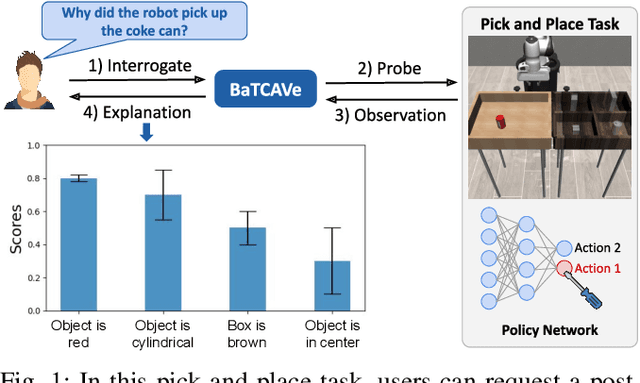
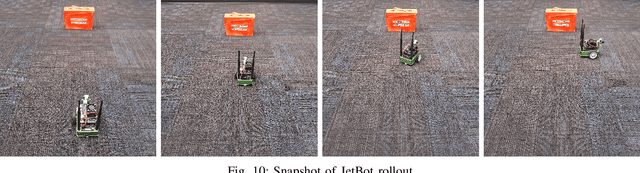
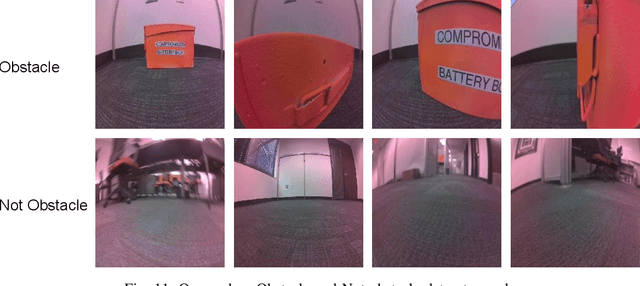
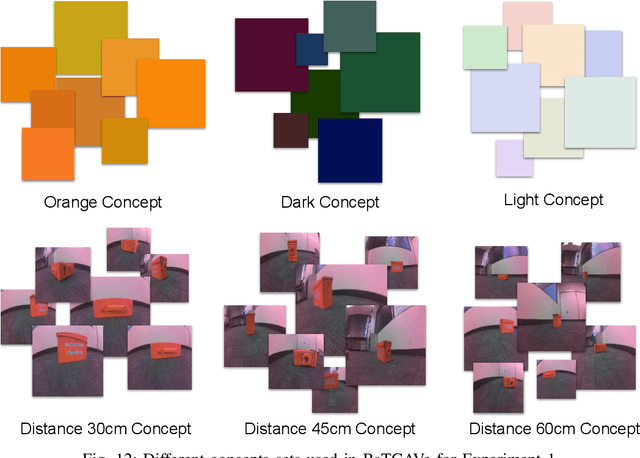
Black box neural networks are an indispensable part of modern robots. Nevertheless, deploying such high-stakes systems in real-world scenarios poses significant challenges when the stakeholders, such as engineers and legislative bodies, lack insights into the neural networks' decision-making process. Presently, explainable AI is primarily tailored to natural language processing and computer vision, falling short in two critical aspects when applied in robots: grounding in decision-making tasks and the ability to assess trustworthiness of their explanations. In this paper, we introduce a trustworthy explainable robotics technique based on human-interpretable, high-level concepts that attribute to the decisions made by the neural network. Our proposed technique provides explanations with associated uncertainty scores by matching neural network's activations with human-interpretable visualizations. To validate our approach, we conducted a series of experiments with various simulated and real-world robot decision-making models, demonstrating the effectiveness of the proposed approach as a post-hoc, human-friendly robot learning diagnostic tool.