 Add to Chrome
 Add to Firefox
 Add to Edge
Adopting Reinforcement Learning with Verifiable Rewards for Molecular Generation
Jul 21, 2026
Leveraging large language models (LLMs) for molecular generation has shown remarkable potential in chemical and drug design. Current methods primarily rely on supervised training or fine-tuning with limited datasets, which are insufficient to capture complex molecular design objectives. While some approaches attempt to guide generation toward specific goals, they often lack direct optimization mechanisms, making it difficult to align generated molecules with desired properties. To tackle these challenges, we propose \textbf{LLMol}, a principled reinforcement learning framework that directly incorporates verifiable rewards for targeted molecule generation. The key insight is to formulate molecular design as a goal-conditioned sequence prediction task, where verifiable rewards serve as explicit supervision to drive generation toward desired objectives. LLMol follows a two-stage training paradigm combining supervised learning and reinforcement learning. In the first stage, large language models are supervised fine-tuned to capture chemical syntax and molecular distributions. In the second stage, we introduce Reinforcement Learning with Verifiable Rewards (RLVR), which directly integrates property-based reward signals to guide molecular generation toward task-specific objectives. To address the high variance and instability common in discrete sequence optimization, we adopt Group Relative Policy Optimization (GRPO), a stable on-policy algorithm that smooths reward signals and improves training robustness. This framework enables LLMol to effectively handle a range of molecular design tasks, including single-property targeting (e.g., penalized logP, QED) and structure-constrained optimization. Experimental results demonstrate that LLMol consistently outperforms existing methods, achieving higher success rates and improved efficiency across diverse molecular benchmarks.

Debiasing Graph Representation Learning based on Information Bottleneck
Sep 02, 2024Graph representation learning has shown superior performance in numerous real-world applications, such as finance and social networks. Nevertheless, most existing works might make discriminatory predictions due to insufficient attention to fairness in their decision-making processes. This oversight has prompted a growing focus on fair representation learning. Among recent explorations on fair representation learning, prior works based on adversarial learning usually induce unstable or counterproductive performance. To achieve fairness in a stable manner, we present the design and implementation of GRAFair, a new framework based on a variational graph auto-encoder. The crux of GRAFair is the Conditional Fairness Bottleneck, where the objective is to capture the trade-off between the utility of representations and sensitive information of interest. By applying variational approximation, we can make the optimization objective tractable. Particularly, GRAFair can be trained to produce informative representations of tasks while containing little sensitive information without adversarial training. Experiments on various real-world datasets demonstrate the effectiveness of our proposed method in terms of fairness, utility, robustness, and stability.
OrphicX: A Causality-Inspired Latent Variable Model for Interpreting Graph Neural Networks
Mar 29, 2022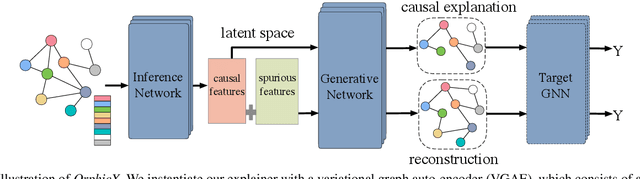
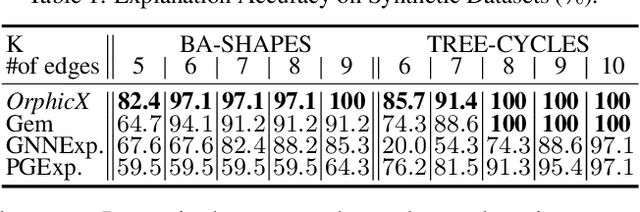
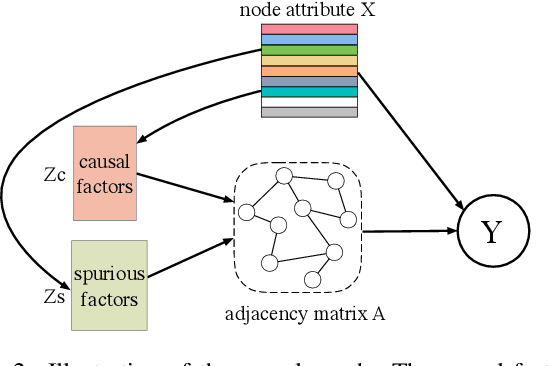
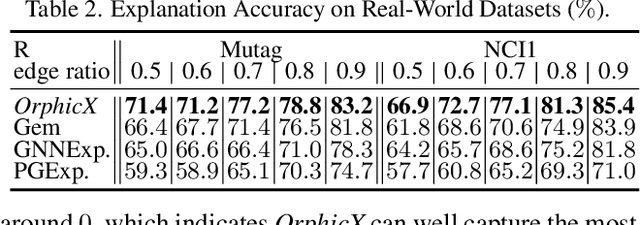
This paper proposes a new eXplanation framework, called OrphicX, for generating causal explanations for any graph neural networks (GNNs) based on learned latent causal factors. Specifically, we construct a distinct generative model and design an objective function that encourages the generative model to produce causal, compact, and faithful explanations. This is achieved by isolating the causal factors in the latent space of graphs by maximizing the information flow measurements. We theoretically analyze the cause-effect relationships in the proposed causal graph, identify node attributes as confounders between graphs and GNN predictions, and circumvent such confounder effect by leveraging the backdoor adjustment formula. Our framework is compatible with any GNNs, and it does not require access to the process by which the target GNN produces its predictions. In addition, it does not rely on the linear-independence assumption of the explained features, nor require prior knowledge on the graph learning tasks. We show a proof-of-concept of OrphicX on canonical classification problems on graph data. In particular, we analyze the explanatory subgraphs obtained from explanations for molecular graphs (i.e., Mutag) and quantitatively evaluate the explanation performance with frequently occurring subgraph patterns. Empirically, we show that OrphicX can effectively identify the causal semantics for generating causal explanations, significantly outperforming its alternatives.
Generative Causal Explanations for Graph Neural Networks
Apr 14, 2021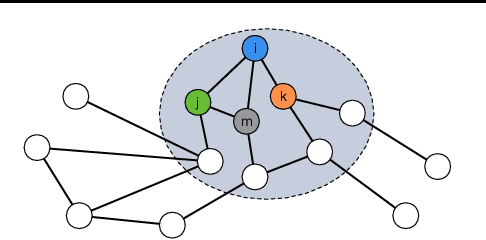
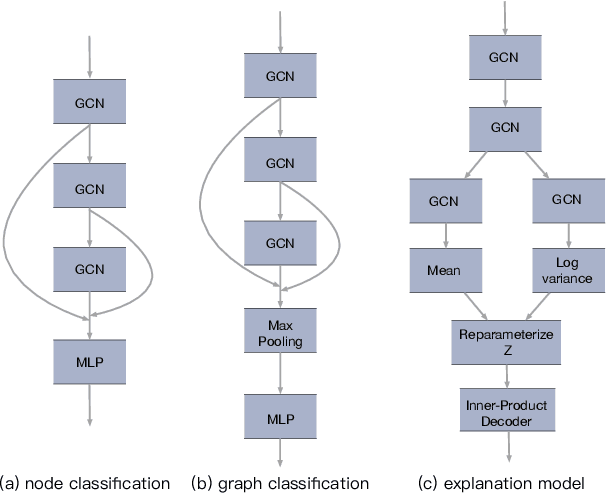
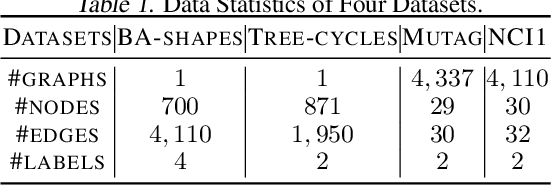
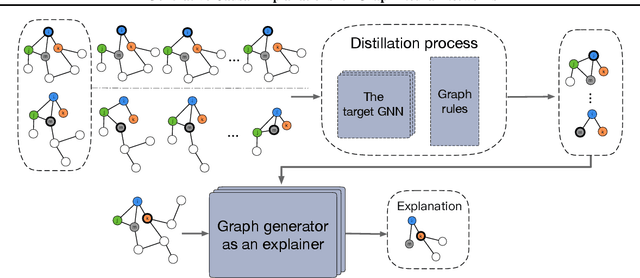
This paper presents Gem, a model-agnostic approach for providing interpretable explanations for any GNNs on various graph learning tasks. Specifically, we formulate the problem of providing explanations for the decisions of GNNs as a causal learning task. Then we train a causal explanation model equipped with a loss function based on Granger causality. Different from existing explainers for GNNs, Gem explains GNNs on graph-structured data from a causal perspective. It has better generalization ability as it has no requirements on the internal structure of the GNNs or prior knowledge on the graph learning tasks. In addition, Gem, once trained, can be used to explain the target GNN very quickly. Our theoretical analysis shows that several recent explainers fall into a unified framework of additive feature attribution methods. Experimental results on synthetic and real-world datasets show that Gem achieves a relative increase of the explanation accuracy by up to $30\%$ and speeds up the explanation process by up to $110\times$ as compared to its state-of-the-art alternatives.