 Add to Chrome
 Add to Firefox
 Add to Edge
Structured-Sparse Attention for Entity Tracking with Subquadratic Sequence Complexity
May 21, 2026
Entity tracking requires maintaining and updating latent states for entities and attributes over long sequences. Recent task-specific attention operators can compress deep Transformer stacks into a few layers by performing multi-hop state propagation within a single layer, but their dense evaluation remains expensive. We show that in this setting, learned attention is strongly structured: most mass concentrates in local block-diagonal neighborhoods with a light cross-block residue. Exploiting this, we derive a blockwise evaluation of a resolvent-style operator that keeps within-block interactions exact and routes cross-block interactions through a reduced system. The resulting evaluation is subquadratic in sequence length $O(n^{4/3}d)$ (and $O(n^{7/3})$ when $d\approx n$). On controlled tracking benchmarks, our method matches the dense operator's accuracy while reducing wall-clock time by $12-29\%$ under a standardized measurement protocol, and is up to $2.4 \times$ faster than a compact dense Transformer at comparable exact-match accuracy. We further provide ablations over block size and model capacity, and identify a limitation: performance collapses when the number of simultaneously evolving properties exceeds the number of attention heads.

1st Workshop on Maritime Computer Vision 2023: Challenge Results
Nov 28, 2022
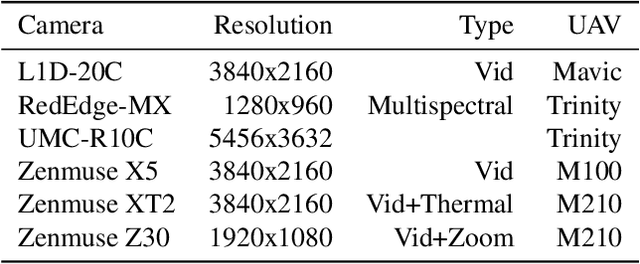
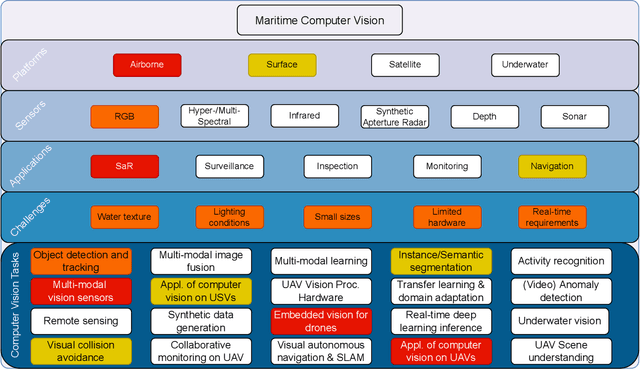
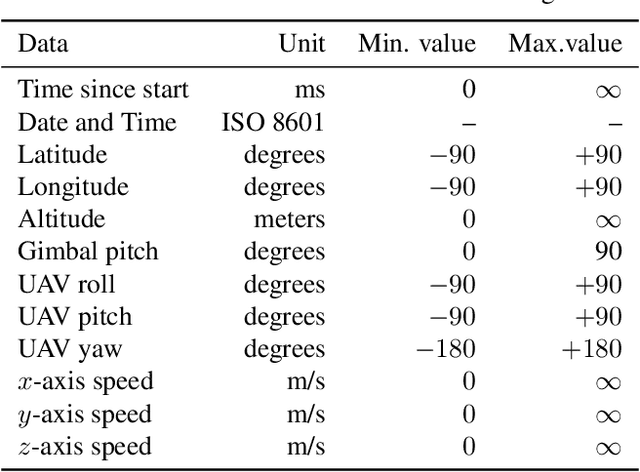
The 1$^{\text{st}}$ Workshop on Maritime Computer Vision (MaCVi) 2023 focused on maritime computer vision for Unmanned Aerial Vehicles (UAV) and Unmanned Surface Vehicle (USV), and organized several subchallenges in this domain: (i) UAV-based Maritime Object Detection, (ii) UAV-based Maritime Object Tracking, (iii) USV-based Maritime Obstacle Segmentation and (iv) USV-based Maritime Obstacle Detection. The subchallenges were based on the SeaDronesSee and MODS benchmarks. This report summarizes the main findings of the individual subchallenges and introduces a new benchmark, called SeaDronesSee Object Detection v2, which extends the previous benchmark by including more classes and footage. We provide statistical and qualitative analyses, and assess trends in the best-performing methodologies of over 130 submissions. The methods are summarized in the appendix. The datasets, evaluation code and the leaderboard are publicly available at https://seadronessee.cs.uni-tuebingen.de/macvi.