 Add to Chrome
 Add to Firefox
 Add to Edge
Mirror: A Multi-Agent System for AI-Assisted Ethics Review
Feb 09, 2026
Ethics review is a foundational mechanism of modern research governance, yet contemporary systems face increasing strain as ethical risks arise as structural consequences of large-scale, interdisciplinary scientific practice. The demand for consistent and defensible decisions under heterogeneous risk profiles exposes limitations in institutional review capacity rather than in the legitimacy of ethics oversight. Recent advances in large language models (LLMs) offer new opportunities to support ethics review, but their direct application remains limited by insufficient ethical reasoning capability, weak integration with regulatory structures, and strict privacy constraints on authentic review materials. In this work, we introduce Mirror, an agentic framework for AI-assisted ethical review that integrates ethical reasoning, structured rule interpretation, and multi-agent deliberation within a unified architecture. At its core is EthicsLLM, a foundational model fine-tuned on EthicsQA, a specialized dataset of 41K question-chain-of-thought-answer triples distilled from authoritative ethics and regulatory corpora. EthicsLLM provides detailed normative and regulatory understanding, enabling Mirror to operate in two complementary modes. Mirror-ER (expedited Review) automates expedited review through an executable rule base that supports efficient and transparent compliance checks for minimal-risk studies. Mirror-CR (Committee Review) simulates full-board deliberation through coordinated interactions among expert agents, an ethics secretary agent, and a principal investigator agent, producing structured, committee-level assessments across ten ethical dimensions. Empirical evaluations demonstrate that Mirror significantly improves the quality, consistency, and professionalism of ethics assessments compared with strong generalist LLMs.

Breaking the Passive Learning Trap: An Active Perception Strategy for Human Motion Prediction
Nov 18, 2025Forecasting 3D human motion is an important embodiment of fine-grained understanding and cognition of human behavior by artificial agents. Current approaches excessively rely on implicit network modeling of spatiotemporal relationships and motion characteristics, falling into the passive learning trap that results in redundant and monotonous 3D coordinate information acquisition while lacking actively guided explicit learning mechanisms. To overcome these issues, we propose an Active Perceptual Strategy (APS) for human motion prediction, leveraging quotient space representations to explicitly encode motion properties while introducing auxiliary learning objectives to strengthen spatio-temporal modeling. Specifically, we first design a data perception module that projects poses into the quotient space, decoupling motion geometry from coordinate redundancy. By jointly encoding tangent vectors and Grassmann projections, this module simultaneously achieves geometric dimension reduction, semantic decoupling, and dynamic constraint enforcement for effective motion pose characterization. Furthermore, we introduce a network perception module that actively learns spatio-temporal dependencies through restorative learning. This module deliberately masks specific joints or injects noise to construct auxiliary supervision signals. A dedicated auxiliary learning network is designed to actively adapt and learn from perturbed information. Notably, APS is model agnostic and can be integrated with different prediction models to enhance active perceptual. The experimental results demonstrate that our method achieves the new state-of-the-art, outperforming existing methods by large margins: 16.3% on H3.6M, 13.9% on CMU Mocap, and 10.1% on 3DPW.
Multi-scale Residual Transformer for VLF Lightning Transients Classification
Dec 07, 2023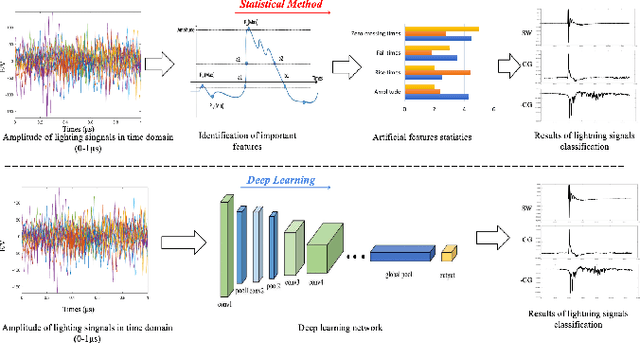
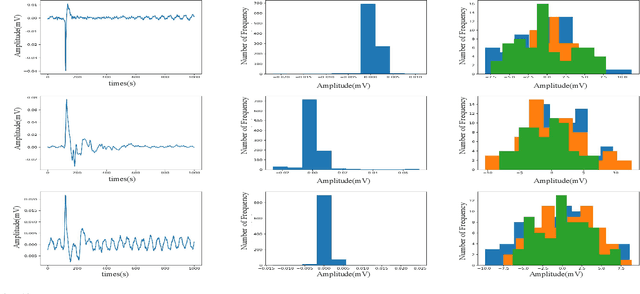
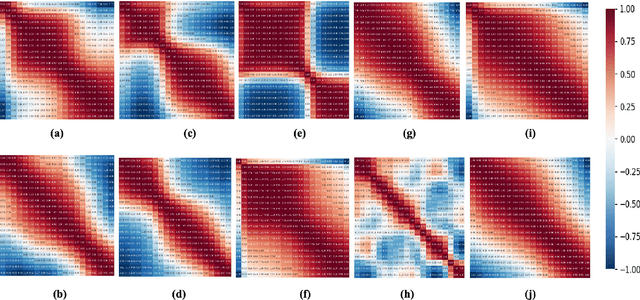
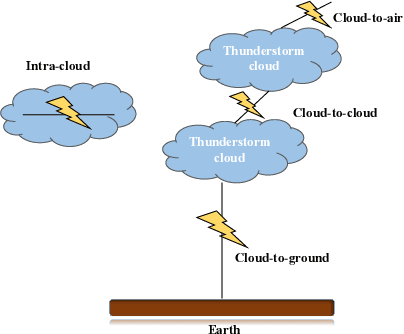
The utilization of Very Low Frequency (VLF) electromagnetic signals in navigation systems is widespread. However, the non-stationary behavior of lightning signals can affect VLF electromagnetic signal transmission. Accurately classifying lightning signals is important for reducing interference and noise in VLF, thereby improving the reliability and overall performance of navigation systems. In recent years, the evolution of deep learning, specifically Convolutional Neural Network (CNNs), has sparked a transformation in lightning classification, surpassing traditional statistical methodologies. Existing CNN models have limitations as they overlook the diverse attributes of lightning signals across different scales and neglect the significance of temporal sequencing in sequential signals. This study introduces an innovative multi-scale residual transform (MRTransformer) that not only has the ability to discern intricate fine-grained patterns while also weighing the significance of different aspects within the input lightning signal sequence. This model performs the attributes of the lightning signal across different scales and the level of accuracy reached 90% in the classification. In future work, this model has the potential applied to a comprehensive understanding of the localization and waveform characteristics of lightning signals.