 Add to Chrome
 Add to Firefox
 Add to Edge
Revisiting Weight Regularization for Low-Rank Continual Learning
Feb 19, 2026
Continual Learning (CL) with large-scale pre-trained models (PTMs) has recently gained wide attention, shifting the focus from training from scratch to continually adapting PTMs. This has given rise to a promising paradigm: parameter-efficient continual learning (PECL), where task interference is typically mitigated by assigning a task-specific module during training, such as low-rank adapters. However, weight regularization techniques, such as Elastic Weight Consolidation (EWC)-a key strategy in CL-remain underexplored in this new paradigm. In this paper, we revisit weight regularization in low-rank CL as a new perspective for mitigating task interference in PECL. Unlike existing low-rank CL methods, we mitigate task interference by regularizing a shared low-rank update through EWC, thereby keeping the storage requirement and inference costs constant regardless of the number of tasks. Our proposed method EWC-LoRA leverages a low-rank representation to estimate parameter importance over the full-dimensional space. This design offers a practical, computational- and memory-efficient solution for CL with PTMs, and provides insights that may inform the broader application of regularization techniques within PECL. Extensive experiments on various benchmarks demonstrate the effectiveness of EWC-LoRA, achieving a stability-plasticity trade-off superior to existing low-rank CL approaches. These results indicate that, even under low-rank parameterizations, weight regularization remains an effective mechanism for mitigating task interference. Code is available at: https://github.com/yaoyz96/low-rank-cl.

Continual Learning Should Move Beyond Incremental Classification
Feb 17, 2025

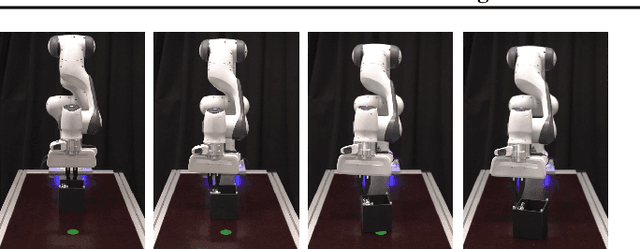
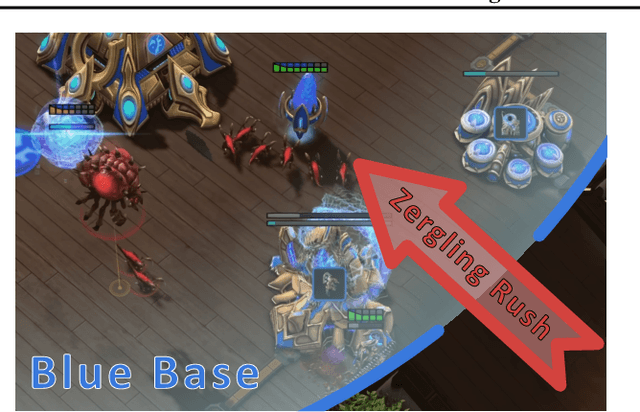
Continual learning (CL) is the sub-field of machine learning concerned with accumulating knowledge in dynamic environments. So far, CL research has mainly focused on incremental classification tasks, where models learn to classify new categories while retaining knowledge of previously learned ones. Here, we argue that maintaining such a focus limits both theoretical development and practical applicability of CL methods. Through a detailed analysis of concrete examples - including multi-target classification, robotics with constrained output spaces, learning in continuous task domains, and higher-level concept memorization - we demonstrate how current CL approaches often fail when applied beyond standard classification. We identify three fundamental challenges: (C1) the nature of continuity in learning problems, (C2) the choice of appropriate spaces and metrics for measuring similarity, and (C3) the role of learning objectives beyond classification. For each challenge, we provide specific recommendations to help move the field forward, including formalizing temporal dynamics through distribution processes, developing principled approaches for continuous task spaces, and incorporating density estimation and generative objectives. In so doing, this position paper aims to broaden the scope of CL research while strengthening its theoretical foundations, making it more applicable to real-world problems.