 Add to Chrome
 Add to Firefox
 Add to Edge
Towards Discourse Parsing-inspired Semantic Storytelling
Apr 25, 2020
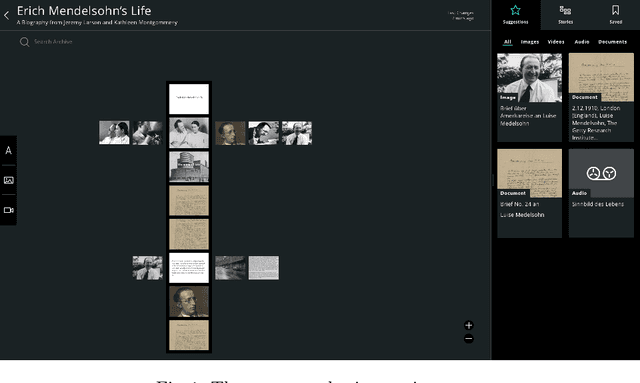
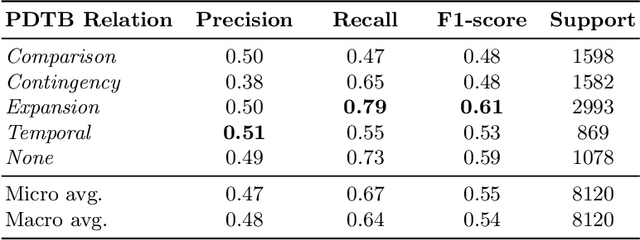
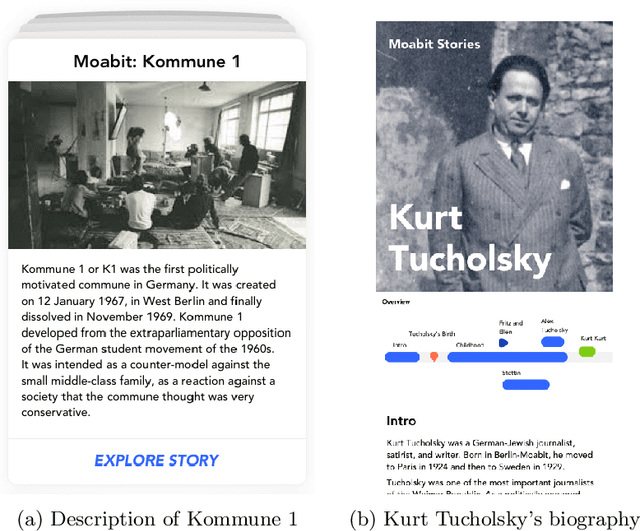
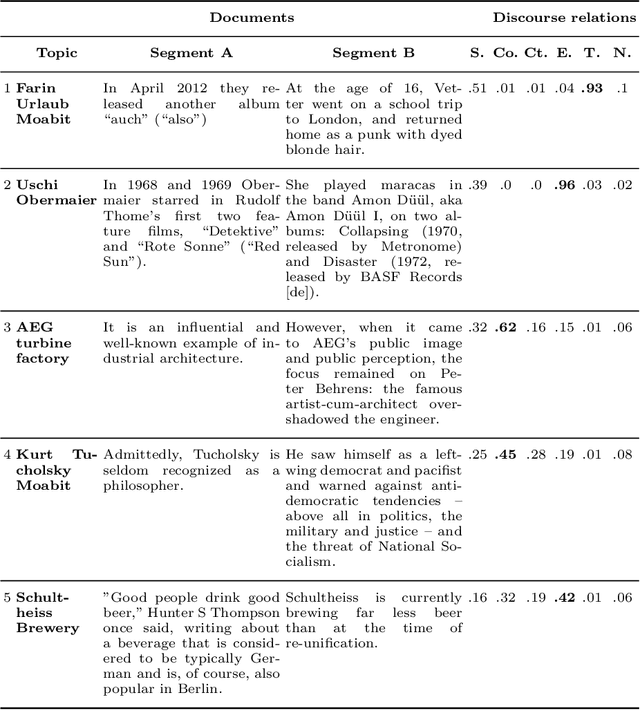
Previous work of ours on Semantic Storytelling uses text analytics procedures including Named Entity Recognition and Event Detection. In this paper, we outline our longer-term vision on Semantic Storytelling and describe the current conceptual and technical approach. In the project that drives our research we develop AI-based technologies that are verified by partners from industry. One long-term goal is the development of an approach for Semantic Storytelling that has broad coverage and that is, furthermore, robust. We provide first results on experiments that involve discourse parsing, applied to a concrete use case, "Explore the Neighbourhood!", which is based on a semi-automatically collected data set with documents about noteworthy people in one of Berlin's districts. Though automatically obtaining annotations for coherence relations from plain text is a non-trivial challenge, our preliminary results are promising. We envision our approach to be combined with additional features (NER, coreference resolution, knowledge graphs

Observations on Annotations
Apr 21, 2020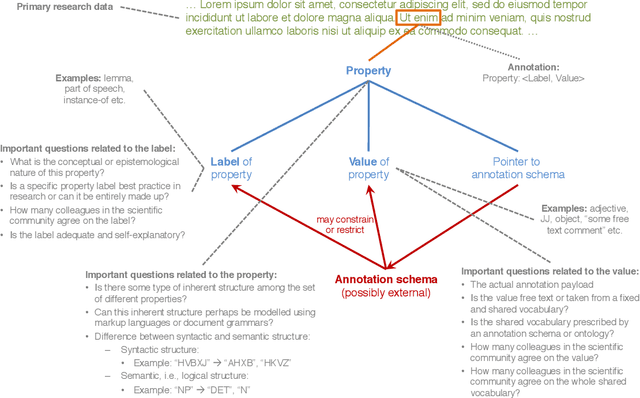
The annotation of textual information is a fundamental activity in Linguistics and Computational Linguistics. This article presents various observations on annotations. It approaches the topic from several angles including Hypertext, Computational Linguistics and Language Technology, Artificial Intelligence and Open Science. Annotations can be examined along different dimensions. In terms of complexity, they can range from trivial to highly sophisticated, in terms of maturity from experimental to standardised. Annotations can be annotated themselves using more abstract annotations. Primary research data such as, e.g., text documents can be annotated on different layers concurrently, which are independent but can be exploited using multi-layer querying. Standards guarantee interoperability and reusability of data sets. The chapter concludes with four final observations, formulated as research questions or rather provocative remarks on the current state of annotation research.
Towards an Interoperable Ecosystem of AI and LT Platforms: A Roadmap for the Implementation of Different Levels of Interoperability
Apr 17, 2020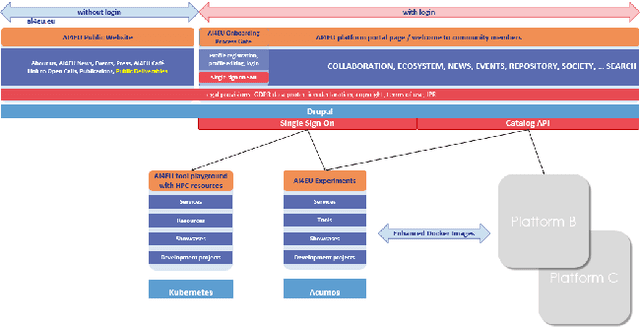
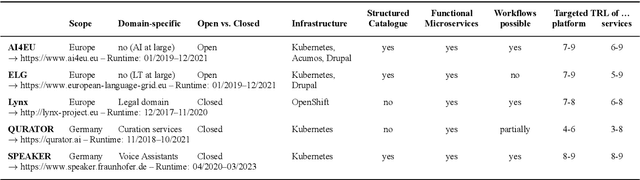
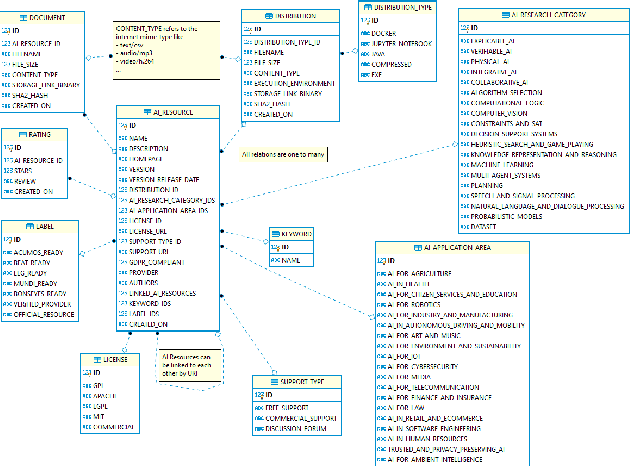

With regard to the wider area of AI/LT platform interoperability, we concentrate on two core aspects: (1) cross-platform search and discovery of resources and services; (2) composition of cross-platform service workflows. We devise five different levels (of increasing complexity) of platform interoperability that we suggest to implement in a wider federation of AI/LT platforms. We illustrate the approach using the five emerging AI/LT platforms AI4EU, ELG, Lynx, QURATOR and SPEAKER.
A Workflow Manager for Complex NLP and Content Curation Pipelines
Apr 16, 2020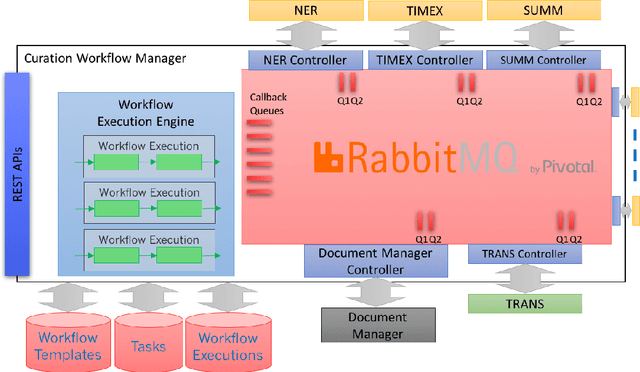
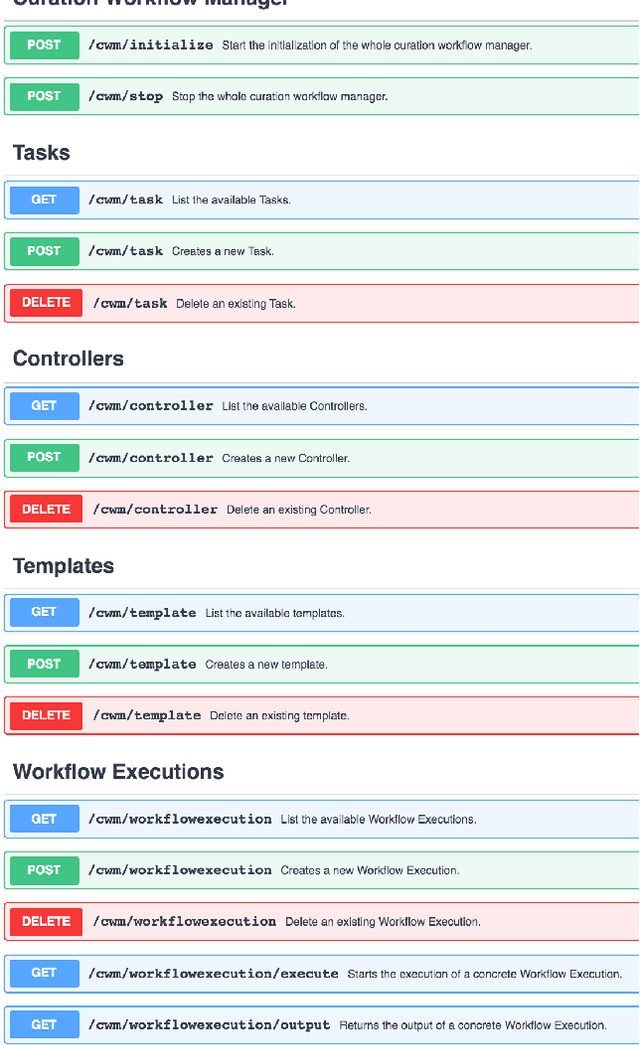
We present a workflow manager for the flexible creation and customisation of NLP processing pipelines. The workflow manager addresses challenges in interoperability across various different NLP tasks and hardware-based resource usage. Based on the four key principles of generality, flexibility, scalability and efficiency, we present the first version of the workflow manager by providing details on its custom definition language, explaining the communication components and the general system architecture and setup. We currently implement the system, which is grounded and motivated by real-world industry use cases in several innovation and transfer projects.
The European Language Technology Landscape in 2020: Language-Centric and Human-Centric AI for Cross-Cultural Communication in Multilingual Europe
Mar 30, 2020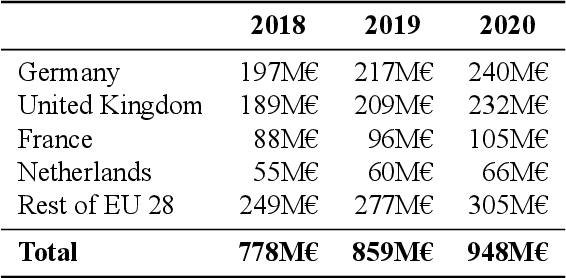
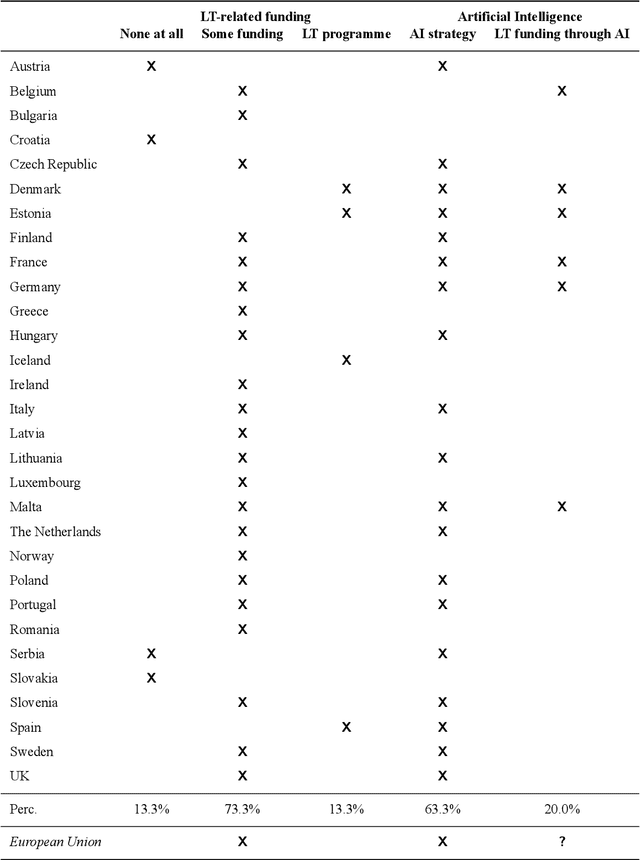
Multilingualism is a cultural cornerstone of Europe and firmly anchored in the European treaties including full language equality. However, language barriers impacting business, cross-lingual and cross-cultural communication are still omnipresent. Language Technologies (LTs) are a powerful means to break down these barriers. While the last decade has seen various initiatives that created a multitude of approaches and technologies tailored to Europe's specific needs, there is still an immense level of fragmentation. At the same time, AI has become an increasingly important concept in the European Information and Communication Technology area. For a few years now, AI, including many opportunities, synergies but also misconceptions, has been overshadowing every other topic. We present an overview of the European LT landscape, describing funding programmes, activities, actions and challenges in the different countries with regard to LT, including the current state of play in industry and the LT market. We present a brief overview of the main LT-related activities on the EU level in the last ten years and develop strategic guidance with regard to four key dimensions.
European Language Grid: An Overview
Mar 30, 2020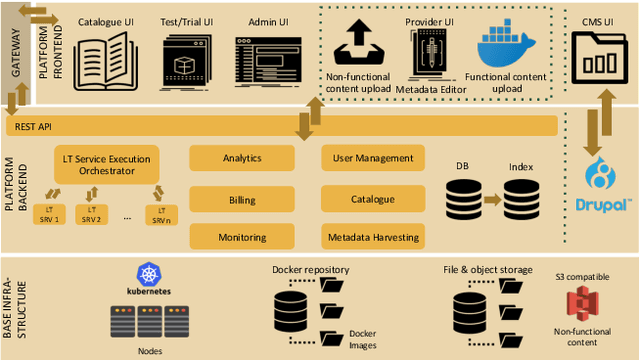
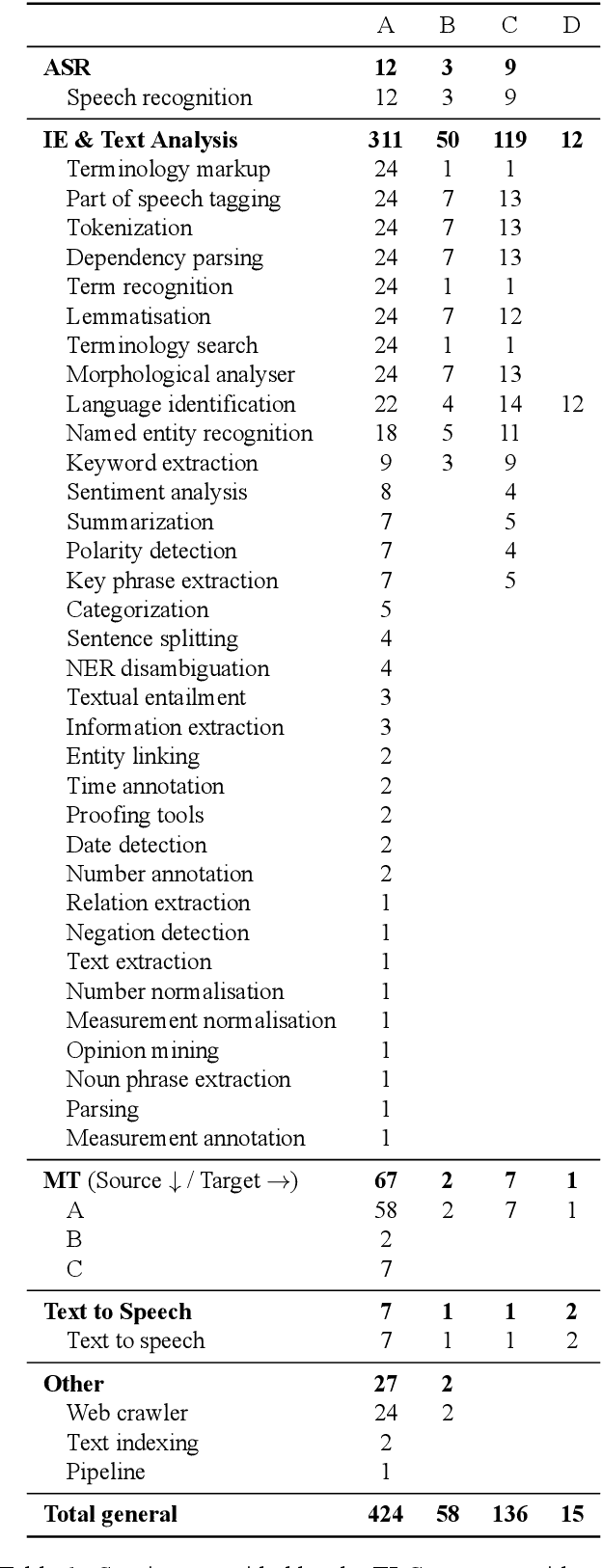
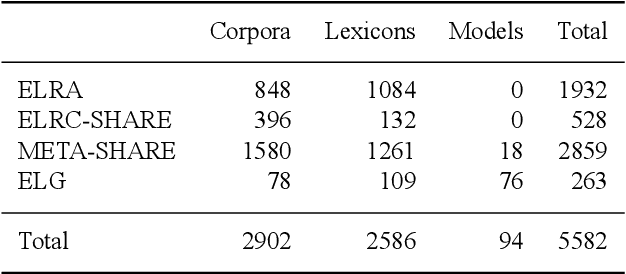
With 24 official EU and many additional languages, multilingualism in Europe and an inclusive Digital Single Market can only be enabled through Language Technologies (LTs). European LT business is dominated by hundreds of SMEs and a few large players. Many are world-class, with technologies that outperform the global players. However, European LT business is also fragmented, by nation states, languages, verticals and sectors, significantly holding back its impact. The European Language Grid (ELG) project addresses this fragmentation by establishing the ELG as the primary platform for LT in Europe. The ELG is a scalable cloud platform, providing, in an easy-to-integrate way, access to hundreds of commercial and non-commercial LTs for all European languages, including running tools and services as well as data sets and resources. Once fully operational, it will enable the commercial and non-commercial European LT community to deposit and upload their technologies and data sets into the ELG, to deploy them through the grid, and to connect with other resources. The ELG will boost the Multilingual Digital Single Market towards a thriving European LT community, creating new jobs and opportunities. Furthermore, the ELG project organises two open calls for up to 20 pilot projects. It also sets up 32 National Competence Centres (NCCs) and the European LT Council (LTC) for outreach and coordination purposes.
Making Metadata Fit for Next Generation Language Technology Platforms: The Metadata Schema of the European Language Grid
Mar 30, 2020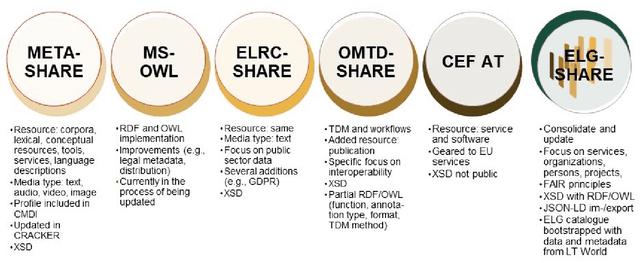
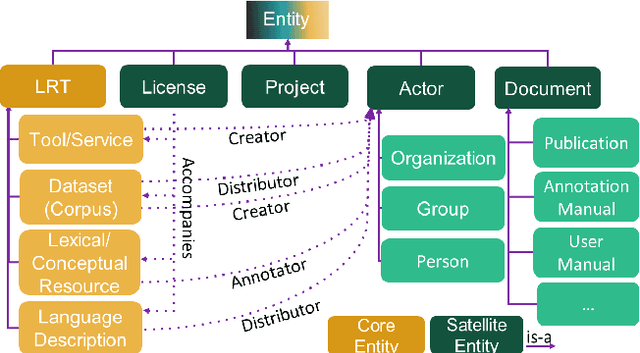
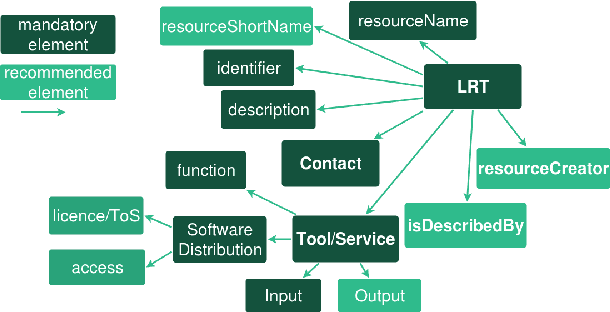
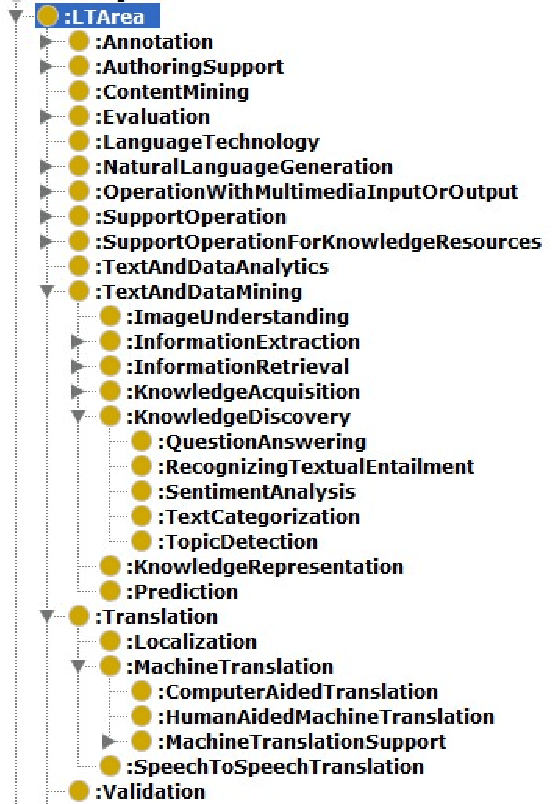
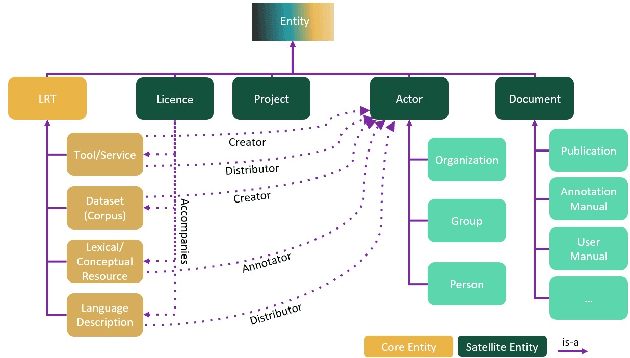
The current scientific and technological landscape is characterised by the increasing availability of data resources and processing tools and services. In this setting, metadata have emerged as a key factor facilitating management, sharing and usage of such digital assets. In this paper we present ELG-SHARE, a rich metadata schema catering for the description of Language Resources and Technologies (processing and generation services and tools, models, corpora, term lists, etc.), as well as related entities (e.g., organizations, projects, supporting documents, etc.). The schema powers the European Language Grid platform that aims to be the primary hub and marketplace for industry-relevant Language Technology in Europe. ELG-SHARE has been based on various metadata schemas, vocabularies, and ontologies, as well as related recommendations and guidelines.
Named Entities in Medical Case Reports: Corpus and Experiments
Mar 29, 2020
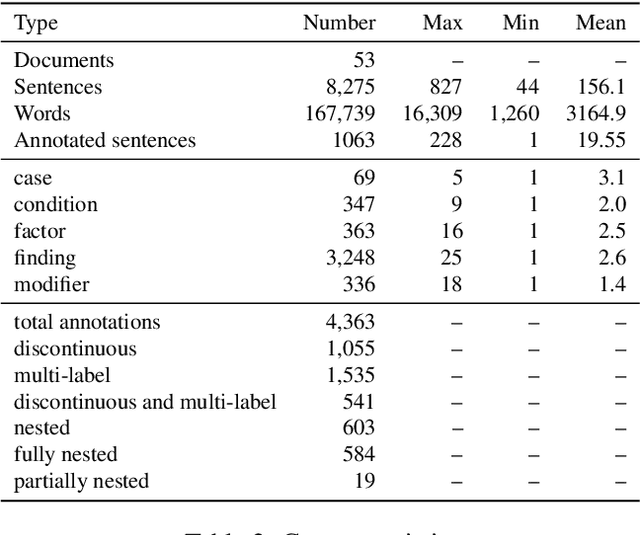
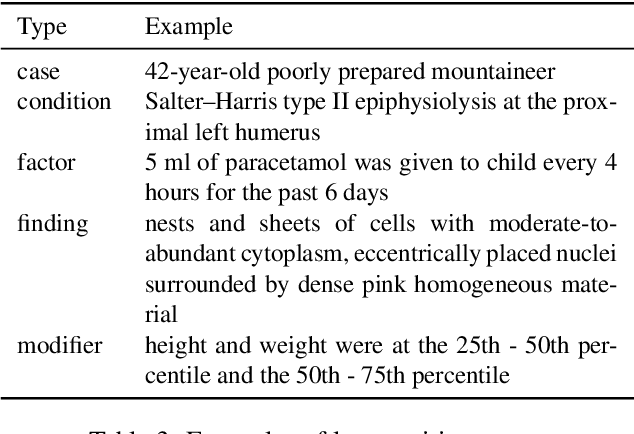
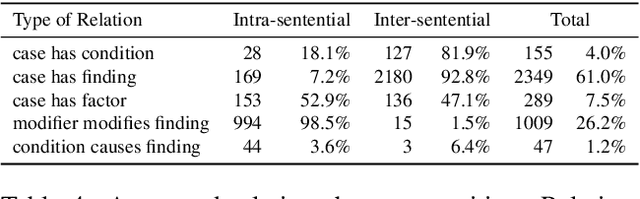
We present a new corpus comprising annotations of medical entities in case reports, originating from PubMed Central's open access library. In the case reports, we annotate cases, conditions, findings, factors and negation modifiers. Moreover, where applicable, we annotate relations between these entities. As such, this is the first corpus of this kind made available to the scientific community in English. It enables the initial investigation of automatic information extraction from case reports through tasks like Named Entity Recognition, Relation Extraction and (sentence/paragraph) relevance detection. Additionally, we present four strong baseline systems for the detection of medical entities made available through the annotated dataset.
Abstractive Text Summarization based on Language Model Conditioning and Locality Modeling
Mar 29, 2020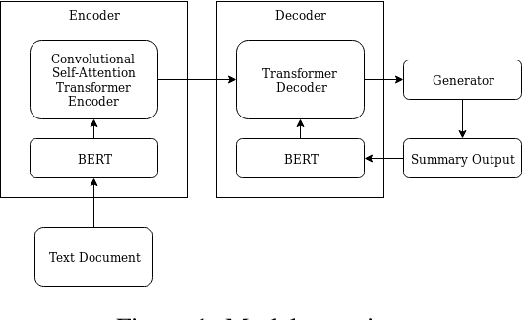
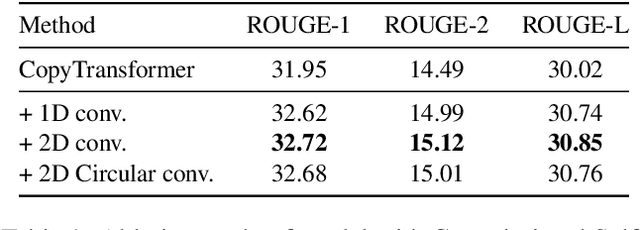
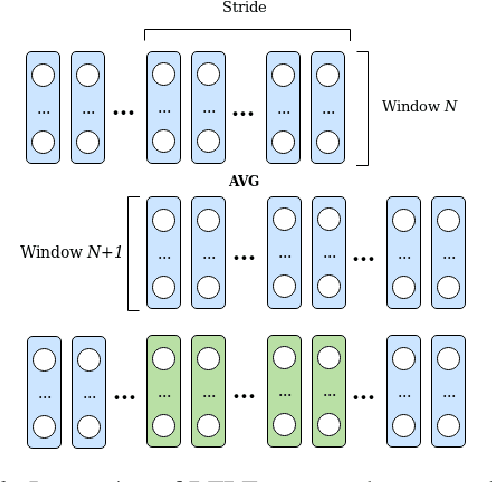
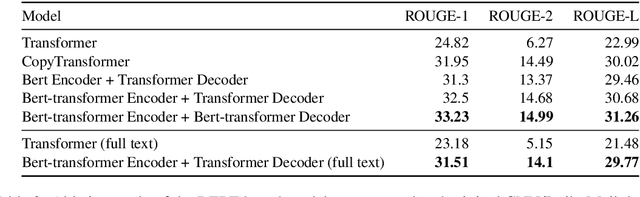
We explore to what extent knowledge about the pre-trained language model that is used is beneficial for the task of abstractive summarization. To this end, we experiment with conditioning the encoder and decoder of a Transformer-based neural model on the BERT language model. In addition, we propose a new method of BERT-windowing, which allows chunk-wise processing of texts longer than the BERT window size. We also explore how locality modelling, i.e., the explicit restriction of calculations to the local context, can affect the summarization ability of the Transformer. This is done by introducing 2-dimensional convolutional self-attention into the first layers of the encoder. The results of our models are compared to a baseline and the state-of-the-art models on the CNN/Daily Mail dataset. We additionally train our model on the SwissText dataset to demonstrate usability on German. Both models outperform the baseline in ROUGE scores on two datasets and show its superiority in a manual qualitative analysis.
A Dataset of German Legal Documents for Named Entity Recognition
Mar 29, 2020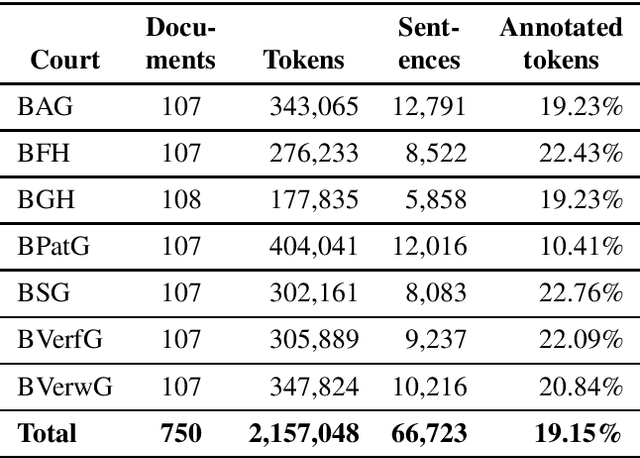
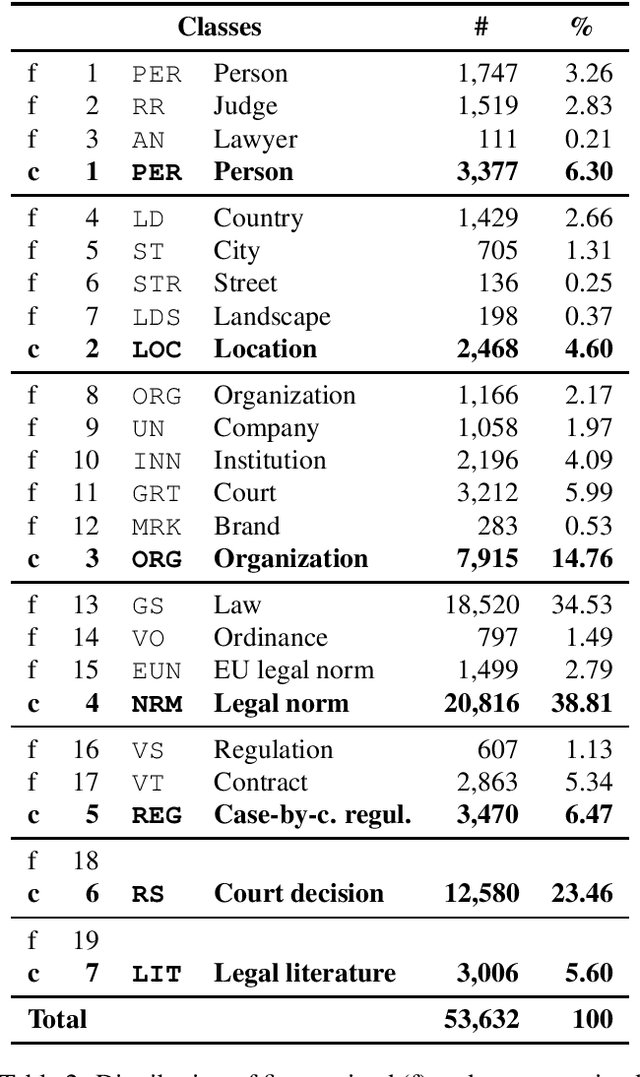
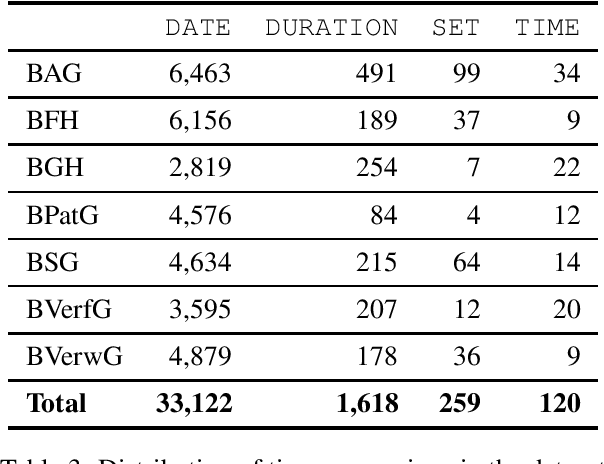
We describe a dataset developed for Named Entity Recognition in German federal court decisions. It consists of approx. 67,000 sentences with over 2 million tokens. The resource contains 54,000 manually annotated entities, mapped to 19 fine-grained semantic classes: person, judge, lawyer, country, city, street, landscape, organization, company, institution, court, brand, law, ordinance, European legal norm, regulation, contract, court decision, and legal literature. The legal documents were, furthermore, automatically annotated with more than 35,000 TimeML-based time expressions. The dataset, which is available under a CC-BY 4.0 license in the CoNNL-2002 format, was developed for training an NER service for German legal documents in the EU project Lynx.