 Add to Chrome
 Add to Firefox
 Add to Edge
AI Benchmark Democratization and Carpentry
Dec 12, 2025
Benchmarks are a cornerstone of modern machine learning, enabling reproducibility, comparison, and scientific progress. However, AI benchmarks are increasingly complex, requiring dynamic, AI-focused workflows. Rapid evolution in model architectures, scale, datasets, and deployment contexts makes evaluation a moving target. Large language models often memorize static benchmarks, causing a gap between benchmark results and real-world performance. Beyond traditional static benchmarks, continuous adaptive benchmarking frameworks are needed to align scientific assessment with deployment risks. This calls for skills and education in AI Benchmark Carpentry. From our experience with MLCommons, educational initiatives, and programs like the DOE's Trillion Parameter Consortium, key barriers include high resource demands, limited access to specialized hardware, lack of benchmark design expertise, and uncertainty in relating results to application domains. Current benchmarks often emphasize peak performance on top-tier hardware, offering limited guidance for diverse, real-world scenarios. Benchmarking must become dynamic, incorporating evolving models, updated data, and heterogeneous platforms while maintaining transparency, reproducibility, and interpretability. Democratization requires both technical innovation and systematic education across levels, building sustained expertise in benchmark design and use. Benchmarks should support application-relevant comparisons, enabling informed, context-sensitive decisions. Dynamic, inclusive benchmarking will ensure evaluation keeps pace with AI evolution and supports responsible, reproducible, and accessible AI deployment. Community efforts can provide a foundation for AI Benchmark Carpentry.

Open and Sustainable AI: challenges, opportunities and the road ahead in the life sciences
May 22, 2025
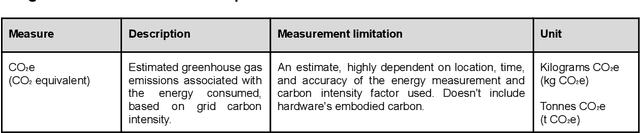
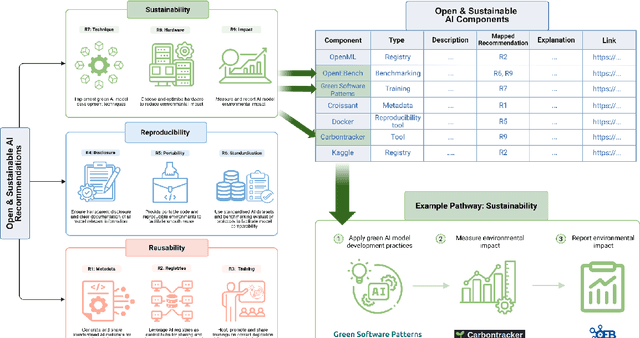
Artificial intelligence (AI) has recently seen transformative breakthroughs in the life sciences, expanding possibilities for researchers to interpret biological information at an unprecedented capacity, with novel applications and advances being made almost daily. In order to maximise return on the growing investments in AI-based life science research and accelerate this progress, it has become urgent to address the exacerbation of long-standing research challenges arising from the rapid adoption of AI methods. We review the increased erosion of trust in AI research outputs, driven by the issues of poor reusability and reproducibility, and highlight their consequent impact on environmental sustainability. Furthermore, we discuss the fragmented components of the AI ecosystem and lack of guiding pathways to best support Open and Sustainable AI (OSAI) model development. In response, this perspective introduces a practical set of OSAI recommendations directly mapped to over 300 components of the AI ecosystem. Our work connects researchers with relevant AI resources, facilitating the implementation of sustainable, reusable and transparent AI. Built upon life science community consensus and aligned to existing efforts, the outputs of this perspective are designed to aid the future development of policy and structured pathways for guiding AI implementation.