 Add to Chrome
 Add to Firefox
 Add to Edge
TagLLM: A Fine-Grained Tag Generation Approach for Note Recommendation
Mar 23, 2026
Large Language Models (LLMs) have shown promising potential in E-commerce community recommendation. While LLMs and Multimodal LLMs (MLLMs) are widely used to encode notes into implicit embeddings, leveraging their generative capabilities to represent notes with interpretable tags remains unexplored. In the field of tag generation, traditional close-ended methods heavily rely on the design of tag pools, while existing open-ended methods applied directly to note recommendations face two limitations: (1) MLLMs lack guidance during generation, resulting in redundant tags that fail to capture user interests; (2) The generated tags are often coarse and lack fine-grained representation of notes, interfering with downstream recommendations. To address these limitations, we propose TagLLM, a fine-grained tag generation method for note recommendation. TagLLM captures user interests across note categories through a User Interest Handbook and constructs fine-grained tag data using multimodal CoT Extraction. A Tag Knowledge Distillation method is developed to equip small models with competitive generation capabilities, enhancing inference efficiency. In online A/B test, TagLLM increases average view duration per user by 0.31%, average interactions per user by 0.96%, and page view click-through rate in cold-start scenario by 32.37%, demonstrating its effectiveness.

Sequential vessel segmentation via deep channel attention network
Feb 10, 2021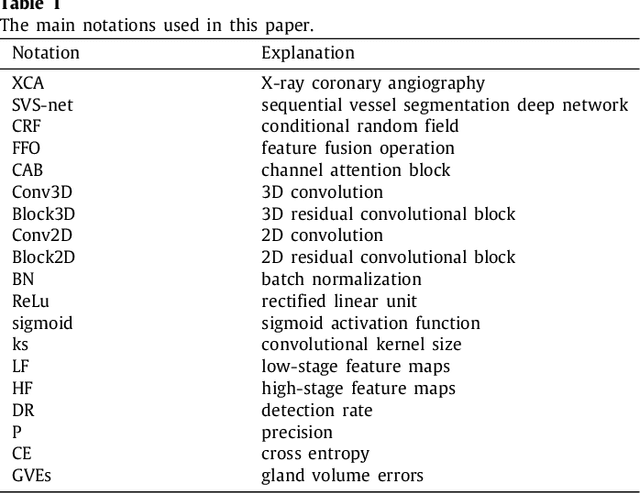
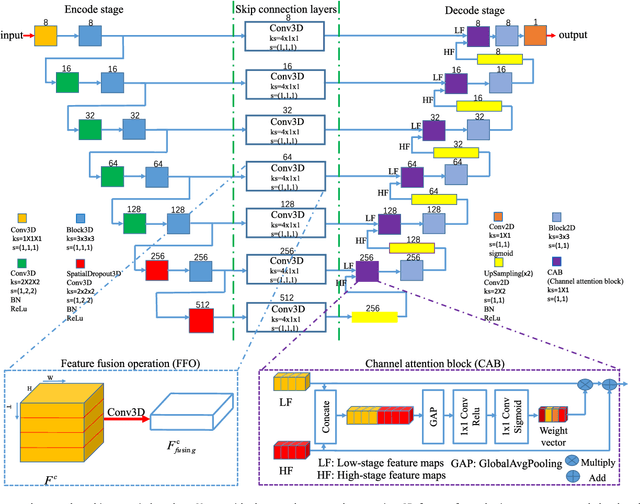
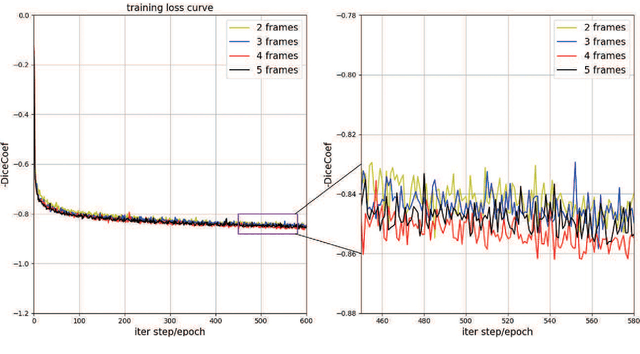
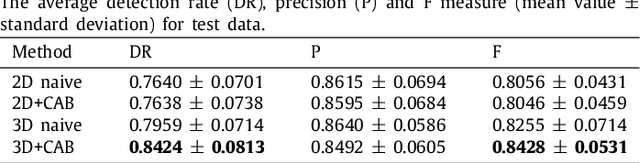
This paper develops a novel encoder-decoder deep network architecture which exploits the several contextual frames of 2D+t sequential images in a sliding window centered at current frame to segment 2D vessel masks from the current frame. The architecture is equipped with temporal-spatial feature extraction in encoder stage, feature fusion in skip connection layers and channel attention mechanism in decoder stage. In the encoder stage, a series of 3D convolutional layers are employed to hierarchically extract temporal-spatial features. Skip connection layers subsequently fuse the temporal-spatial feature maps and deliver them to the corresponding decoder stages. To efficiently discriminate vessel features from the complex and noisy backgrounds in the XCA images, the decoder stage effectively utilizes channel attention blocks to refine the intermediate feature maps from skip connection layers for subsequently decoding the refined features in 2D ways to produce the segmented vessel masks. Furthermore, Dice loss function is implemented to train the proposed deep network in order to tackle the class imbalance problem in the XCA data due to the wide distribution of complex background artifacts. Extensive experiments by comparing our method with other state-of-the-art algorithms demonstrate the proposed method's superior performance over other methods in terms of the quantitative metrics and visual validation. The source codes are at https://github.com/Binjie-Qin/SVS-net
* 14