 Add to Chrome
 Add to Firefox
 Add to Edge
Learning Logical Operations for Arbitrary Quantum Error Correction Codes
May 27, 2026
Logical operations are essential for quantum computation within quantum error-correcting codes. However, discovering their physical realizations is challenging, especially for non-additive codes that lack a stabilizer description. We present a general learning-based framework that, given only an encoding circuit, constructs physical implementations of logical operations while enforcing structural properties such as transversality or shallow depth. Our approach is validated by rediscovering known logical operations of standard stabilizer codes. We then extend it to a co-design procedure, dubbed variational early fault-tolerant quantum computing (VarEFTQC), which tailors non-additive encodings to a given noise model and enforces desired logical gate sets, such as transversal IQP-type families or low-depth universal sets. A software library implements the complete learning pipeline, including loss-function variants, ansatz families, and optimization routines. Together, these results position VarEFTQC as a practical tool for discovering hardware-adapted logical gadgets for early fault-tolerant quantum computing.

Learning to Concatenate Quantum Codes
Apr 16, 2026Concatenating quantum error correction codes scales error correction capability by driving logical error rates down double-exponentially across levels. However, the noise structure shifts under concatenation, making it hard to choose an optimal code sequence. We automate this choice by estimating the effective noise channel after each level and selecting the next code accordingly. In particular, we use learning-based methods to tailor small, non-additive encoders when the noise exhibits sufficient structure, then switch to standard codes once the noise is nearly uniform. In simulations, this level-wise adaptation achieves a target logical error rate with far fewer qubits than concatenating stabilizer codes alone--reducing qubit counts by up to two orders of magnitude for strongly structured noise. Therefore, this hybrid, learning-based strategy offers a promising tool for early fault-tolerant quantum computing.
Pareto Optimal Benchmarking of AI Models on ARM Cortex Processors for Sustainable Embedded Systems
Feb 19, 2026This work presents a practical benchmarking framework for optimizing artificial intelligence (AI) models on ARM Cortex processors (M0+, M4, M7), focusing on energy efficiency, accuracy, and resource utilization in embedded systems. Through the design of an automated test bench, we provide a systematic approach to evaluate across key performance indicators (KPIs) and identify optimal combinations of processor and AI model. The research highlights a nearlinear correlation between floating-point operations (FLOPs) and inference time, offering a reliable metric for estimating computational demands. Using Pareto analysis, we demonstrate how to balance trade-offs between energy consumption and model accuracy, ensuring that AI applications meet performance requirements without compromising sustainability. Key findings indicate that the M7 processor is ideal for short inference cycles, while the M4 processor offers better energy efficiency for longer inference tasks. The M0+ processor, while less efficient for complex AI models, remains suitable for simpler tasks. This work provides insights for developers, guiding them to design energy-efficient AI systems that deliver high performance in realworld applications.
* 11 pages, 7 figures, Funding: GreenICT@FMD (BMFTR grant 16ME0491K)
Bridging the Gap Between Explainable AI and Uncertainty Quantification to Enhance Trustability
May 25, 2021
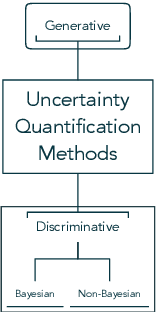
After the tremendous advances of deep learning and other AI methods, more attention is flowing into other properties of modern approaches, such as interpretability, fairness, etc. combined in frameworks like Responsible AI. Two research directions, namely Explainable AI and Uncertainty Quantification are becoming more and more important, but have been so far never combined and jointly explored. In this paper, I show how both research areas provide potential for combination, why more research should be done in this direction and how this would lead to an increase in trustability in AI systems.