 Add to Chrome
 Add to Firefox
 Add to Edge
When Readability and Source Retention Diverge: An Evaluability Gap in AI Translation
Aug 19, 2026
Readable AI output can leave an evaluability gap: even when the source is shown, an overall-quality judgment may not reflect what an output preserves. We investigated how source-text condition and output rendering relate to perceived translation quality, and how output and system appraisals relate to trust and stated disclosure willingness in a plain-text interface. A focal 2 * 2 comparison (N=306) using TransLingo examined simple generated narratives and complex literary-philosophical prose alongside LLM-generated readability-oriented outputs and researcher-revised fidelity-oriented outputs. A descriptive stimulus audit indicated greater source retention in fidelity-oriented outputs in both source-text conditions. Factorial analyses showed a significant rendering-by-source-text-condition interaction in perceived quality. Participants rated fidelity-oriented outputs higher than readability-oriented outputs for the simple narratives, whereas no reliable rendering difference emerged for the complex prose. A corresponding source-condition-dependent pattern was observed for perceived intelligence, agency-oriented anthropomorphic attribution, and task-performance trust. A separate theory-ordered appraisal-structure SEM characterized concurrent associations among perceived quality, perceived intelligence, agency-oriented anthropomorphic attribution, task-performance trust, and stated disclosure willingness across six domains, with task-performance trust as the proximal correlate of stated willingness. The observed rating pattern distinguishes source access from source evaluability: for the complex stimuli, displaying the source did not ensure that one overall-quality rating reflected differences in retained content. It also separates support for evaluating translation output from data-handling support for decisions about what personal text to entrust to a system.

When Visibility Outpaces Verification: Delayed Verification and Narrative Lock-in in Agentic AI Discourse
Feb 11, 2026Agentic AI systems-autonomous entities capable of independent planning and execution-reshape the landscape of human-AI trust. Long before direct system exposure, user expectations are mediated through high-stakes public discourse on social platforms. However, platform-mediated engagement signals (e.g., upvotes) may inadvertently function as a ``credibility proxy,'' potentially stifling critical evaluation. This paper investigates the interplay between social proof and verification timing in online discussions of agentic AI. Analyzing a longitudinal dataset from two distinct Reddit communities with contrasting interaction cultures-r/OpenClaw and r/Moltbook-we operationalize verification cues via reproducible lexical rules and model the ``time-to-first-verification'' using a right-censored survival analysis framework. Our findings reveal a systemic ``Popularity Paradox'': high-visibility discussions in both subreddits experience significantly delayed or entirely absent verification cues compared to low-visibility threads. This temporal lag creates a critical window for ``Narrative Lock-in,'' where early, unverified claims crystallize into collective cognitive biases before evidence-seeking behaviors emerge. We discuss the implications of this ``credibility-by-visibility'' effect for AI safety and propose ``epistemic friction'' as a design intervention to rebalance engagement-driven platforms.
Human Control Is the Anchor, Not the Answer: Early Divergence of Oversight in Agentic AI Communities
Feb 10, 2026Oversight for agentic AI is often discussed as a single goal ("human control"), yet early adoption may produce role-specific expectations. We present a comparative analysis of two newly active Reddit communities in Jan--Feb 2026 that reflect different socio-technical roles: r/OpenClaw (deployment and operations) and r/Moltbook (agent-centered social interaction). We conceptualize this period as an early-stage crystallization phase, where oversight expectations form before norms reach equilibrium. Using topic modeling in a shared comparison space, a coarse-grained oversight-theme abstraction, engagement-weighted salience, and divergence tests, we show the communities are strongly separable (JSD =0.418, cosine =0.372, permutation $p=0.0005$). Across both communities, "human control" is an anchor term, but its operational meaning diverges: r/OpenClaw} emphasizes execution guardrails and recovery (action-risk), while r/Moltbook} emphasizes identity, legitimacy, and accountability in public interaction (meaning-risk). The resulting distinction offers a portable lens for designing and evaluating oversight mechanisms that match agent role, rather than applying one-size-fits-all control policies.
Culturally-Grounded Governance for Multilingual Language Models: Rights, Data Boundaries, and Accountable AI Design
Jan 31, 2026Multilingual large language models (MLLMs) are increasingly deployed across cultural, linguistic, and political contexts, yet existing governance frameworks largely assume English-centric data, homogeneous user populations, and abstract notions of fairness. This creates systematic risks for low-resource languages and culturally marginalized communities, where data practices, model behavior, and accountability mechanisms often fail to align with local norms, rights, and expectations. Drawing on cross-cultural perspectives in human-centered computing and AI governance, this paper synthesizes existing evidence on multilingual model behavior, data asymmetries, and sociotechnical harm, and articulates a culturally grounded governance framework for MLLMs. We identify three interrelated governance challenges: cultural and linguistic inequities in training data and evaluation practices, misalignment between global deployment and locally situated norms, values, and power structures, and limited accountability mechanisms for addressing harms experienced by marginalized language communities. Rather than proposing new technical benchmarks, we contribute a conceptual agenda that reframes multilingual AI governance as a sociocultural and rights based problem. We outline design and policy implications for data stewardship, transparency, and participatory accountability, and argue that culturally grounded governance is essential for ensuring that multilingual language models do not reproduce existing global inequalities under the guise of scale and neutrality.
Artificial intelligence in communication impacts language and social relationships
Feb 10, 2021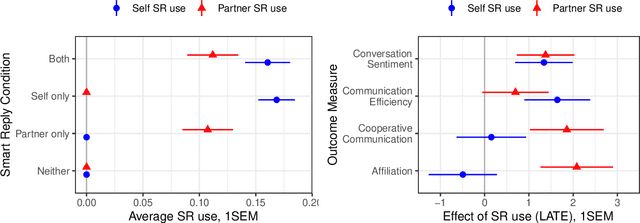
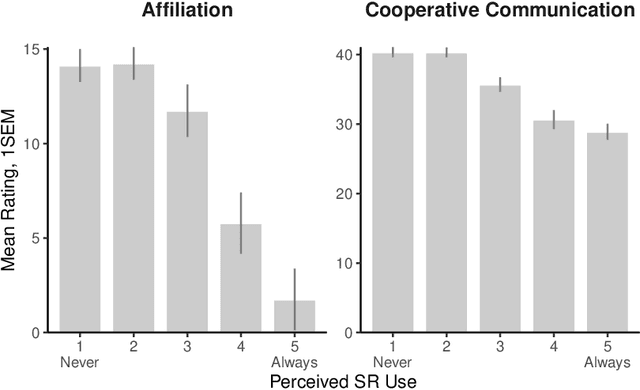
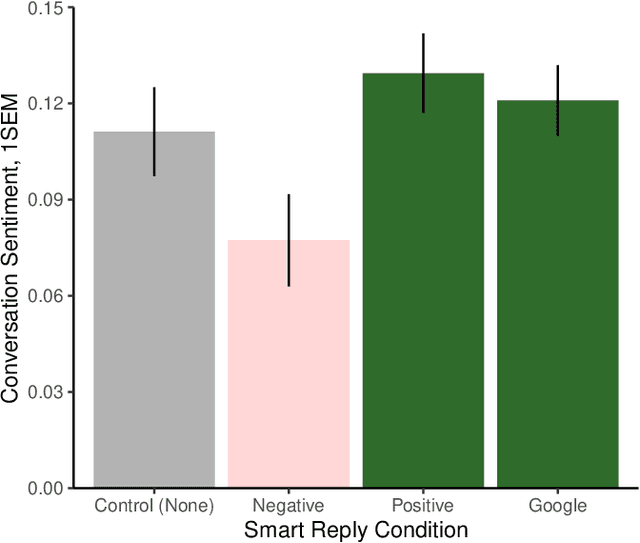
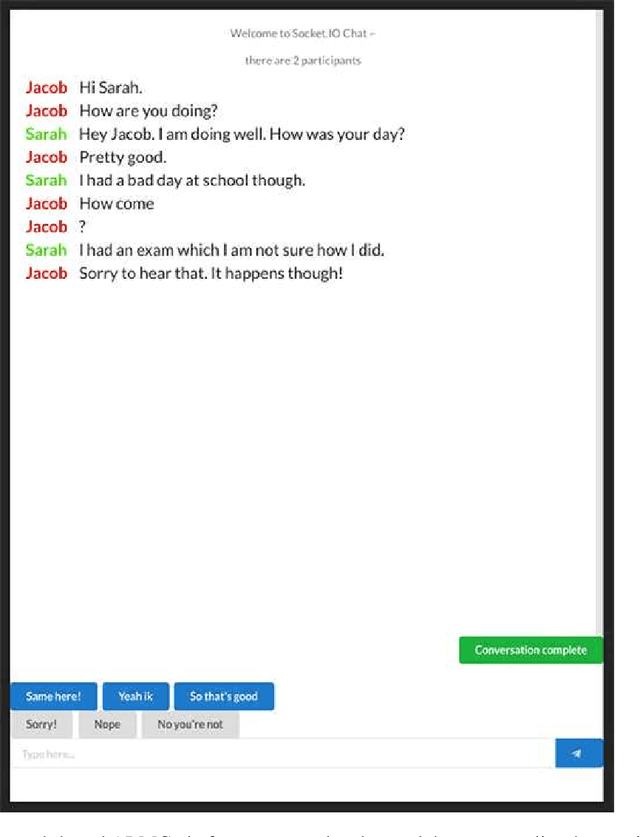
Artificial intelligence (AI) is now widely used to facilitate social interaction, but its impact on social relationships and communication is not well understood. We study the social consequences of one of the most pervasive AI applications: algorithmic response suggestions ("smart replies"). Two randomized experiments (n = 1036) provide evidence that a commercially-deployed AI changes how people interact with and perceive one another in pro-social and anti-social ways. We find that using algorithmic responses increases communication efficiency, use of positive emotional language, and positive evaluations by communication partners. However, consistent with common assumptions about the negative implications of AI, people are evaluated more negatively if they are suspected to be using algorithmic responses. Thus, even though AI can increase communication efficiency and improve interpersonal perceptions, it risks changing users' language production and continues to be viewed negatively.
Robot Assisted Tower Construction - A Resource Distribution Task to Study Human-Robot Collaboration and Interaction with Groups of People
Dec 22, 2018

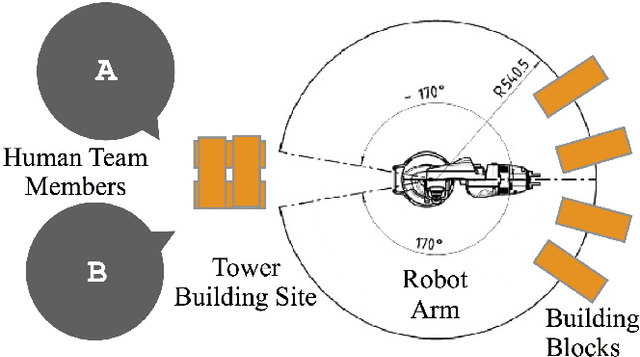

Research on human-robot collaboration or human-robot teaming, has focused predominantly on understanding and enabling collaboration between a single robot and a single human. Extending human-robot collaboration research beyond the dyad, raises novel questions about how a robot should distribute resources among group members and about what the social and task related consequences of the distribution are. Methodological advances are needed to allow researchers to collect data about human robot collaboration that involves multiple people. This paper presents Tower Construction, a novel resource distribution task that allows researchers to examine collaboration between a robot and groups of people. By focusing on the question of whether and how a robot's distribution of resources (wooden blocks required for a building task) affects collaboration dynamics and outcomes, we provide a case of how this task can be applied in a laboratory study with 124 participants to collect data about human robot collaboration that involves multiple humans. We highlight the kinds of insights the task can yield. In particular we find that the distribution of resources affects perceptions of performance, and interpersonal dynamics between human team-members.