 Add to Chrome
 Add to Firefox
 Add to Edge
Does Latent Context Help? A Controlled Evaluation of Inverse Reinforcement Learning in Arctic Shipping
Aug 06, 2026
Artificial Intelligence (AI)-assisted navigation can help Arctic shipping adapt to rapidly changing sea-ice conditions, but reliable deployment requires reward models that are interpretable and robust to changing environments. Inverse reinforcement learning (IRL) provides a framework for recovering such rewards from vessel trajectories, while recent meta-IRL methods introduce latent context variables to capture behavioral heterogeneity. However, it remains unclear whether these latent representations recover genuinely hidden preferences or simply re-encode information already available in the observed state. We conduct a controlled evaluation on 3,186 AIS-derived voyages from 202 vessels across nine Arctic shipping seasons, comparing a linear shared reward, a nonlinear shared reward, and a latent-context model built on the same nonlinear architecture. The nonlinear reward improves held-out likelihood by 50.9% over the linear baseline, whereas adding vessel-specific latent context reduces performance by 16.5%. Behavioral analysis, context probes, and a pre-registered feature-hiding ablation show that apparent vessel-level variation is largely explained by observable route and environmental conditions rather than hidden vessel-specific factors. Moreover, predictive accuracy, route fidelity, and reward transfer yield different model rankings, demonstrating that no single metric is sufficient to evaluate learned rewards. These findings motivate testing whether the observed route, environmental, and vessel features already explain behavioral variation before adding per-vessel latent context. This supports more trustworthy AI deployment in safety-critical domains.

Shoulders of Giants: A Look at the Degree and Utility of Openness in NLP Research
Jun 10, 2024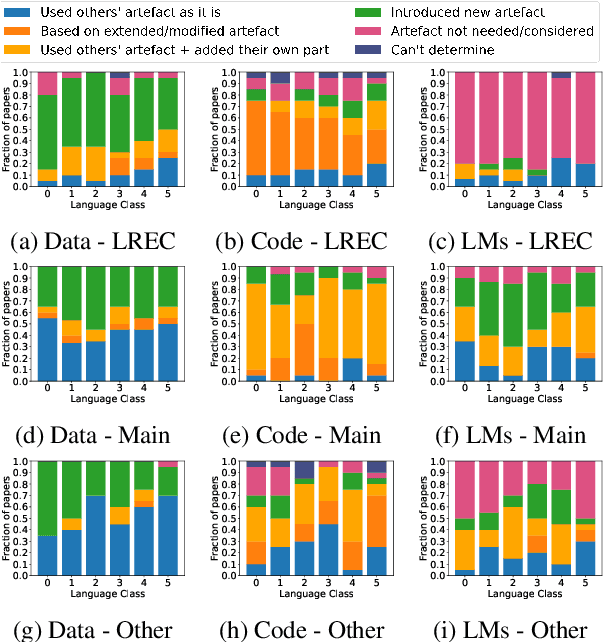
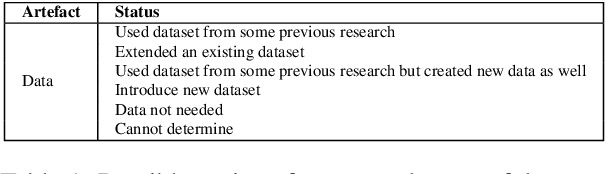
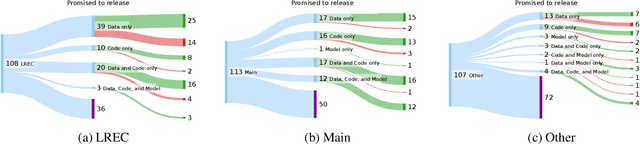
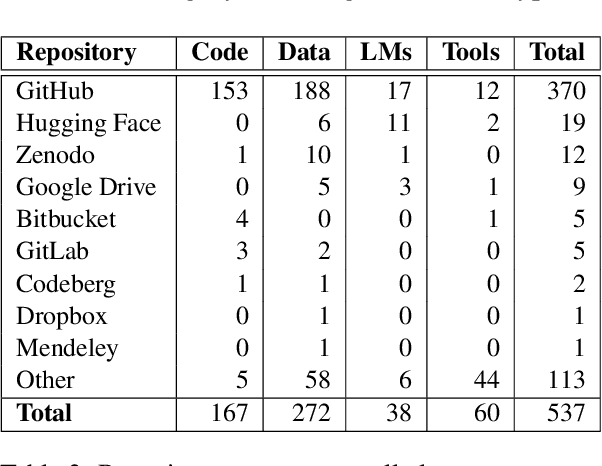
We analysed a sample of NLP research papers archived in ACL Anthology as an attempt to quantify the degree of openness and the benefit of such an open culture in the NLP community. We observe that papers published in different NLP venues show different patterns related to artefact reuse. We also note that more than 30% of the papers we analysed do not release their artefacts publicly, despite promising to do so. Further, we observe a wide language-wise disparity in publicly available NLP-related artefacts.
Few-shot Multispectral Segmentation with Representations Generated by Reinforcement Learning
Nov 20, 2023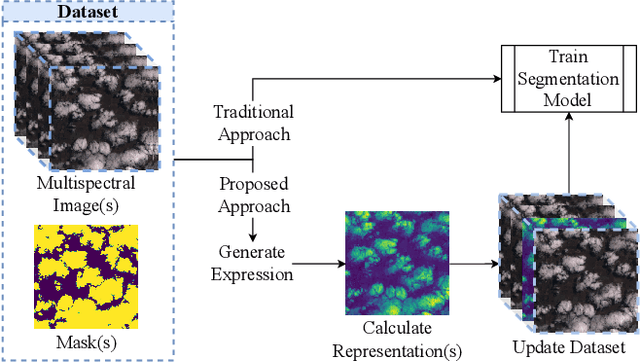
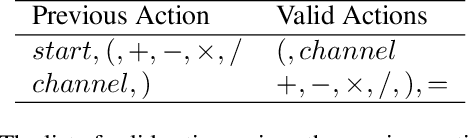
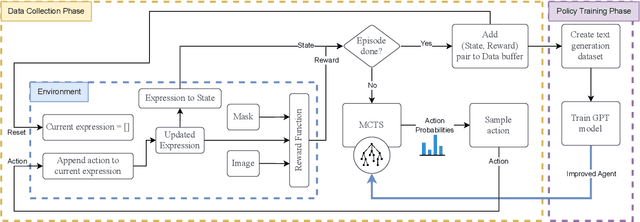
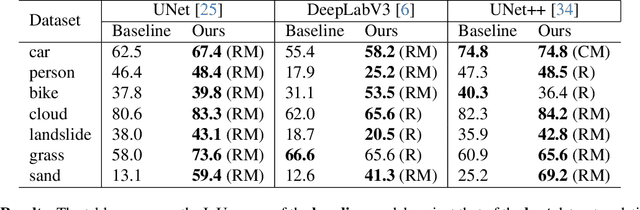
The task of multispectral image segmentation (segmentation of images with numerous channels/bands, each capturing a specific range of wavelengths of electromagnetic radiation) has been previously explored in contexts with large amounts of labeled data. However, these models tend not to generalize well to datasets of smaller size. In this paper, we propose a novel approach for improving few-shot segmentation performance on multispectral images using reinforcement learning to generate representations. These representations are generated in the form of mathematical expressions between channels and are tailored to the specific class being segmented. Our methodology involves training an agent to identify the most informative expressions, updating the dataset using these expressions, and then using the updated dataset to perform segmentation. Due to the limited length of the expressions, the model receives useful representations without any added risk of overfitting. We evaluate the effectiveness of our approach on several multispectral datasets and demonstrate its effectiveness in boosting the performance of segmentation algorithms.