 Add to Chrome
 Add to Firefox
 Add to Edge
Modality vs. Morphology: A Framework for Time Series Classification for Biological Signals
May 18, 2026
Time series classification (TSC) of biological signals has progressed from handcrafted, modality-specific approaches to deep architectures capable of representing the diverse waveform structures of underlying physiological processes (i.e., morphology). This review introduces a unified morphology--modality framework that connects waveform structure to a methodological design, revealing how spikes, bursts, oscillations, slow drift, and hierarchical rhythms inform model design. By analyzing electroencephalography, electromyography, electrocardiography, photoplethysmography, and ocular modalities (electrooculography, pupillometry, eye-tracking), the review demonstrates how morphology determines preprocessing and modeling strategies. Integrating evidence across these biological signals, the framework reveals that morphology, not model class, most strongly determines performance and interpretability. This provides insight into why deep models succeed when their inductive biases align with underlying waveform dynamics. This review also identifies future work including morphological data augmentation and evaluation metrics to improve generalization. Together, these insights position morphology-aware modeling as a unifying principle for developing generalizable, interpretable, and physiologically meaningful TSC models across biological signals.

FaRO 2: an Open Source, Configurable Smart City Framework for Real-Time Distributed Vision and Biometric Systems
Sep 26, 2022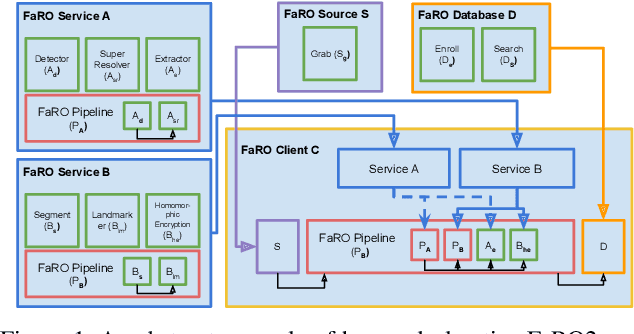
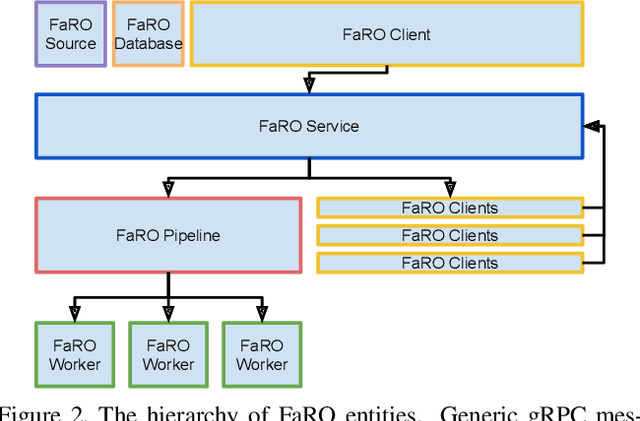
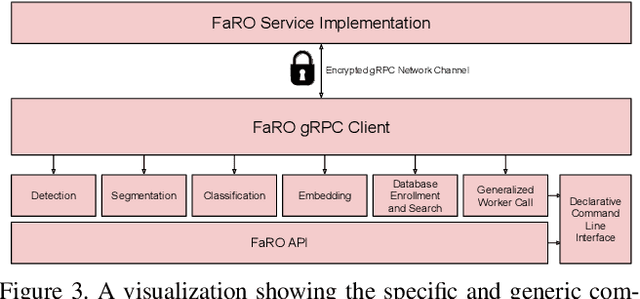
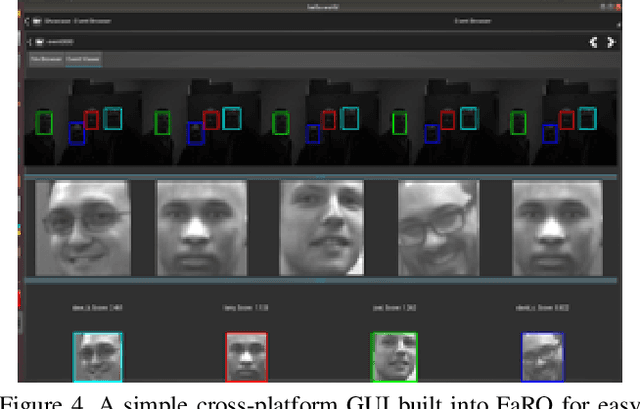
Recent global growth in the interest of smart cities has led to trillions of dollars of investment toward research and development. These connected cities have the potential to create a symbiosis of technology and society and revolutionize the cost of living, safety, ecological sustainability, and quality of life of societies on a world-wide scale. Some key components of the smart city construct are connected smart grids, self-driving cars, federated learning systems, smart utilities, large-scale public transit, and proactive surveillance systems. While exciting in prospect, these technologies and their subsequent integration cannot be attempted without addressing the potential societal impacts of such a high degree of automation and data sharing. Additionally, the feasibility of coordinating so many disparate tasks will require a fast, extensible, unifying framework. To that end, we propose FaRO2, a completely reimagined successor to FaRO1, built from the ground up. FaRO2 affords all of the same functionality as its predecessor, serving as a unified biometric API harness that allows for seamless evaluation, deployment, and simple pipeline creation for heterogeneous biometric software. FaRO2 additionally provides a fully declarative capability for defining and coordinating custom machine learning and sensor pipelines, allowing the distribution of processes across otherwise incompatible hardware and networks. FaRO2 ultimately provides a way to quickly configure, hot-swap, and expand large coordinated or federated systems online without interruptions for maintenance. Because much of the data collected in a smart city contains Personally Identifying Information (PII), FaRO2 also provides built-in tools and layers to ensure secure and encrypted streaming, storage, and access of PII data across distributed systems.