 Add to Chrome
 Add to Firefox
 Add to Edge
Modality vs. Morphology: A Framework for Time Series Classification for Biological Signals
May 18, 2026
Time series classification (TSC) of biological signals has progressed from handcrafted, modality-specific approaches to deep architectures capable of representing the diverse waveform structures of underlying physiological processes (i.e., morphology). This review introduces a unified morphology--modality framework that connects waveform structure to a methodological design, revealing how spikes, bursts, oscillations, slow drift, and hierarchical rhythms inform model design. By analyzing electroencephalography, electromyography, electrocardiography, photoplethysmography, and ocular modalities (electrooculography, pupillometry, eye-tracking), the review demonstrates how morphology determines preprocessing and modeling strategies. Integrating evidence across these biological signals, the framework reveals that morphology, not model class, most strongly determines performance and interpretability. This provides insight into why deep models succeed when their inductive biases align with underlying waveform dynamics. This review also identifies future work including morphological data augmentation and evaluation metrics to improve generalization. Together, these insights position morphology-aware modeling as a unifying principle for developing generalizable, interpretable, and physiologically meaningful TSC models across biological signals.

Expanding on the BRIAR Dataset: A Comprehensive Whole Body Biometric Recognition Resource at Extreme Distances and Real-World Scenarios (Collections 1-4)
Jan 23, 2025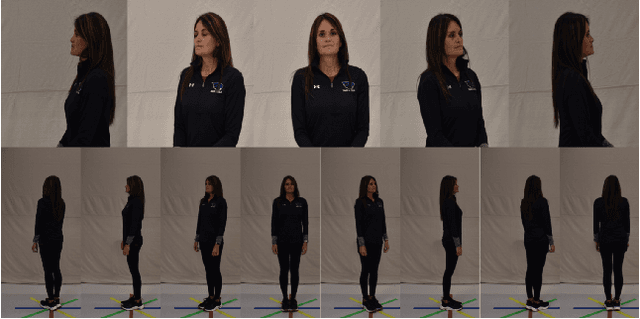
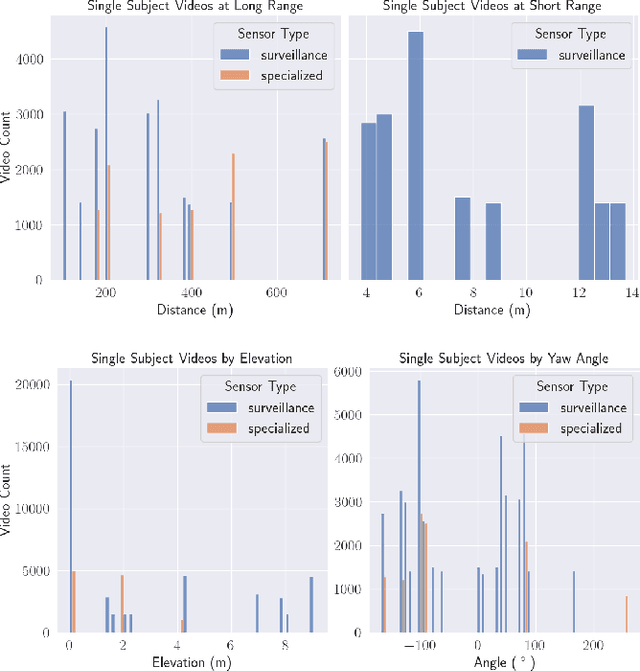
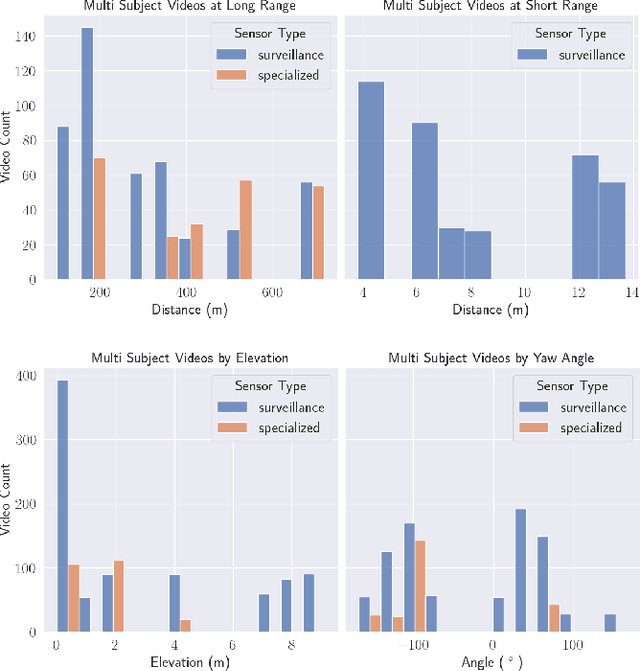
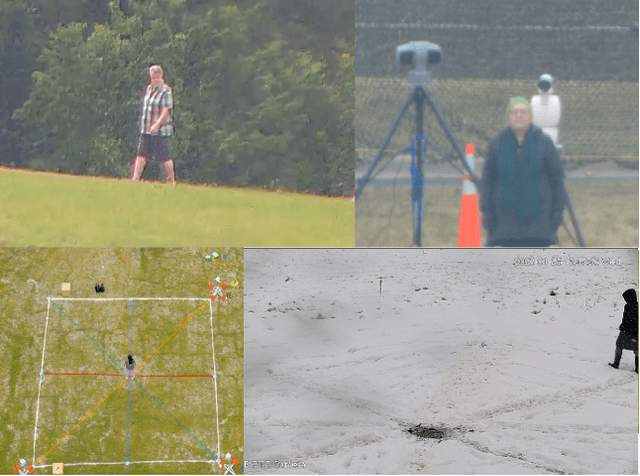
The state-of-the-art in biometric recognition algorithms and operational systems has advanced quickly in recent years providing high accuracy and robustness in more challenging collection environments and consumer applications. However, the technology still suffers greatly when applied to non-conventional settings such as those seen when performing identification at extreme distances or from elevated cameras on buildings or mounted to UAVs. This paper summarizes an extension to the largest dataset currently focused on addressing these operational challenges, and describes its composition as well as methodologies of collection, curation, and annotation.