 Add to Chrome
 Add to Firefox
 Add to Edge
VT-DUDA: Visual Token Conditioning for Diffusion-guided Unsupervised Domain Adaptation
Jun 19, 2026
Unsupervised domain adaptation (UDA) aims to learn a target-domain classifier from labeled source data and unlabeled target data under distribution shift. Recent diffusion-based UDA methods approach this problem by synthesizing labeled target-style images and training on the resulting synthetic data. However, their performance depends heavily on the conditioning design: class prompts provide only coarse guidance, while domain adaptation modules mainly control appearance, which may leave target-style synthesis insufficiently specified. We propose VT-DUDA, a visual-token conditioning framework for diffusion-guided UDA. Instead of relying only on text prompts, VT-DUDA uses source images to provide additional instance-level visual context for target-style synthesis. Specifically, VT-DUDA maps each source image to a compact sequence of visual tokens and forms a hybrid conditioning context by concatenating these tokens with the corresponding text embeddings along the cross-attention context dimension of a latent diffusion model. This provides instance-dependent conditioning beyond text alone, while synthesis is performed with the target-domain adapter branch. Because guidance is represented explicitly as a token sequence, the same interface also permits inference-time manipulation of the conditioning signal through token selection and token-strength adjustment. The proposed method preserves the standard diffusion objective and can be integrated into existing adapter-based diffusion frameworks without modifying the backbone. Across Office-31, Office-Home, and VisDA-2017, VT-DUDA improves average target-domain accuracy over strong discriminative and diffusion-based UDA baselines. The results suggest that, in generation-based UDA, a stronger conditioning interface can improve the downstream usefulness of synthetic target-style data.

Distribution Alignment for One-Shot Federated Learning via Optimal Transport
Jun 15, 2026One-Shot Federated Learning (OSFL) addresses extreme communication regimes in which clients interact with the server only once, amplifying the impact of heterogeneous client data distributions. In particular, the interaction of domain shift and label shift across clients induces misaligned feature representations that cannot be corrected through iterative optimization. Existing OSFL methods rely on distillation, server-side generation or ensemble-based aggregation, but assume aligned representations or address domain and label shift separately. We introduce SLOT-Align (Single-round, Learning-free Optimal Transport Alignment), a geometry-aware feature harmonization framework for OSFL. SLOT-Align uses a shared frozen encoder to extract compact feature statistics, constructs a global reference via Bures-Wasserstein barycenters, and aligns local representations using closed-form geodesic optimal transport maps. The method is computationally efficient and can be combined with existing OSFL pipelines relying on frozen encoders without modifying their training procedures. Extensive experiments across multiple benchmarks, pretrained backbones, and OSFL methods show that SLOT-Align consistently improves accuracy and robustness under joint domain and label shift.
A store-and-forward cloud-based telemonitoring system for automatic assessing dysarthria evolution in neurological diseases from video-recording analysis
Sep 16, 2023Background and objectives: Patients suffering from neurological diseases may develop dysarthria, a motor speech disorder affecting the execution of speech. Close and quantitative monitoring of dysarthria evolution is crucial for enabling clinicians to promptly implement patient management strategies and maximizing effectiveness and efficiency of communication functions in term of restoring, compensating or adjusting. In the clinical assessment of orofacial structures and functions, at rest condition or during speech and non-speech movements, a qualitative evaluation is usually performed, throughout visual observation. Methods: To overcome limitations posed by qualitative assessments, this work presents a store-and-forward self-service telemonitoring system that integrates, within its cloud architecture, a convolutional neural network (CNN) for analyzing video recordings acquired by individuals with dysarthria. This architecture, called facial landmark Mask RCNN, aims at locating facial landmarks as a prior for assessing the orofacial functions related to speech and examining dysarthria evolution in neurological diseases. Results: When tested on the Toronto NeuroFace dataset, a publicly available annotated dataset of video recordings from patients with amyotrophic lateral sclerosis (ALS) and stroke, the proposed CNN achieved a normalized mean error equal to 1.79 on localizing the facial landmarks. We also tested our system in a real-life scenario on 11 bulbar-onset ALS subjects, obtaining promising outcomes in terms of facial landmark position estimation. Discussion and conclusions: This preliminary study represents a relevant step towards the use of remote tools to support clinicians in monitoring the evolution of dysarthria.
Deep learning-based approaches for human motion decoding in smart walkers for rehabilitation
Jan 13, 2023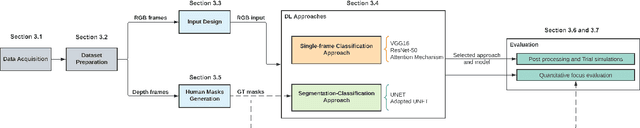
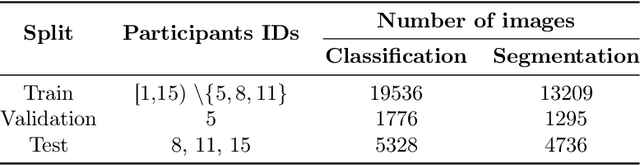
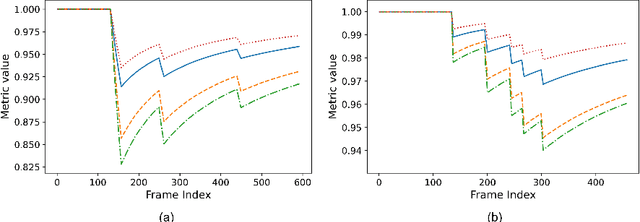
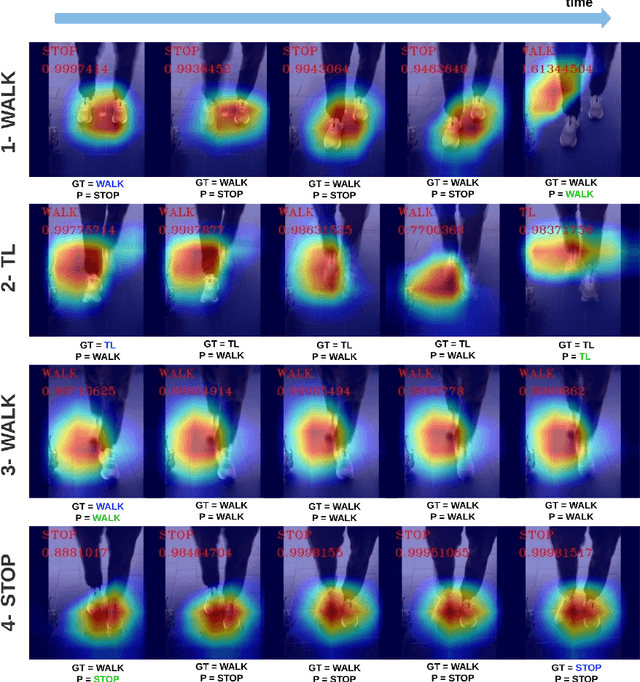
Gait disabilities are among the most frequent worldwide. Their treatment relies on rehabilitation therapies, in which smart walkers are being introduced to empower the user's recovery and autonomy, while reducing the clinicians effort. For that, these should be able to decode human motion and needs, as early as possible. Current walkers decode motion intention using information of wearable or embedded sensors, namely inertial units, force and hall sensors, and lasers, whose main limitations imply an expensive solution or hinder the perception of human movement. Smart walkers commonly lack a seamless human-robot interaction, which intuitively understands human motions. A contactless approach is proposed in this work, addressing human motion decoding as an early action recognition/detection problematic, using RGB-D cameras. We studied different deep learning-based algorithms, organised in three different approaches, to process lower body RGB-D video sequences, recorded from an embedded camera of a smart walker, and classify them into 4 classes (stop, walk, turn right/left). A custom dataset involving 15 healthy participants walking with the device was acquired and prepared, resulting in 28800 balanced RGB-D frames, to train and evaluate the deep networks. The best results were attained by a convolutional neural network with a channel attention mechanism, reaching accuracy values of 99.61% and above 93%, for offline early detection/recognition and trial simulations, respectively. Following the hypothesis that human lower body features encode prominent information, fostering a more robust prediction towards real-time applications, the algorithm focus was also evaluated using Dice metric, leading to values slightly higher than 30%. Promising results were attained for early action detection as a human motion decoding strategy, with enhancements in the focus of the proposed architectures.