 Add to Chrome
 Add to Firefox
 Add to Edge
FFinRED: An Expert-Guided Benchmark Generation and Evaluation Framework for Financial LLM Red-Teaming
Jun 18, 2026
Existing safety benchmarks target general adversarial scenarios but miss finance-specific risks. Financial LLMs face regulatory compliance violations, fraud facilitation, and systemic trust erosion that require targeted evaluation. We introduce FinRED, an expert-guided red-teaming framework for financial LLM safety evaluation developed with financial experts. FinRED uses a novel two-level taxonomy mapping global standards (e.g., FATF and EU DORA) to threats ranging from regulatory evasion to complex fraud, integrated with a scalable pipeline that converts real financial documents into context-rich red-teaming Behavioral Prompts (seeds) through an expert-defined schema. Rigorous expert validation confirms seed plausibility and realism for meaningful LLM safety evaluation. We also provide an expert-validated, finance-specific rubric that goes beyond disclaimer checks, aligns more closely with human experts than static one-size-fits-all rubrics, and reduces critical false negatives from 28 to 12. Aligned with internationally adopted risk-management and information-security standards (e.g., ISO/IEC 27001), FinRED is deployed in South Korea's Financial Security Institute (FSI) regulatory sandbox for generative AI security evaluation in real financial services. To mitigate dual-use risks, the dataset, generation pipeline, prompt template, and evaluation framework are gated for qualified researchers at https://github.com/selectstar-ai/FinRED-paper and https://huggingface.co/datasets/datumo/FinRED.

VOMTC: Vision Objects for Millimeter and Terahertz Communications
Sep 14, 2024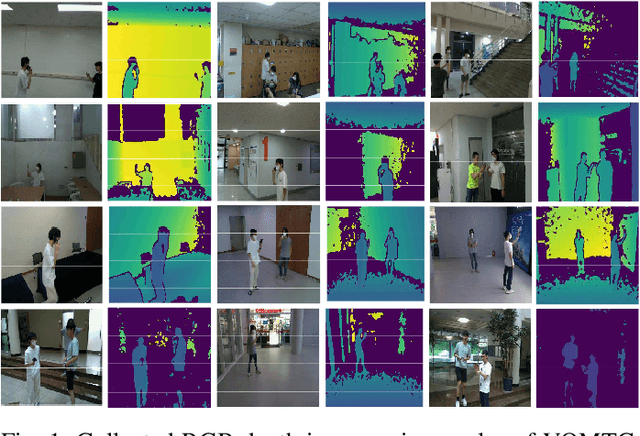
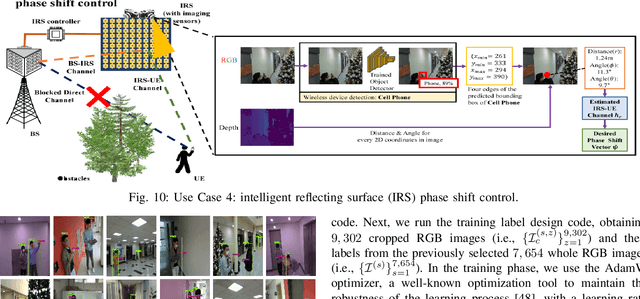
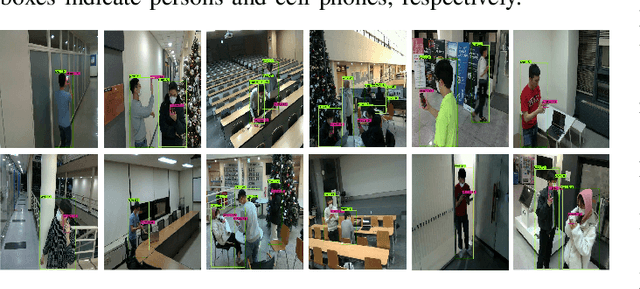
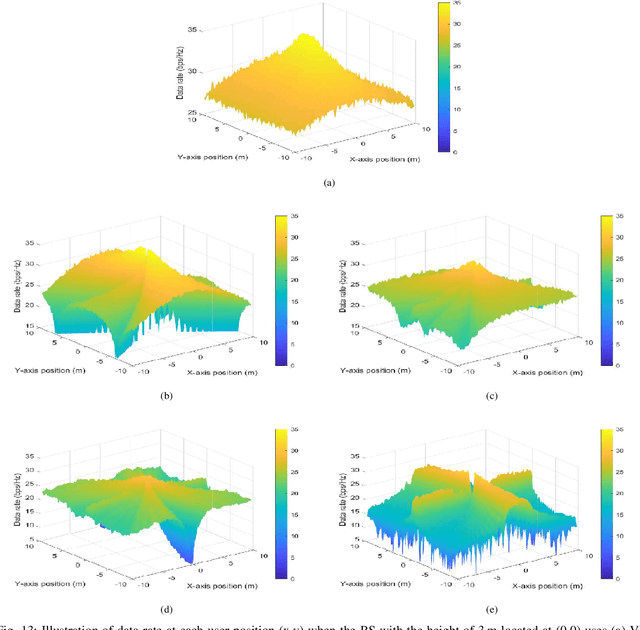
Recent advances in sensing and computer vision (CV) technologies have opened the door for the application of deep learning (DL)-based CV technologies in the realm of 6G wireless communications. For the successful application of this emerging technology, it is crucial to have a qualified vision dataset tailored for wireless applications (e.g., RGB images containing wireless devices such as laptops and cell phones). An aim of this paper is to propose a large-scale vision dataset referred to as Vision Objects for Millimeter and Terahertz Communications (VOMTC). The VOMTC dataset consists of 20,232 pairs of RGB and depth images obtained from a camera attached to the base station (BS), with each pair labeled with three representative object categories (person, cell phone, and laptop) and bounding boxes of the objects. Through experimental studies of the VOMTC datasets, we show that the beamforming technique exploiting the VOMTC-trained object detector outperforms conventional beamforming techniques.