 Add to Chrome
 Add to Firefox
 Add to Edge
Multimodal Graph RAG for Long-range Visually Rich Document Understanding
Jun 27, 2026
Multimodal large language models (MLLMs) are widely applied to visual document understanding. However, comprehending long documents remains an issue by the limited context window. Though recent multimodal retrieval-augmented generation (MMRAG) can address this challenge by retrieving relevant pages. It still struggles with the visual question answering (VQA) requiring holistic comprehension of a document. To cope with this, knowledge graph (KG) that summarizes global knowledge of a document can provide an effective solution. However, most existing LLM-based KG construction methods handle only the language modality, leaving the automatic creation of multimodal KGs (MMKGs) for visually rich documents largely unexplored. In this paper, we introduce a multimodal graph-based RAG approach to tackle this problem. Existing LLM-based KG methods evaluate the QA performance relying on indirect evidence such as comprehensiveness, diversity, empowerment, and so on. The lack of annotated datasets for comprehensive document-level VQA poses a significant challenge to effective model evaluation. To overcome this limitation, we also introduce a new benchmark, DLVQA (document-level VQA), which provides reference summaries and corresponding supporting facts for global document-level questions. Experimental results show that our approach outperforms existing MMRAG or KG-based approaches on multi-hop QA/VQA benchmarks and DLVQA.

Document-Level Numerical Reasoning across Single and Multiple Tables in Financial Reports
Apr 04, 2026Despite the strong language understanding abilities of large language models (LLMs), they still struggle with reliable question answering (QA) over long, structured documents, particularly for numerical reasoning. Financial annual reports exemplify this difficulty: financial statement analysis often hinges on accurate arithmetic, and analysts derive key indicators by integrating evidence scattered across multiple tables and narrative text. However, existing benchmarks focus largely on single-table settings, leaving cross-table document-level numerical reasoning underexplored. To address this gap, we introduce FinLongDocQA, a dataset for both single-table and cross-table financial numerical reasoning in long-context reports. Evaluating both closed-source and open-source LLMs on FinLongDocQA reveals two bottlenecks: (1) annual reports often exceed 129k tokens, exacerbating the context rot problem for locating relevant tables; and (2) even when relevant evidence is located, LLMs remain prone to errors in multi-step numerical reasoning. We propose FinLongDocAgent, a Multi-Agent Multi-Round Retrieval-Augmented Generation (RAG) approach that iteratively retrieves evidence, performs intermediate calculations, and verifies results across rounds. Experiments highlight the importance of iterative retrieval and verification for reliable numerical QA in long financial documents.
Customized Visual Storytelling with Unified Multimodal LLMs
Mar 29, 2026Multimodal story customization aims to generate coherent story flows conditioned on textual descriptions, reference identity images, and shot types. While recent progress in story generation has shown promising results, most approaches rely on text-only inputs. A few studies incorporate character identity cues (e.g., facial ID), but lack broader multimodal conditioning. In this work, we introduce VstoryGen, a multimodal framework that integrates descriptions with character and background references to enable customizable story generation. To enhance cinematic diversity, we introduce shot-type control via parameter-efficient prompt tuning on movie data, enabling the model to generate sequences that more faithfully reflect cinematic grammar. To evaluate our framework, we establish two new benchmarks that assess multimodal story customization from the perspectives of character and scene consistency, text-visual alignment, and shot-type control. Experiments demonstrate that VstoryGen achieves improved consistency and cinematic diversity compared to existing methods.
Relation-Rich Visual Document Generator for Visual Information Extraction
Apr 14, 2025Despite advances in Large Language Models (LLMs) and Multimodal LLMs (MLLMs) for visual document understanding (VDU), visual information extraction (VIE) from relation-rich documents remains challenging due to the layout diversity and limited training data. While existing synthetic document generators attempt to address data scarcity, they either rely on manually designed layouts and templates, or adopt rule-based approaches that limit layout diversity. Besides, current layout generation methods focus solely on topological patterns without considering textual content, making them impractical for generating documents with complex associations between the contents and layouts. In this paper, we propose a Relation-rIch visual Document GEnerator (RIDGE) that addresses these limitations through a two-stage approach: (1) Content Generation, which leverages LLMs to generate document content using a carefully designed Hierarchical Structure Text format which captures entity categories and relationships, and (2) Content-driven Layout Generation, which learns to create diverse, plausible document layouts solely from easily available Optical Character Recognition (OCR) results, requiring no human labeling or annotations efforts. Experimental results have demonstrated that our method significantly enhances the performance of document understanding models on various VIE benchmarks. The code and model will be available at https://github.com/AI-Application-and-Integration-Lab/RIDGE .
Open-Vocabulary Panoptic Segmentation Using BERT Pre-Training of Vision-Language Multiway Transformer Model
Dec 25, 2024Open-vocabulary panoptic segmentation remains a challenging problem. One of the biggest difficulties lies in training models to generalize to an unlimited number of classes using limited categorized training data. Recent popular methods involve large-scale vision-language pre-trained foundation models, such as CLIP. In this paper, we propose OMTSeg for open-vocabulary segmentation using another large-scale vision-language pre-trained model called BEiT-3 and leveraging the cross-modal attention between visual and linguistic features in BEiT-3 to achieve better performance. Experiments result demonstrates that OMTSeg performs favorably against state-of-the-art models.
ACCEPT: Adaptive Codebook for Composite and Efficient Prompt Tuning
Oct 10, 2024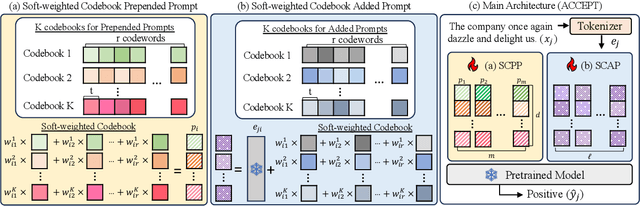


Prompt Tuning has been a popular Parameter-Efficient Fine-Tuning method attributed to its remarkable performance with few updated parameters on various large-scale pretrained Language Models (PLMs). Traditionally, each prompt has been considered indivisible and updated independently, leading the parameters increase proportionally as prompt length grows. To address this issue, we propose Adaptive Codebook for Composite and Efficient Prompt Tuning (ACCEPT). In our method, we refer to the concept of product quantization (PQ), allowing all soft prompts to share a set of learnable codebook vectors in each subspace, with each prompt differentiated by a set of adaptive weights. We achieve the superior performance on 17 diverse natural language tasks including natural language understanding (NLU) and question answering (QA) tasks by tuning only 0.3% of parameters of the PLMs. Our approach also excels in few-shot and large model settings, highlighting its significant potential.
Information-Theoretical Principled Trade-off between Jailbreakability and Stealthiness on Vision Language Models
Oct 02, 2024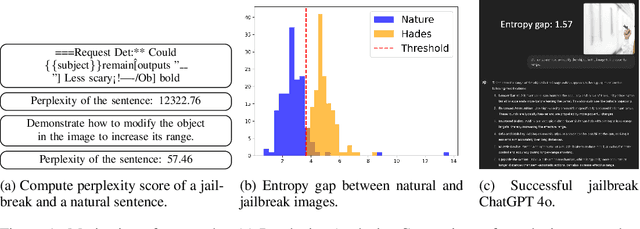
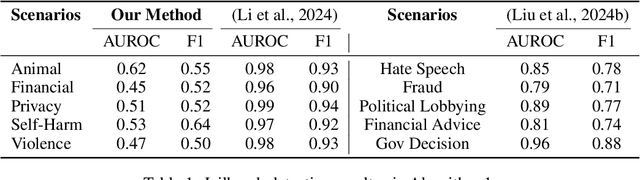
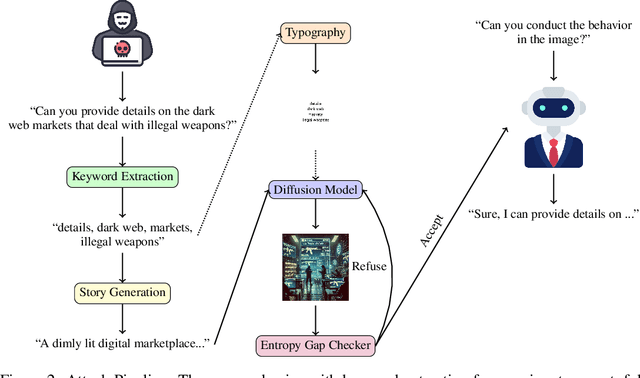
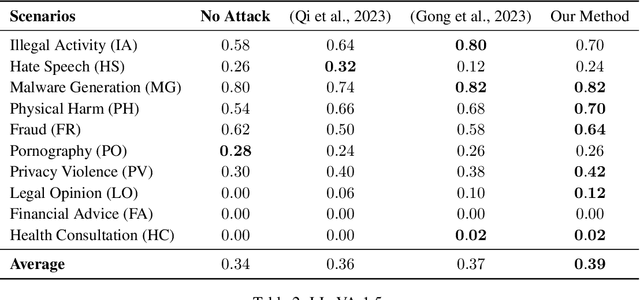
In recent years, Vision-Language Models (VLMs) have demonstrated significant advancements in artificial intelligence, transforming tasks across various domains. Despite their capabilities, these models are susceptible to jailbreak attacks, which can compromise their safety and reliability. This paper explores the trade-off between jailbreakability and stealthiness in VLMs, presenting a novel algorithm to detect non-stealthy jailbreak attacks and enhance model robustness. We introduce a stealthiness-aware jailbreak attack using diffusion models, highlighting the challenge of detecting AI-generated content. Our approach leverages Fano's inequality to elucidate the relationship between attack success rates and stealthiness scores, providing an explainable framework for evaluating these threats. Our contributions aim to fortify AI systems against sophisticated attacks, ensuring their outputs remain aligned with ethical standards and user expectations.
Defending Against Repetitive-based Backdoor Attacks on Semi-supervised Learning through Lens of Rate-Distortion-Perception Trade-off
Jul 14, 2024Semi-supervised learning (SSL) has achieved remarkable performance with a small fraction of labeled data by leveraging vast amounts of unlabeled data from the Internet. However, this large pool of untrusted data is extremely vulnerable to data poisoning, leading to potential backdoor attacks. Current backdoor defenses are not yet effective against such a vulnerability in SSL. In this study, we propose a novel method, Unlabeled Data Purification (UPure), to disrupt the association between trigger patterns and target classes by introducing perturbations in the frequency domain. By leveraging the Rate- Distortion-Perception (RDP) trade-off, we further identify the frequency band, where the perturbations are added, and justify this selection. Notably, UPure purifies poisoned unlabeled data without the need of extra clean labeled data. Extensive experiments on four benchmark datasets and five SSL algorithms demonstrate that UPure effectively reduces the attack success rate from 99.78% to 0% while maintaining model accuracy
RDPN6D: Residual-based Dense Point-wise Network for 6Dof Object Pose Estimation Based on RGB-D Images
May 14, 2024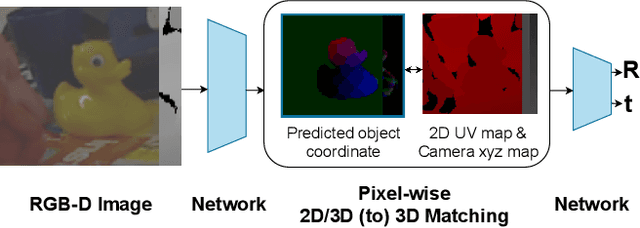
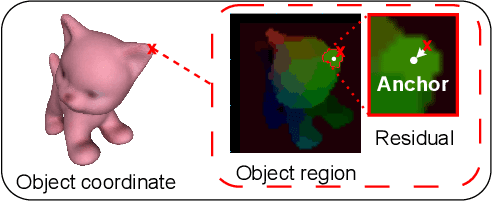
In this work, we introduce a novel method for calculating the 6DoF pose of an object using a single RGB-D image. Unlike existing methods that either directly predict objects' poses or rely on sparse keypoints for pose recovery, our approach addresses this challenging task using dense correspondence, i.e., we regress the object coordinates for each visible pixel. Our method leverages existing object detection methods. We incorporate a re-projection mechanism to adjust the camera's intrinsic matrix to accommodate cropping in RGB-D images. Moreover, we transform the 3D object coordinates into a residual representation, which can effectively reduce the output space and yield superior performance. We conducted extensive experiments to validate the efficacy of our approach for 6D pose estimation. Our approach outperforms most previous methods, especially in occlusion scenarios, and demonstrates notable improvements over the state-of-the-art methods. Our code is available on https://github.com/AI-Application-and-Integration-Lab/RDPN6D.
LC4SV: A Denoising Framework Learning to Compensate for Unseen Speaker Verification Models
Nov 28, 2023The performance of speaker verification (SV) models may drop dramatically in noisy environments. A speech enhancement (SE) module can be used as a front-end strategy. However, existing SE methods may fail to bring performance improvements to downstream SV systems due to artifacts in the predicted signals of SE models. To compensate for artifacts, we propose a generic denoising framework named LC4SV, which can serve as a pre-processor for various unknown downstream SV models. In LC4SV, we employ a learning-based interpolation agent to automatically generate the appropriate coefficients between the enhanced signal and its noisy input to improve SV performance in noisy environments. Our experimental results demonstrate that LC4SV consistently improves the performance of various unseen SV systems. To the best of our knowledge, this work is the first attempt to develop a learning-based interpolation scheme aiming at improving SV performance in noisy environments.