 Add to Chrome
 Add to Firefox
 Add to Edge
EngineAD: A Real-World Vehicle Engine Anomaly Detection Dataset
Mar 26, 2026
The progress of Anomaly Detection (AD) in safety-critical domains, such as transportation, is severely constrained by the lack of large-scale, real-world benchmarks. To address this, we introduce EngineAD, a novel, multivariate dataset comprising high-resolution sensor telemetry collected from a fleet of 25 commercial vehicles over a six-month period. Unlike synthetic datasets, EngineAD features authentic operational data labeled with expert annotations, distinguishing normal states from subtle indicators of incipient engine faults. We preprocess the data into $300$-timestep segments of $8$ principal components and establish an initial benchmark using nine diverse one-class anomaly detection models. Our experiments reveal significant performance variability across the vehicle fleet, underscoring the challenge of cross-vehicle generalization. Furthermore, our findings corroborate recent literature, showing that simple classical methods (e.g., K-Means and One-Class SVM) are often highly competitive with, or superior to, deep learning approaches in this segment-based evaluation. By publicly releasing EngineAD, we aim to provide a realistic, challenging resource for developing robust and field-deployable anomaly detection and anomaly prediction solutions for the automotive industry.

NetKet 3: Machine Learning Toolbox for Many-Body Quantum Systems
Dec 20, 2021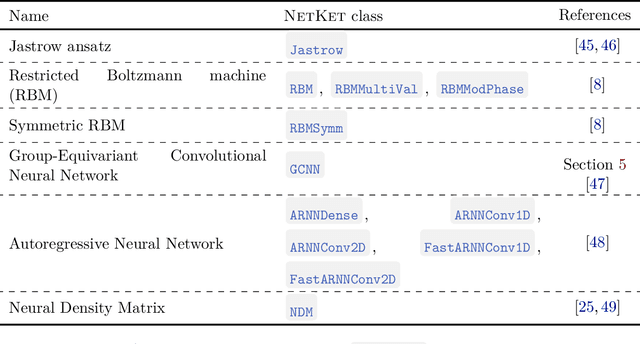
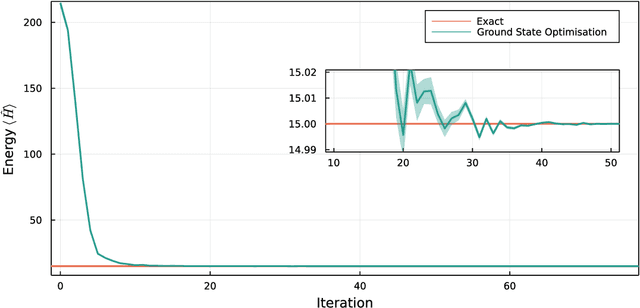
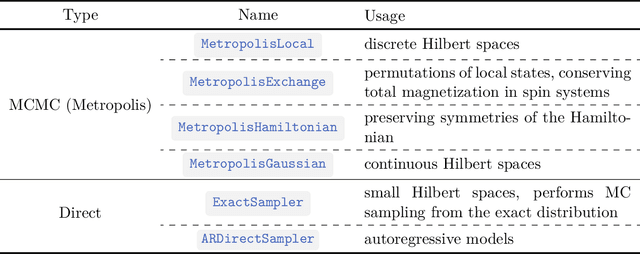
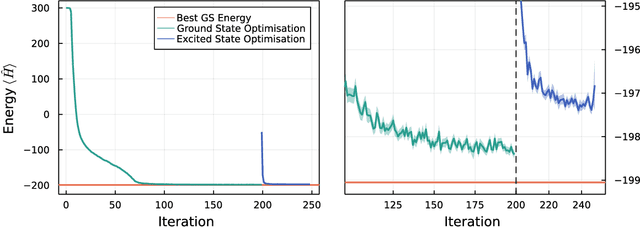
We introduce version 3 of NetKet, the machine learning toolbox for many-body quantum physics. NetKet is built around neural-network quantum states and provides efficient algorithms for their evaluation and optimization. This new version is built on top of JAX, a differentiable programming and accelerated linear algebra framework for the Python programming language. The most significant new feature is the possibility to define arbitrary neural network ans\"atze in pure Python code using the concise notation of machine-learning frameworks, which allows for just-in-time compilation as well as the implicit generation of gradients thanks to automatic differentiation. NetKet 3 also comes with support for GPU and TPU accelerators, advanced support for discrete symmetry groups, chunking to scale up to thousands of degrees of freedom, drivers for quantum dynamics applications, and improved modularity, allowing users to use only parts of the toolbox as a foundation for their own code.