 Add to Chrome
 Add to Firefox
 Add to Edge
Bounding Box Label Propagation for Re-Annotation of Document Layout Analysis Datasets
Jun 16, 2026
Datasets in practical document processing scenarios typically grow over time, and their class annotations undergo continuous refinement. This creates significant re-annotation efforts, which are time-consuming and costly. A promising remedy is to re-annotate only a small subset of available documents manually and apply semi-supervised learning techniques that leverage both labelled and unlabelled data. Although there are numerous approaches to tackle this problem for classification, there exists no adaptation for the problem of re-classifying object detection instances, e.g. for document layout analysis. To this end, we propose Bounding Box Label Propagation (BBLP), a pseudo-labelling framework for object detection. An object encoder integrates visual, textual, and positional embeddings from object detection samples to come up with a joint embedding that can be used for Label Propagation on partially annotated datasets in a plug-and-play fashion. Evaluation results indicate that the proposed approach produces high-quality class annotations of bounding boxes. In the D4LA layout analysis dataset, it achieves a mAP of 54.0%, corresponding to 81.6% of fully supervised performance, while using only 10% labelled data. Our work demonstrates the potential of Label Propagation for object detection and lays the groundwork for reducing manual annotation efforts in real-world document processing applications.

Make Thunderbolts Less Frightening -- Predicting Extreme Weather Using Deep Learning
Dec 06, 2019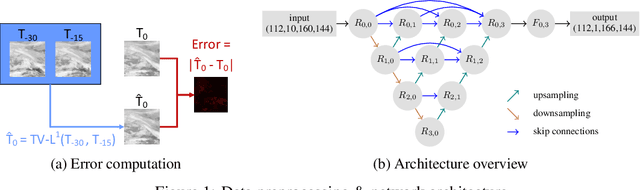
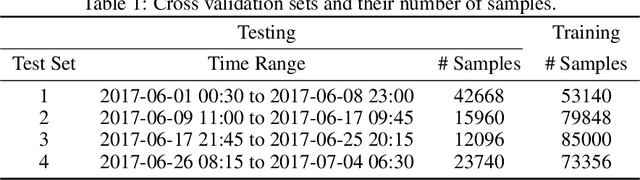
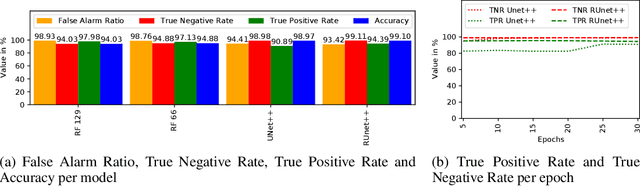
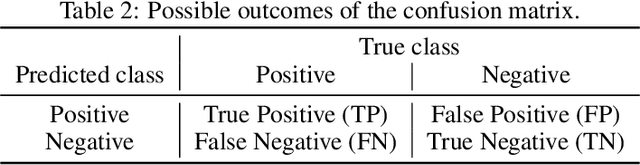
Forecasting severe weather conditions is still a very challenging and computationally expensive task due to the enormous amount of data and the complexity of the underlying physics. Machine learning approaches and especially deep learning have however shown huge improvements in many research areas dealing with large datasets in recent years. In this work, we tackle one specific sub-problem of weather forecasting, namely the prediction of thunderstorms and lightning. We propose the use of a convolutional neural network architecture inspired by UNet++ and ResNet to predict thunderstorms as a binary classification problem based on satellite images and lightnings recorded in the past. We achieve a probability of detection of more than 94% for lightnings within the next 15 minutes while at the same time minimizing the false alarm ratio compared to previous approaches.
The Error is the Feature: how to Forecast Lightning using a Model Prediction Error
Nov 23, 2018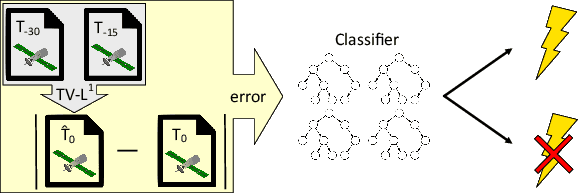
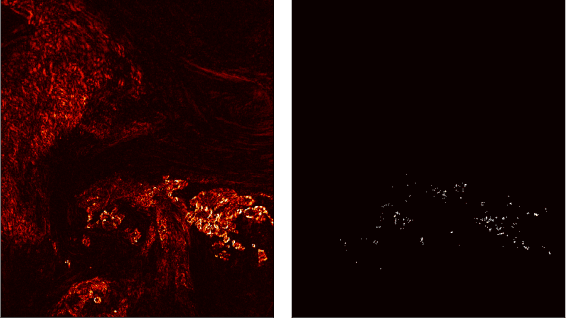
Despite the progress throughout the last decades, weather forecasting is still a challenging and computationally expensive task. Most models which are currently operated by meteorological services around the world rely on numerical weather prediction, a system based on mathematical algorithms describing physical effects. Recent progress in artificial intelligence however demonstrates that machine learning can be successfully applied to many research fields, especially areas dealing with big data that can be used for training. Current approaches to predict thunderstorms often focus on indices describing temperature differences in the atmosphere. If these indices reach a critical threshold, the forecast system emits a thunderstorm warning. Other meteorological systems such as radar and lightning detection systems are added for a more precise prediction. This paper describes a new approach to the prediction of lightnings based on machine learning rather than complex numerical computations. The error of optical flow algorithms applied to images of meteorological satellites is interpreted as a sign for convection potentially leading to thunderstorms. These results are used as the base for the feature generation phase incorporating different convolution steps. Tree classifier models are then trained to predict lightnings within the next few hours (called nowcasting) based on these features. The evaluation section compares the predictive power of the different models and the impact of different features on the classification result.